Key Highlights
- Proper gang sheet planning increases the number of transfers per sheet, which leads to decreased waste.
- The strategic arrangement of designs enables businesses to reduce printing expenses while they achieve greater production productivity.
- Themed DTF gang sheets, which change with different seasons, help businesses to take advantage of seasonal trends.
- Pre-planning for bulk orders enables businesses to complete customer orders more quickly while decreasing their operational standby time.
- Optimizing gang sheets helps businesses increase their profit margins while maintaining their printing standards.
The most effective method for cost reduction and efficiency improvement in DTF transfers lies in maximizing the available gang sheet space. Your DTF gang sheets can help you generate potential profit through every inch, but only if you plan your sheet layout with utmost attention. In this blog we will help you do exactly that. We will explore how the best method for using gang sheets DTF ensures that each sheet generates maximum output. How to use gang sheets in the most efficient way so that you are able to print more while spending less. And, how to strategize your layout to print both similar and different size designs. So let’s begin.
1. Plan Your Layout Strategically
Maximizing gang sheet space begins with the need to create an exact layout, which needs to be executed through careful planning. You need to measure all design elements, then use their dimensions to create groups that include both smaller and larger designs to achieve maximum design efficiency. Remember that design placement requires you to rotate their designs by 90 degrees for optimal use of unfilled areas.
DTF Gang Sheet Spacing Tips for Efficient Layout
- The process of design arrangement through size-based grouping or thematic grouping produces a unified design sheet that uses less film. You can reduce sheet changes when you combine similar orders into one batch.
- The strategic planning of your layouts will provide you with two benefits because it enables you to use space efficiently while your production processes become more efficient.
- Higher initial arrangement planning results in lower DTF film and ink waste, which produces long-term financial savings.
2. Use Variable Sizing and Nesting Techniques
Variable sizing and nesting are essential techniques for maximizing gang sheet efficiency. The design variable sizing method enables designers to make minor design adjustments that maintain design excellence but permit the use of smaller sheet areas. Nesting arranges various shapes into a puzzle configuration, which reduces design waste through space optimization between different designs. The majority of DTF software tools provide automated nesting capabilities that determine optimal design distribution across multiple designs. The process of arranging smaller text-based designs around larger illustrations enables designers to achieve maximum printable area throughout the entire sheet.
The DTF Gang Sheet File Requirements for Nesting
- DTF designs can be creatively nested through their corner design elements, which maintain aesthetic value while achieving complete coverage of empty space.
- The application of these techniques enables maximum transfer capacity per sheet, which results in material cost savings, reduced production time, and enhanced overall investment returns.
- The solution provides a straightforward method that enhances DTF printing efficiency through its ability to generate increased profitability for your business.
3. Batch Orders and Theme-Based Gang Sheets
The combination of batching orders with theme-based gang sheets serves as an effective method to achieve maximum spatial efficiency. Uniting multiple orders that share design characteristics into a single gang sheet results in fewer required sheets, which leads to enhanced operational efficiency. The creation of themed gang sheets for Valentine’s Day seasonal events enables you to forecast customer demand while producing bulk prints within scheduled times. Organizing printed materials according to their themes simplifies post-printing tasks and accelerates the process of completing customer orders.
DTF Gang Sheet Layout Mistakes to Avoid
- Poor design spacing results in film waste and printing operations that become less effective. DTF gang sheet layout errors most frequently occur because designers fail to maintain proper alignment and margin boundaries.
- Designs that lack size adjustments when overcrowded will produce lower quality prints. Production problems arise because designers fail to create an effective combination of their graphic elements.
- The operation needs nesting and rotation techniques to eliminate all empty space. Printers who fail to optimize their layouts waste materials while decreasing their gang sheet operational efficiency.
Conclusion
Optimizing gang sheet space is a simple yet powerful way to boost your DTF printing efficiency and profits. Strategic layouts, variable sizing, nesting techniques, and theme-based batching all help minimize waste and maximize output. Preparing in advance for high-demand periods helps you stay ahead of orders while saving on materials. Start maximizing your DTF gang sheet potential today by using DTF gang sheet design tips and DTF gang sheet setup strategies to optimize production and reduce costs.
Get started with our DTF Sample Pack and Gang Sheet Builder to start creating and testing layouts.
FAQs
Q1: What is a DTF gang sheet in apparel manufacturing?
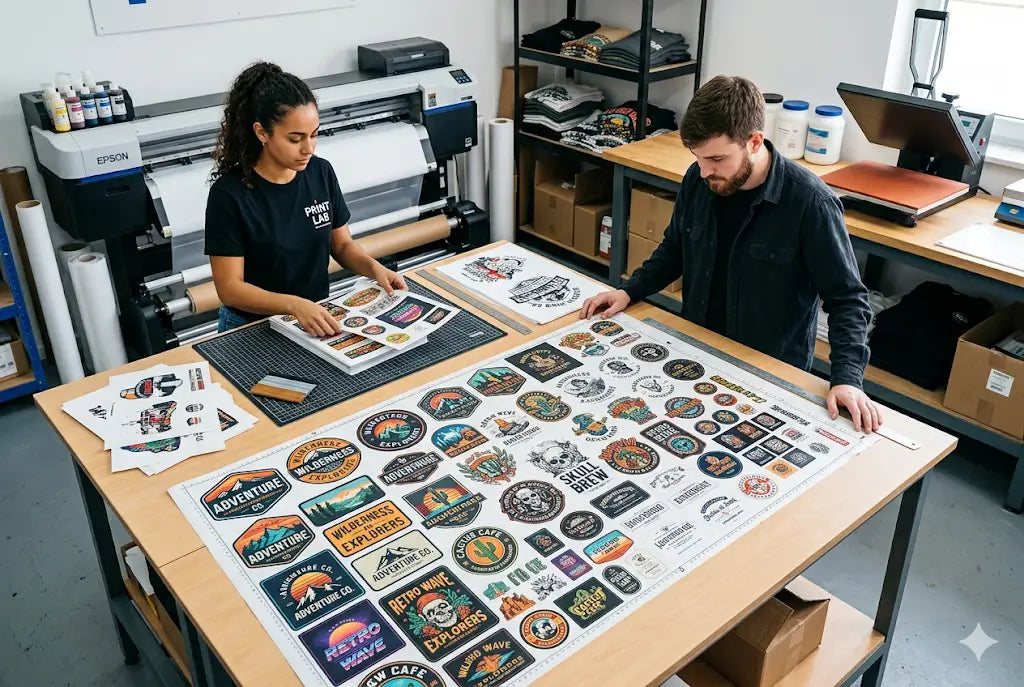
A DTF gang sheet is a single film sheet containing multiple DTF transfer designs arranged to optimize printing space. This helps printers to print multiple designs at once, which results in decreased material waste and faster production. Properly planned gang sheets increase the number of transfers per sheet, which makes DTF printing operations more efficient and helps avoid DTF gang sheet layout mistakes.
Q2: Why is maximizing gang sheet space important?
Maximizing gang sheet space leads to two outcomes, which include decreasing DTF film and ink waste, lowering printing expenses, and enhancing operational performance. The sheet printing process becomes more efficient because an increased number of designs per sheet allows for faster printing and reduced need to switch between sheets, helping you maximize DTF gang sheet space.
Q3: How can I plan a gang sheet layout?
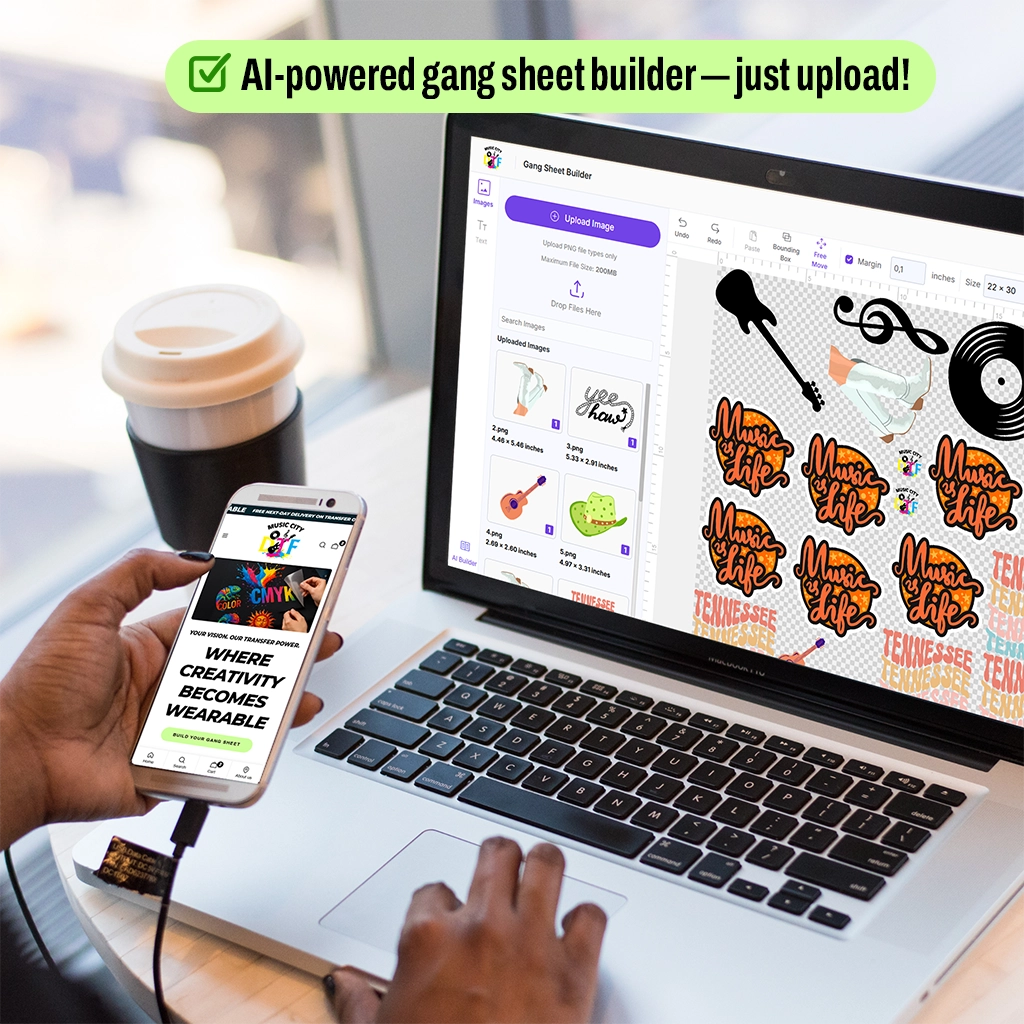
The gang sheet layout process begins with design measurements, which designers use to create arrangements that maximize space efficiency. You can use digital tools like the Music City DTF Gang Sheet Builder to create visualizations, rotate designs, and arrange them according to matching sizes or themes. The production process becomes more efficient through strategic planning, which eliminates film waste and maintains high-quality standards for DTF prints.
Q4: What is nesting in DTF printing?
Nesting implements design placement on a gang sheet through puzzle piece arrangement to achieve maximum space efficiency. The method allows printing multiple times on each sheet, which results in material savings and quicker production processes. Most DTF software programs include automated nesting functions that create efficient layout designs for users.
Q5: Can variable sizing affect print quality?
Variable sizing slightly adjusts the dimensions of designs to better fit the gang sheet. When implemented with precision, the system maintains its print quality. The goal is to utilize otherwise wasted space without distorting key design elements. Many DTF printers and software programs allow users to make small size changes that will preserve sharp colors and edges while achieving optimal sheet usage, a crucial part of optimizing the DTF transfer sheet.
Q6: How do themed gang sheets help with seasonal sales?
Themed gang sheets enable printers to organize their design work according to specific holidays and events that include Valentine's Day. The method enables businesses to handle large orders through advanced order processing while decreasing sheet material waste and improving their delivery operations. This ensures proper DTF gang sheet file requirements are met for all designs.
Q7: What software is best for gang sheet planning?
Multiple DTF software solutions provide users with features for gang sheet planning and automatic nesting. The three most common software choices are Photoshop and Illustrator, together with dedicated DTF software. The software must support user functions for rotating objects, scaling elements, and arranging multiple items at once to maximize DTF gang sheet space.
Q8: How many designs fit on one gang sheet?
The number of designs per gang sheet depends on sheet size, design dimensions, and spacing requirements. Efficient layout planning, nesting, and variable sizing can increase the number of prints per sheet. Seasonal or theme-based grouping also helps maximize utilization. Proper planning ensures every inch of film is used effectively without compromising quality or workflow.
Q9: Can I batch multiple orders on one gang sheet?
Yes. Combining multiple orders into a single gang sheet leads to material savings through reduced space requirements and decreased consumption of ink and film. The optimal layout solution requires design groups to be organized according to their size and theme, and their specific customer order requirements.
Q10: How does optimizing gang sheets save money?
It leads to three advantages, which include decreased film waste, reduced ink consumption and overall time optimization. The production process becomes more efficient because the use of fewer sheets results in reduced material expenses and shorter production times. The more sheet space you save, the more money you save.