





Merch-Driven DTF Transfers for Tennessee Brands That Move Fast
Ready to Press DTF Transfers Built Around Nashville’s Real Creative-Commerce Deadlines
A Friday night merch table on Lower Broad can wipe out 200 shirts before the second set ends — and if the reorder misses the next morning's press window, the whole weekend slips. Music City DTF was built around that kind of creative-commerce pressure instead of generic apparel production schedules. Our DTF Transfers are made for bands, boutiques, event vendors, hospitality groups, and Tennessee creative buyers that need merch-ready output without the chaos that usually comes with show-cycle reorders.
Standard Nashville-area file-to-merch cycles regularly move in as little as 24–48 hours on approved artwork, including gang sheet runs for event vendors and boutique apparel drops. And the people placing those orders aren't traditional print shops. They're touring merch managers, bachelorette apparel sellers, Lower Broadway hospitality operators, East Nashville retail brands, pop-up vendors, and campus gear sellers trying to keep product moving while customers are still standing in line.
Why Tennessee Creative Buyers Order Print Differently Than Everyone Else
Touring Merch Reorders Don’t Wait for “Normal” Production Schedules
Touring merch operations don't order on predictable calendars. A band sells out after a packed weekend run, somebody texts updated art at 11:40pm, and the reorder has to be moving before lunch the next day. Music City DTF handles those show-cycle reorders with organized file tracking, repeat-layout storage, and transfer yield planning that keeps repeat artwork consistent across 50-piece and 500-piece creative-volume runs.
Bachelorette Apparel Businesses Need Repeatable Press Performance Fast
The bachelorette apparel market changes the math completely. Most orders aren't massive. They're compressed. One vendor may need 48 matching shirts, 16 tote bags, and 24 drink pouch graphics all inside a two-day window before a Broadway weekend. Cold peel is the call on moisture-wicking blends that dominate those runs because hot peel ghosting on light poly can ruin the entire batch. We've seen that mistake too many times from suppliers trying to move too fast.
Hospitality Apparel Gets Put Through Constant Wear
Lower Broadway hospitality groups operate differently again. Staff uniforms for bars and live music venues get washed constantly, stretched through long shifts, and exposed to heat, sweat, and repeat wear six nights a week. That's why our dtf shirt transfers go through edge inspection and registration checks before packing — especially on black cotton and tri-blend garments where flaws show instantly under venue lighting.
Boutique Drops Depend on Reorder Accuracy
Boutique apparel shops around 12 South and East Nashville don't think in bulk inventory anymore. They think in drops. A retailer may run 72 pieces on Wednesday, post them Friday morning, then reorder 150 by Sunday if the release takes off online. Music City DTF keeps archived production specs on repeat designs so reorder accuracy stays tight instead of drifting between runs.
Festival Vendors Need Better Packing Than Most Suppliers Offer
Festival vendors and temporary event operations create another pressure point: transport and storage. Transfers packed loosely curl, stick, or edge-lift in humid Tennessee weather. Most creative buyers don't think about packing format until they're pressing shirts backstage or inside a vendor tent at midnight. We pack flat because peel performance starts long before the heat press closes.
Campus Merchandise Runs Happen Inside Tight Sales Windows
And then there's campus merchandise. Vanderbilt, Belmont, MTSU, and Tennessee State sellers often work inside compressed seasonal spikes — orientation week, rivalry games, graduation runs. Those aren't casual delays. Missing a campus sales window can wipe out an entire semester's worth of momentum.
Upload Your Art Now — Merch-Ready Transfers Delivered Across Tennessee Without Show-Night Delays. [Order DTF Transfers]
From Artwork Upload to Finished Transfer: How Music City DTF Handles the Process
File Review and Transfer Yield Setup
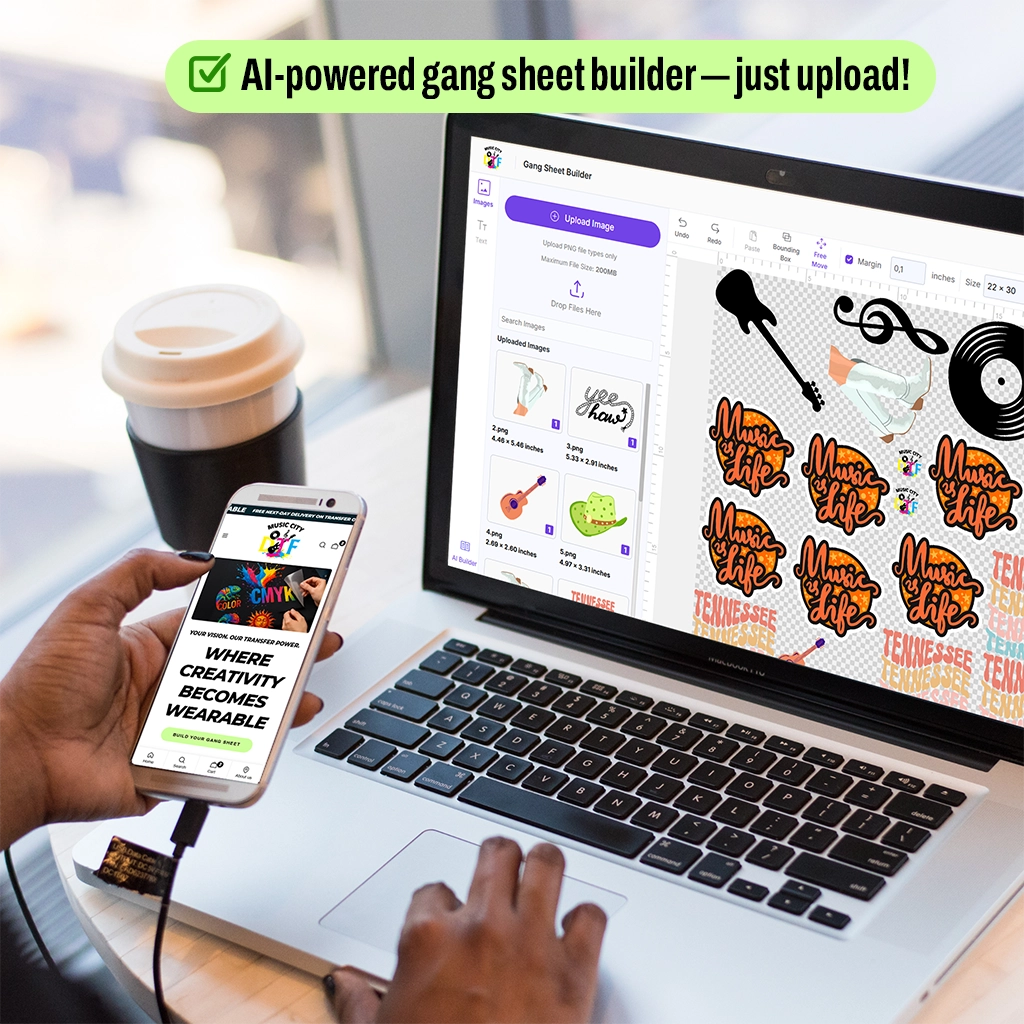
Every order starts with artwork inspection, sizing verification, transparency checks, and transfer yield mapping. PNG files at 300 DPI work best, though vector files regularly move through the queue for larger creative-volume runs. Gang sheet spacing gets underestimated constantly. Too tight and peel performance drops during repetitive pressing — especially on 80-piece bachelorette runs where one weak edge becomes 80 weak edges.
For a Nashville creative buyer, that means less guessing. A touring merch manager sending revised artwork from a hotel lobby before a Thursday show shouldn't have to wonder whether sleeve logos shifted 0.25 inches between reorder batches. We lock repeat positioning before production starts.
Color Density and Underbase Calibration
White underbase strength controls everything on dark garments. Our production team calibrates opacity levels based on garment type, transfer density, and fabric blend so reds stay deep under stage lights instead of flattening out after the first press cycle.
What we've found: boutique apparel brands care less about "perfect lab color" and more about how graphics actually photograph in storefront lighting and Instagram content. That's a different target entirely. And it changes how transfers get built.
Film Printing and Adhesive Coverage
Transfers move through controlled film printing with adhesive coverage matched to the artwork density and garment type. Cotton, polyester, tri-blends, fleece, and performance fabrics all react differently during heat activation windows.
On a show-night run, that looks like fewer failed presses backstage or inside temporary event setups where conditions aren't ideal. We've had Lower Broad vendors tell us they're pressing in storage rooms between sets. Transfers need to handle that environment without becoming unpredictable.
Cure Inspection and Registration Accuracy
Every run moves through cure inspection before release. Adhesive bonding, edge definition, and registration alignment are checked manually because small flaws multiply fast on high-visibility merch runs.
That matters because a 300-piece venue order doesn't fail one shirt at a time. It fails publicly. Under bright lights. In customer photos. In front of people already holding drinks and phones.
Packing, Shipping, and Press Instructions
Transfers are packed flat with moisture-conscious handling to help maintain peel stability during transport across Tennessee. Humidity matters. Especially in summer. Curled film and edge-stick issues usually start during poor storage and careless packing, not during pressing.
For context: standard press-ready application lands around 320°F for 10–15 seconds with firm pressure and a cold peel, followed by a short 3–5 second second-press using parchment or kraft paper. That's the setup most Nashville creative buyers rely on because it holds clean across repeated merch runs.
Repeat Orders and Archived Production Specs
Repeat artwork stays archived with sizing references, placement notes, and production specifications tied to previous runs. That shortens file-to-merch cycles for repeat creative buyers ordering the same graphics across different garment blanks or seasonal drops.
And that's huge for merch operations. A band shouldn't have to rebuild an approved chest graphic every time they add hoodies two weeks later.
Transfer Performance That Holds Up Under Real Merch Conditions
Wash Durability That Supports Tour Merchandise
Our ready to press dtf transfers are built to hold through 50+ wash cycles without cracking or fading when pressed correctly. That matters for tour merchandise because fans don't wear those shirts once. They wear them constantly — through festivals, bars, road trips, and repeat washing that exposes weak adhesive bonding fast.
Stage-Light Visibility and Color Depth
Transfer opacity is tuned for visibility under direct lighting. Bright venue LEDs and photography flashes expose weak underbases immediately, especially on black garments. Music City DTF runs white layering that supports sharper contrast on dark cotton, tri-blends, fleece, and polyester blends commonly used in music and event merchandise.
Peel Consistency During High-Volume Press Runs
Peel performance matters more than most suppliers admit. A clean cold peel saves time on repetitive press runs and lowers edge-lift risk during high-volume event production. For a bachelorette vendor pressing 120 shirts in one evening, smoother release consistency changes the entire workflow.
Flexibility Across Retail and Performance Apparel
Stretch response matters too — especially on fitted retail apparel. Our dtf heat transfers maintain flexibility across movement-heavy garments like performance tees, fitted boutique cuts, and hospitality staff apparel that goes through repeated wear during long shifts.
Flat Packing and Moisture-Conscious Handling
And packing format matters just as much as printing. We've seen transfers arrive edge-stuck, curled, or humidity-damaged from national suppliers using loose-stack shipping methods. Creative buyers don't need surprises when they're halfway through a 200-piece press session.
One more thing. Transfer performance isn't just about how a print looks fresh off the press. It's about whether the graphic still looks sellable after six weekends on a merch rack.
Tennessee Creative-Commerce Success Story
A 12 South-based boutique apparel brand came to Music City DTF with a show-cycle reorder problem after a viral social post pushed a weekend release past inventory projections. The order involved 180 oversized back-print dtf transfers ready to press on heavyweight cotton tees with a 36-hour deadline before a Saturday pop-up event. We ran it through our archived repeat-layout system with cold-peel production settings and completed the creative-volume run with a 98.7% press acceptance rate across the final batch.
The Businesses Behind Nashville’s Constant Merch Demand
Touring Artists and Merch Managers
These buyers live inside reorder pressure. One weekend can empty inventory faster than expected, especially during regional tour runs through Tennessee, Kentucky, and Georgia. They need fast dtf transfers that keep artwork consistent from city to city without color drift between batches.
Bachelorette Apparel and Event Shirt Sellers
Most of these businesses operate on compressed timelines tied directly to travel weekends. Orders range from 20 shirts to 200-piece coordinated runs across tanks, hoodies, totes, and accessories. What they need isn't generic speed. They need predictable peel performance during repetitive pressing.
Lower Broadway Venue and Hospitality Apparel Buyers
Bars, music venues, and hospitality groups run apparel hard. Staff shirts get washed constantly and replaced often. Music City DTF helps maintain transfer consistency across recurring staff apparel orders so venue branding stays uniform through repeat runs.
Boutique Apparel Drops Across Tennessee
Boutique brands don't want warehouse-level inventory anymore. They want drop-ready output in controlled quantities — 48 pieces, 72 pieces, maybe 120 if the release gains traction online. That means custom dtf transfers ready to press with reorder consistency built in from the start.
Festival Vendors and Temporary Merch Operations
Festival sellers need portable, press-ready graphics that survive transport, humidity exposure, and long setup days. Flat packing and stable peel performance matter here more than flashy marketing language ever will.
University and Campus Apparel Shops
Vanderbilt, Belmont, MTSU, and Tennessee State apparel sellers operate around seasonal spikes tied to campus events and student demand cycles. Missing a production window before orientation or graduation isn't a small problem. It changes the whole sales season.
Order a DTF Transfers — Same Transfer Performance Used Across Every Creative-Volume Drop, No Minimums.
Why Tennessee Creative Buyers Move Away From National DTF Suppliers
A lot of Tennessee creative buyers come to Music City DTF after losing time — not because the print itself was terrible, but because the supplier didn't understand how creative-commerce deadlines actually work. A merch reorder delayed two days after a sold-out Friday show doesn't just create inconvenience. It kills momentum while people are actively looking for the product online.
National suppliers also tend to pack for warehouse efficiency instead of real-world merch use. We've seen transfers arrive curled, edge-stuck, and compressed inside oversized packaging that spent days crossing the country in summer heat. That's not a small issue when somebody is pressing shirts for a pop-up six hours later.
Music City DTF handles production with the assumption that these orders are attached to active commercial moments — live events, retail launches, venue staffing, or weekend-driven tourism traffic. That's why file organization, repeat-layout tracking, and flat-pack handling stay part of the workflow instead of becoming afterthoughts.
To put that plainly: creative buyers don't need generic volume. They need output that performs under pressure. Different thing entirely.
Now sure, national suppliers can move enormous quantities. Scale matters. But for Nashville-area creative businesses, transfer accuracy, reorder consistency, and file-to-merch control usually matter more than saving a few cents per sheet while hoping the order arrives usable.
Serving Creative Businesses Across Tennessee
Music City DTF ships creative-volume orders across Tennessee every week, including boutique apparel runs in Franklin, venue merchandise in Nashville, and festival vendor restocks heading into Chattanooga event weekends. Memphis buyers regularly order bulk dtf transfers for music-driven streetwear brands and regional artist merchandise, while Knoxville apparel operations use dtf transfers gang sheet layouts to manage smaller seasonal drops without carrying excess inventory. Murfreesboro campus sellers move fast around MTSU events, Clarksville event vendors need repeatable reorder consistency tied to military-community gatherings and local festivals, and Jackson apparel businesses continue expanding custom merchandise operations tied to regional retail and live entertainment traffic.
1,000+ Tennessee Creative Businesses Already Running on Music City DTF — Start Your Next Merch Drop in Minutes. [Start Your Order]
Frequently Asked Questions
DTF Transfers are heat-applied graphics printed onto transfer film and pressed onto garments at roughly 320°F for 10–15 seconds. Nashville merch sellers use them because they support fast creative-volume production across cotton, polyester, fleece, and tri-blend apparel without screen setup delays. The short file-to-merch cycle helps bands, boutiques, and event vendors reorder quickly during active sales periods.
Yes. Our ready to press dtf transfers are built for repeated wear, movement, and heavy wash durability tied to tour merchandise use. Most properly pressed transfers hold through 50+ washes without major cracking or fading. That matters for concert apparel because fans wear those garments constantly, especially heavyweight tees and fleece hoodies sold during regional tour runs.
Our dtf shirt transfers work well on cotton, polyester, performance blends, tri-blends, fleece, and many mixed-fabric garments. Cold peel settings usually perform best on moisture-wicking performance apparel used heavily in event and bachelorette merchandise. Pressing at firm pressure with a short second press using parchment paper helps maintain cleaner adhesion across repeat production runs.
Yes. Music City DTF handles creative-volume runs ranging from small boutique launches to 500-piece event orders and repeat show-cycle reorders. Buyers often combine front graphics, sleeve logos, and oversized back prints inside dtf transfers gang sheet layouts to support transfer yield and lower material waste during larger Tennessee merchandise production schedules.
Standard file-to-merch cycles often move within 24–48 hours on approved artwork, though larger creative-volume runs may take longer depending on queue size and artwork complexity. Show-cycle reorders tied to live events, boutique launches, or campus apparel windows usually move faster when previous layouts and production specifications already exist inside the reorder archive system.
Most dtf heat transfers apply best around 320°F with firm pressure for roughly 10–15 seconds followed by a cold peel. A second press lasting 3–5 seconds with parchment or kraft paper helps support stronger bonding and smoother surface finish. Polyester-heavy garments may need adjusted heat activation windows to lower ghosting risk during repetitive pressing sessions.
Yes. Music City DTF produces custom dtf transfers ready to press using uploaded PNG or vector artwork sized specifically for retail apparel, event merchandise, staff uniforms, and music-industry products. Most buyers send 300 DPI transparent PNG files for best edge clarity and registration accuracy, especially on oversized back graphics and layered multi-color artwork.
Peel performance affects speed, edge stability, and repeat consistency during repetitive pressing. A weak release becomes a major issue when somebody is pressing 150 shirts in one session. Clean cold-peel behavior helps maintain production flow while lowering edge-lift problems, especially on high-volume bachelorette orders and backstage merchandise production where time gets compressed quickly.
Store transfers flat inside a cool, dry environment away from direct sunlight and humidity exposure. Sealed containers or protective sleeves help maintain adhesive stability for roughly 6–12 months under proper conditions. Curled film and edge-stick problems usually start during poor storage practices, particularly during Tennessee summer humidity and repeated temperature changes during transport.
Absolutely. Music City DTF ships orders throughout Tennessee including Memphis, Knoxville, Chattanooga, Murfreesboro, Franklin, Clarksville, and Jackson. Many buyers outside Nashville use fast dtf transfers for regional festivals, boutique retail launches, school apparel programs, and music-related merchandise operations that need reliable reorder consistency without depending on distant national suppliers.
Join Our Growing List of Happy Customers
Jason M.
I used these DTF transfers for a batch of hoodies, and the colors are vibrant and sharp. After multiple washes, the prints haven’t cracked or faded. Super easy to apply with my heat press, and the finish feels soft and flexible.

Ashley R.
These transfers are great for my custom t-shirt business. The white underbase ensures my designs pop even on dark fabrics. I deducted one star only because I had to fine-tune my heat press settings, but the results are very professional.

Brandon T.
I tried the transfers on cotton, polyester, and tri-blends, and they all turned out beautifully. The prints feel soft to the touch and maintain their flexibility. Great for personal projects or bulk orders!

Nicole C.
The DTF transfers deliver consistent results every time. The colors stay vibrant, and the prints adhere well without cracking. I gave four stars because they require careful temperature control, but once you get it right, the outcome is excellent.
Marcus J.
These ready-to-press transfers are amazing for custom apparel. The application process is straightforward, and the prints have a soft, professional finish that looks like store-bought merch. I’ll definitely reorder for future projects.
Get DTF Transfers for Your Nashville Brand
Music City DTF Transfers provide an easy solution for creating bright and long-lasting custom clothing that achieves professional results. Our Ready to Press DTF Transfers enable high-quality results for single prints or full production runs.
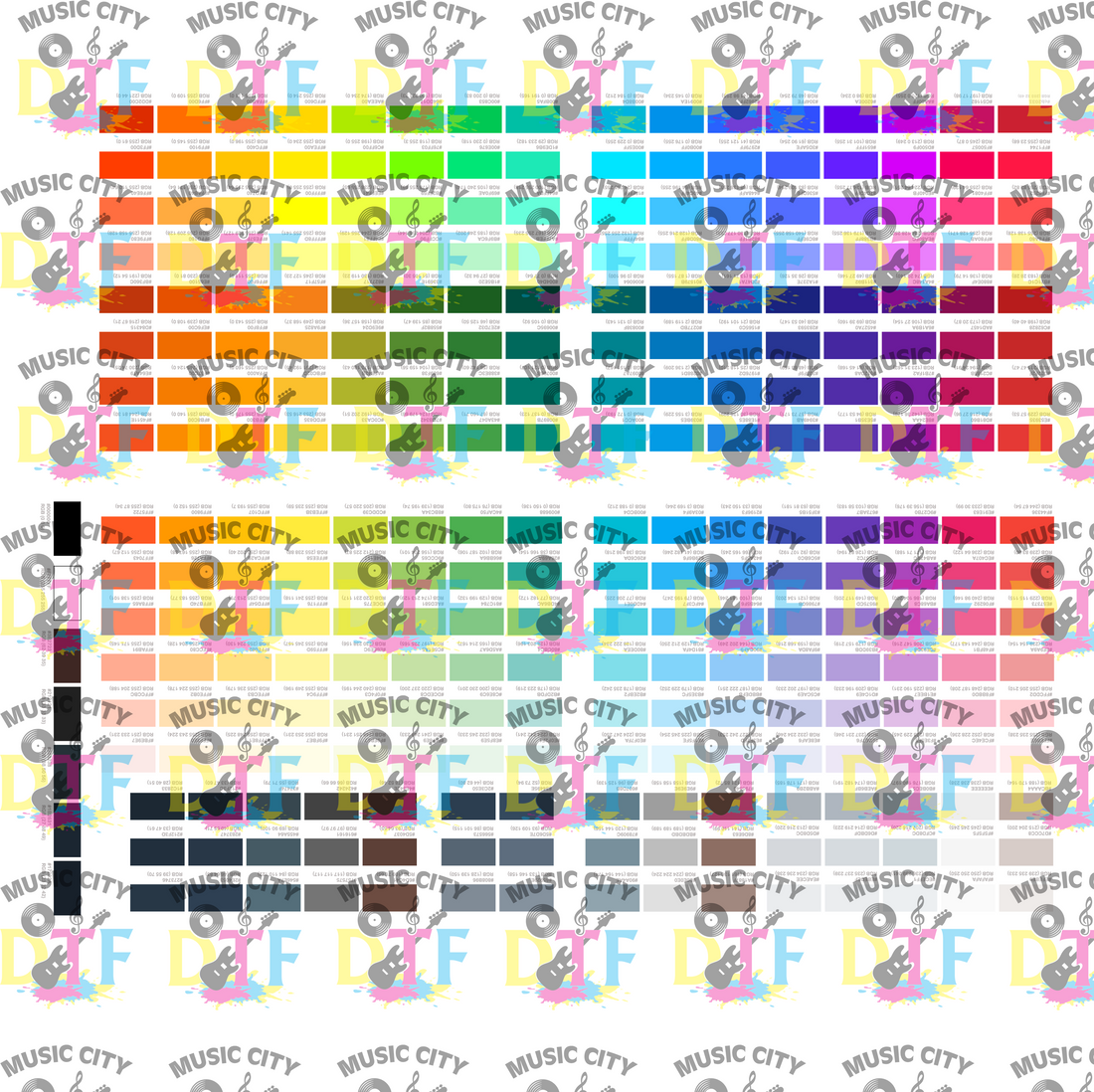
Buy DTF Transfers from Music City DTF today and bring your apparel designs to life. Don’t forget to order your color chart and DTF Sample Pack, too!