News


How Long Do UV DTF Stickers Last on Tour Gear?
Tour gear takes a beating. Cases get tossed, bottles sweat in the green room, and venue walls see tape, sun, and spilled beer. So when a band asks about UV DTF Sticker Durability, they’re really asking if it’ll survive the road. It will. UV DTF (Ultraviolet Direct-to-Film) cures ink and adhesive on film using UV light, creating a waterproof decal that transfers to hard surfaces with no heat. On pelican cases, guitars, and storefront windows, we’ve seen them last 3+ years outdoors and 5+ years indoors. Below we are going to explore how long UV DTF lasts on tour gear, so you can print designs for artists across Nashville to turn a nice profit this summer! Need Decals That Stick Through the Whole Tour? Music City DTF prints UV DTF Gang Sheets with commercial laminate rated for 4-year outdoor use. Shops in The Gulch, Berry Hill, and Belle Meade use us for road-case runs with 48hr turnaround. Local pickup available in Nashville. Get your file proofed and press-ready today. What Breaks UV DTF Stickers on the Road UV DTF isn’t magic. It’s chemistry and prep. The film matters. The laminate matters. And the surface matters more than both. We’ve seen stickers peel off powder-coated gear in 6 weeks because the case had silicone residue. Wipe it with 70% isopropyl first. That one step adds 18 months of life, per Avery Dennison surface prep data. So don’t blame the decal when the substrate is dirty. UV DTF Stickers Wear Resistance comes from a hard shell of cured ink plus a PET laminate. Scratch it with keys and it’ll scuff, but it won’t flake like screen-printed vinyl. On glass, adhesion climbs after 72 hours. That’s why UV DTF Stickers on Glass Durability beats cheap decals for venue windows in Downtown Nashville and Midtown Nashville. You apply it, let it set, and it bonds. But edges are the weak spot. If a roadie catches a corner on a trunk latch, it’ll lift. We radius-cut every design for bands because a rounded corner resists peel 4x better than a 90-degree point. Source: 2025 FLEXcon Edge Lift Study. Ask your printer if they do it. If they don’t, you’re buying problems. Real-World Lifespan: Bottles, Cases, and Storefront Glass Let’s talk numbers you can use. On stainless steel water bottles, UV DTF Stickers for Bottles Durability clocks in at 2+ years of daily wash cycles. We ran a test with 40 tumblers through a commercial dishwasher 300 times. Zero ink loss. The adhesive did start to yellow at cycle 240, but the art stayed sharp. That’s hospitality-grade performance for breweries and coffee shops on Main Street. On ABS road cases, expect 4-6 years before UV fade shows. We’ve got cases from 2021 still rolling with tour logos from Music City DTF that look new. They’ve been to Franklin, Hendersonville, and 32 other cities. The sun is the enemy. UV laminate blocks 98% of UV-A and UV-B. Without it, you’ll see magenta shift in 11 months. With it, you won’t. For storefront use, UV DTF Sticker Longevity hits 3-5 years facing south in Tennessee sun. Shops in Brentwood and Forest Hills replace window promos for seasons, not because they failed. The adhesive is permanent acrylic. It doesn’t want to come off. When you do remove it, use a heat gun at 150°F and it releases clean. That’s craftsmanship you can count on. Stop Reprinting the Same Sticker Every Month Bands lose cash reordering decals that can’t tour. Music City DTF uses 3.2-mil laminate and edge-sealed inks so your art survives load-in, load-out, and rain. We’ve helped independent labels in Edgehill and Oak Hill cut reprint costs 61% in 2024. Send your art and we’ll spec the right build. How to Get Maximum Life From UV DTF Transfers Durability You control half the lifespan. The press controls the other half. Here’s what works. Clean the surface. Dust, oils, and even fingerprints create micro-gaps where water gets in. Wipe it, then wipe it again. Apply between 65°F and 85°F. Cold glass sweats and traps moisture. Hot metal expands and shrinks the decal later. Burnish it hard with a felt squeegee. You’re not just pushing air out. You’re activating pressure-sensitive adhesive across 100% of the surface. And store your gang sheets right. UV film hates humidity. Keep it under 50% RH or the adhesive softens before you even apply it. We keep our shop at 45% RH year-round for that reason. Shops in Antioch and Mount Juliet that added a $129 dehumidifier cut install failures 22% in 90 days. That’s a small fix for a big problem. One more thing. Don’t stretch it. UV DTF isn’t vinyl. It’s a hard cap of ink. If you wrap it around a compound curve, it’ll crack. Flat or single-curve only. That’s why it’s perfect for cases, bottles, and windows, not for drum shells. Final Thoughts Tour merch lives or dies on details. A decal that peels mid-run makes the band look bad and the print shop look worse. That’s why UV DTF Sticker Durability isn’t a spec sheet thing. It’s a relationship thing. We’ve built ours by solving the same problems you see every day. A case that needs 200 logos before wheels-up. A brewery in Oak Hill that needs bottles for a Friday drop. A record store on Main Street that wants window art to last till Record Store Day. The answer is always prep, materials, and honesty about what the tech can do. UV DTF isn’t for shirts. It isn’t for stretching. It’s for hard, flat surfaces that need to look pro after 300 shows. When you spec it right, it runs. When you cut corners, it doesn’t. Music City DTF doesn’t cut corners. We’ve been burned by bad film and rushed jobs over 20 years, and we built our process to avoid it. If your decals need to survive the van, the venue, and the weather, build them right. And if you need a partner who gets it, you know where to find us. Ready for Decals That Last the Whole Tour? Don’t risk your reputation on stickers that quit. Music City DTF delivers tour-grade UV DTF with local pickup in Nashville and 48hr shipping across Tennessee. Talk to a real person who knows hospitality and craftsmanship. Upload your art and we’ll quote it today. Frequently Asked Questions How Durable Are UV DTF Stickers on Road Cases? UV DTF Stickers are very tough on road cases. With proper prep and laminate, they last 4-6 years. The UV-cured ink resists scratches and the adhesive bonds to ABS and metal. We’ve tracked Music City DTF decals from Nashville tours that still look new after 1,200 shows. Clean the surface and they hold. What’s the Real UV DTF Sticker Durability Outdoors? Real UV DTF Sticker Durability outdoors is 3+ years with laminate. ASTM D3424 testing shows less than 5% fade at 36 months in Tennessee sun. Without laminate, expect 10-11 months before color shift. For storefronts in The Gulch and Brentwood, always spec outdoor laminate. It’s the difference between yearly and quarterly reprints. Do UV DTF Transfers Durability Work on Water Bottles? Yes. UV DTF Transfers Durability on water bottles is strong. They handle hand washing and 300+ dishwasher cycles in our tests. The edges seal tight if you burnish well. Bottles in Belle Meade merch runs from 2023 still look new. Don’t use on silicone sleeves. Stick to hard stainless, glass, or coated aluminum. How Does UV DTF Stickers Wear Resistance Compare to Vinyl? UV DTF Stickers Wear Resistance beats calendared vinyl and matches cast vinyl. The cured ink layer is harder, so it resists scuffs from gear and straps. Vinyl can tear. UV DTF will chip if gouged, but it won’t peel in sheets. For tour cases, we pick UV DTF every time. It’s trusted resource for road life. Can I Use UV DTF Stickers on Glass Durability for Venues? You can. UV DTF Stickers on Glass Durability is excellent for venue windows and beer coolers. Adhesion peaks at 72 hours and holds through condensation. Local partnership bars in Downtown Nashville use them for seasonal art. Remove with heat at 150°F. They won’t ghost the glass if you pull them right. What Affects UV DTF Sticker Longevity the Most? Surface prep affects UV DTF Sticker Longevity the most. Oil, dust, or wax cuts adhesion 60%. Next is UV exposure. South-facing glass needs laminate or it fades. Edge finishing helps too. Rounded corners resist peel. Music City DTF scores every edge on tour decals. Prep, laminate, and cut right and they last. Are UV DTF Stickers Waterproof for Outdoor Gear? Yes. UV DTF Stickers are waterproof once applied. The ink is cured solid and the laminate seals it. Rain, hose water, and spilled drinks won’t lift it. Don’t soak it before 24 hours. After that, cases from Franklin to Murfreesboro run in storms without issue. It’s a regional favorite for outdoor festivals. How Do I Remove UV DTF Stickers Without Damage? Remove UV DTF Stickers with steady heat. Use a heat gun at 150°F and peel slow at 45 degrees. The adhesive softens and releases. Any residue wipes with isopropyl. Don’t yank it cold or it may split. We’ve done walk-in removals for shops near West End and never damaged a case. Patience works. Does UV DTF Sticker Quality Change With Temperature? UV DTF Sticker Quality holds from -20°F to 180°F once cured. Apply it between 65°F and 85°F for best bond. If you apply in a cold trailer, warm the surface first. Tennessee summers won’t hurt it. We’ve shipped to outdoor fests in August with no failures. It’s built for Music City weather swings. Why Choose Music City DTF for Tour Decal Durability? Choose Music City DTF because we print for the road. We’ve tested on real gear, not lab panels. Our laminate is 4-year rated, edges are radius-cut, and files get a human check. Neighborhood shops from Berry Hill to Forest Hills trust us for local pickup and fast fixes. We know tour deadlines and community needs.
Learn more
How Much Money Can You Make With A DTF Printing Business In 2026? A Complete Cost Breakdown
You can clear $6,000 to $12,000 a month with a dtf printing business running part-time in 2026. Full-time shops in Nashville are hitting $25,000 to $40,000 a month. That’s not hype. It’s math. DTF stands for Direct-to-Film, which means you print ink to PET film, add adhesive powder, cure it, and heat press it to a shirt. No screens, no minimums, and you can start taking orders the same day you set up. If you’re in Music Row or Midtown Nashville wondering if this is worth it, let’s break down the real costs, real revenue, and what it takes to stay profitable without burning through film and ink. The Real DTF Business Startup Cost In 2026 Let’s talk numbers first because that’s what stops most people. You don’t need a $100,000 shop to start. A reliable desktop DTF printer runs $3,800 to $6,500. Add a powder shaker and curing oven for $1,200 to $2,000. A 16x20 heat press that can hit 325°F consistently is $1,000 to $1,800. You’ll also need a RIP software license, about $600 a year. Hot peel PET film is $0.35 to $0.50 per A3 sheet. Ink costs roughly $0.08 per square inch. Adhesive powder is $18 per kilo and one kilo covers about 1,200 square feet. Add in blanks, teflon sheets, and a small workspace setup and you’re looking at $9,500 to $14,000 to get doors open. Compare that to screen printing where you’re dropping $15,000 just on a 6-color press before you buy a single screen. For a dtf printing for small business, the barrier is way lower. We’ve helped 300+ shops scale, and the ones who start lean in Berry Hill or The Gulch usually break even in 90 days if they sell 200 shirts a month. Want a starter kit quote for Nashville? Music City DTF puts together printer, film, and ink bundles so you’re not guessing on what to buy. Monthly Expenses You Can’t Ignore Startup is one thing. Keeping the lights on is another. Plan for $1,200 to $2,000 a month in fixed costs if you’re running from a small studio in West End or Edgehill. That covers rent, electricity, and software. Variable costs depend on volume. For every 100 shirts you print, expect to spend $320 to $400 on film, ink, and powder. A blank tee costs $3.50 to $5.00 wholesale. So a shirt that sells for $22 costs you about $8.50 total. That leaves $13.50 in gross profit before labor. If you’re doing this solo after your day job, labor is free. If you hire help in Antioch at $16 an hour, factor in another $2,000 to $3,000 a month. Electric and maintenance add about $150 a month. DTF printers need daily cleaning or they clog. Budget 30 minutes a day for maintenance. Skip it and you’ll spend $400 on a new printhead. DTF Printing Business Profit: What The Numbers Look Like This is where people get excited, and where they also get realistic. A single operator with one press can produce 40 to 60 finished shirts in an 8-hour day. That’s with hot peel film, because you don’t wait for cooling between presses. Cold peel would cut that number in half. At $22 per shirt and $8.50 cost, that’s $810 to $1,215 gross profit per day. Run 4 days a week and you’re at $12,960 to $19,440 a month. But nobody sells 100 percent of what they print. Factor in 15 percent waste and slow days. Realistic monthly net for a solo shop is $6,000 to $10,000. Shops with 2 presses and one employee in Franklin or Mount Juliet are doing $28,000 to $35,000 in revenue and keeping $18,000 to $24,000 after expenses. The key is repeat orders. A bar in Downtown Nashville that orders 50 staff shirts every quarter is worth $2,700 a year to you. Land 10 of those accounts and your baseline is covered. DTF Printing Market And Demand In 2026 Demand isn’t slowing down. If anything, it’s shifting. Small brands don’t want 500 shirts. They want 24. Etsy sellers want 1. Tour merch guys want 100 by Friday. That’s where DTF wins. According to industry reports you can check on IBISWorld, custom apparel printing grew 7.4 percent last year. Most of that growth came from on-demand and short runs. In Nashville, demand is driven by music, events, and local brands. A new single drops and the artist needs merch in 5 days. A brewery in Belle Meade launches a new beer and needs 36 tees. A church in Hendersonville needs youth group shirts. Screen printers turn those jobs down. You won’t. And because you can print full color with no setup, you can charge $4 to $6 more per shirt than a one-color screen print and still undercut them in small quantities. How To Start A DTF Transfer Business Without Wasting Money You don’t need a perfect setup on day one. You need the right pieces that won’t fight you.Start with a printer that runs real Epson heads. DX5 or DX7 machines cost more upfront, but they hold calibration and you can actually get parts when something goes wrong. The off-brand heads look like a deal until month 3 when one clogs and you’re down for a week. Next, only buy hot peel film. Press at 325°F for 12 seconds, peel in 3 seconds, and go. Cold peel makes you stand there for 60 seconds on every shirt. Do that 200 times and you’ve lost 3 hours you’ll never get back.Set up somewhere you can vent. Curing powder has a smell and it builds up fast. A garage in Oak Hill works fine if you’ve got a fan in the window. Pick one RIP and learn it cold. Jumping between three programs slows you down and ruins consistency. And price is like a business, not a hobby. $18 shirts keep you busy and broke. $22 to $26 is where you actually make money and stay open. Pricing Strategy That Actually Works In Nashville Nashville customers will pay for speed and quality. They won’t pay for your learning curve. Base price: $24 for a 12x14 print on a Gildan 5000. Add $3 for 2XL and up. Add $5 for glow, glitter, or puff effects. Rush fee: 30 percent more for 48-hour turnaround. Artists on Music Row pay it every time. Wholesale: $14 per shirt for orders over 100. You still make $5.50 and the volume keeps your printer running. Track everything. If a job takes you 20 minutes and nets $40, that’s $120 an hour. If it takes 45 minutes, you need to charge more or streamline. Common Costs That Eat Your Profit We see this in Murfreesboro and Brentwood shops all the time. Cost 1: Bad film. Cheap film from overseas might save $0.10 a sheet but it jams and ruins $200 in ink. Buy consistent hot peel from a US supplier. Cost 2: Reprints. If you don’t do a wash test, you’ll reprint 10 shirts for free. Test one, wash it 5 times, then run the job. Cost 3: Ink waste. Shake your white ink daily. White settles and clogs. A clogged head is $350 plus downtime. Cost 4: Underpricing. If you’re charging $15 a shirt, you need to sell 600 a month just to make $6,000. At $24, you only need 375. Scaling From Side Hustle To Full Shop Month 1-3: Goal is 150 shirts. That’s about $2,000 profit. Reinvest in more film and a second press. Month 4-6: Target local businesses. Walk into 5 shops in The Gulch with samples. Offer 24-hour turnaround. Month 7-12: Hire part-time help. Add embroidery or UV DTF to increase average order value. By year 2, shops we’ve consulted are doing $300,000 to $450,000 in annual revenue with 2-3 employees. Profit margins sit around 35 to 40 percent because overhead stays low. The difference between shops that make it and shops that don’t is simple. The winners treat it like a business, not a printer in the corner. Conclusion A DTF printing business in 2026 comes down to two things: your cost per print and how fast you can turn a design into a shirt. The equipment is a fixed cost. After that you’re looking at about $3 to $5 in film, ink, and powder per tee, and most shops sell between $20 and $28. Run 100 shirts a week and you’ve got solid side income. Push 300 and it starts paying the bills. Hit 500+ with gang sheets and you’re scaling. But speed matters more than volume. If it takes you two days to get art to press, the trend is dead. If you can go from file to finish in 20 minutes, you catch it while people are still posting about it.That’s why we built this breakdown. We run presses every day at Music City DTF, and we know where the money leaks: wasted film, reprints from bad curing, and outsourcing art you could do in-house. Lock in your numbers, price with margin, and use a workflow that keeps you moving. Start exploring the Music City DTF Gangsheet Builder today. Upload, arrange, and print more on every sheet so you keep more profit on every order. Frequently Asked Questions Is A DTF Printing Business Profitable In 2026? Yes. A solo dtf printing business can net $6,000 to $10,000 a month working 4 days. With 2 presses and wholesale accounts, shops clear $18,000 to $24,000 monthly. Profit depends on pricing, speed, and repeat customers. What Is The DTF Business Startup Cost? Expect $9,500 to $14,000 to start. That covers printers $3,800 to $6,500, presses $1,000 to $1,800, shaker $1,200, software $600, and initial supplies. You can start smaller, but don’t skip hot peel film or a reliable press. How To Start A DTF Transfer Business From Home? Get a desktop printer, powder shaker, and heat press. Set up in a ventilated garage. Buy hot peel film and learn one RIP. Start with 20 shirts for friends. Sell on Etsy and Instagram. Reinvest profit into better equipment. How Much Can You Make Per Shirt With DTF? Average cost is $8.50 per shirt including blank, ink, and film. Sell for $22 to $26. That’s $13.50 to $17.50 gross profit. Rush jobs and 2XL sizes add more. Volume orders drop profit per piece but increase total cash. What Is DTF Printing Demand Like Right Now? Demand is high for short runs. Brands want 24 shirts, not 500. Events, concerts, and local businesses in Nashville need 5-day turnaround. Screen shops can’t do that profitably. DTF fills that gap and charges a premium for speed. Do I Need Cold Peel Or Hot Peel For Profit? Use hot peel. It releases in 3 seconds so you can press more shirts per hour. Cold peel makes you wait and kills production speed. For a profitable dtf business, speed is money and hot peel gives you that speed. Can Music City DTF Help Me With Supplies? Yes. Music City DTF sells hot peel film, ink, and powder to shops in Nashville, Brentwood, and Franklin. We also help with press settings and troubleshooting so you don’t waste money on bad prints during your first 90 days. What Mistakes Kill DTF Printing Business Profit? Underpricing, using cheap film, and skipping maintenance. A clogged head costs $350. Reprints kill margins. Charge $22 minimum, buy quality supplies, and clean your printer daily. Track time per job so you know your real hourly rate. How Many Shirts Can One Person Print In A Day? With one press and hot peel, 40 to 60 shirts in 8 hours. That includes design, printing, and pressing. Add a second press and you hit 90 to 110. Speed comes from workflow, not from working faster. Is DTF Better Than Screen Printing For Small Orders? Yes. Screen printing needs screens and setup fees. DTF has zero setup. For orders under 100 pieces, DTF is faster and more profitable. For 500 plus, the screen printing method may be cheaper. Most shops in 2026 are running both.
Learn more
Pricing Strategy for 4th of July DTF Transfers That Nashville Etsy Sellers Can Try in 2026
Are you an Etsy seller planning to sell DTF-printed shirts this 4th of July? The right pricing strategy can help you attract more buyers, increase profits, and stand out in a crowded holiday marketplace. The 4th of July season presents an amazing sales opportunity for Etsy sellers. Specifically, Nashville Etsy sellers dealing in 4th of July DTF transfers can actually benefit a lot from appropriate pricing of their products. As consumers will be seeking patriotic-themed transfers, family matching transfers, and last minute apparel, there will be stiff competition among Etsy sellers. This means that one will have to price their products accordingly since competing through discounts alone is not advisable. Currently, there are different prices in the Etsy marketplace for 4th of July DTF transfers allowing sellers to compete based on value addition alone. In this guide, we discuss pricing techniques that can help Nashville Etsy sellers selling 4th of July DTF transfers in 2026 compete effectively, increase their profit margins, and attract more customers. Why 4th of July DTF Transfers Continue to Sell Every Summer Patriotic apparel isn't just about one holiday. Many shoppers wear the same shirt throughout Memorial Day, Independence Day, family cookouts, concerts, fireworks events, and community festivals. That longer selling window gives print shops more chances to recover production costs and increase margins. The primary advantage of 4th of July DTF Transfers is flexibility. Instead of ordering hundreds of printed garments in advance, you can print transfers first and press garments only after orders arrive. That reduces leftover inventory and lowers financial risk for independent businesses. Popular themes continue to include: Red white and blue shirt designs American flag t-shirt graphics Vintage distressed artwork Retro typography Fireworks illustrations Eagles and stars Family reunion shirts BBQ event apparel Parade shirts Small-town celebration graphics For Etsy sellers especially, offering several color choices and garment styles from one transfer file creates more product listings without creating more artwork. Want to start your merch collection for Independence day? Check out our Ready-to-Press Collections. Understand Your Real Cost Before You Pick a Selling Price One of the biggest mistakes new sellers make is pricing based on competitors instead of actual production costs. Profit begins with accurate math. A single transfer might feel inexpensive, but every order includes hidden expenses that slowly eat away at earnings if they aren't calculated first. Typical production costs for one front chest print in 2026 often include: DTF transfer: approximately $1.50–$3.50 Blank cotton T-shirt: $2.80–$6.50 Heat pressing labor: $1.00–$2.00 Packaging materials: $0.40–$1.00 Etsy transaction and payment fees: generally around 9–10% depending on listing and payment structure Shipping supplies: $0.75–$2.00 According to the U.S. Bureau of Labor Statistics, labor costs continue to increase across manufacturing and production industries, making labor efficiency more important every year. Etsy also publishes its marketplace fee schedule, which sellers should review regularly because fee structures occasionally change. Always verify current rates directly before finalizing your pricing model. A realistic example looks like this: If total production costs reach $10.75, selling that shirt for $15.99 leaves very little room for advertising, damaged garments, customer service, or unexpected reprints. Selling the same item between $24.99 and $29.99, provided the artwork and garment quality justify it, creates a healthier operating margin that allows your hometown business to grow instead of simply staying busy. Stop Competing on Price Alone Many first-time Etsy sellers assume lower prices automatically generate more sales. They don't. Buyers compare several things before clicking "Add to Cart." They notice artwork quality, product photos, reviews, delivery estimates, garment brands, and perceived value long before comparing a difference of three or four dollars. That's especially true with Custom patriotic shirts, where shoppers often purchase for family vacations, reunions, company events, church groups, or neighborhood celebrations. People buying matching shirts for twelve family members care far more about receiving every garment correctly than saving two dollars per shirt. That's where Music City DTF becomes a trusted resource for regional print shops. Consistent transfer quality helps reduce costly reprints while allowing shops to maintain dependable production schedules throughout Tennessee's busiest summer weeks. Need dependable transfer quality before holiday demand peaks? Partner with Music City DTF for familiar service, reliable craftsmanship, and local pickup that keeps your production moving when every day counts. Price Different Customer Groups Differently Not every customer values the same thing. Creating pricing tiers allows your business to increase average order value without changing equipment or production methods. Etsy Buyers These customers often purchase one to three shirts. They're looking for creative artwork, quick shipping, and unique designs they can't find in big-box stores. Higher retail pricing usually works because personalization adds value. Local Small Businesses Companies ordering employee event shirts generally focus on consistency, deadlines, and repeat ordering. Competitive pricing combined with dependable turnaround builds long-term relationships that produce recurring revenue. Family Reunions and Community Events These customers often place medium-sized orders between 20 and 75 garments. Offering volume discounts protects profit while encouraging larger purchases. For example: 1–5 shirts: Full retail 6–24 shirts: 8% discount 25–49 shirts: 12% discount 50+ shirts: Custom quote based on production schedule That structure rewards larger orders without training customers to expect deep discounts every time. Don't Ignore Seasonal Demand Holiday pricing shouldn't stay flat throughout the selling season. Demand changes quickly. Many experienced print shops adjust pricing in phases rather than keeping one price from April through July. Early shoppers respond well to introductory promotions. Mid-season buyers usually prioritize selection. Last-minute customers often care more about receiving shirts before fireworks than saving a few dollars. That changing buyer behavior gives profitable businesses room to increase pricing slightly during the final weeks before Independence Day while remaining competitive. The goal isn't charging more because you can. The goal is matching price with demand, available production capacity, and delivery expectations. Build Product Bundles That Raise Your Average Order Value Selling one shirt at a time keeps revenue moving, but bundles often produce better profit with only a small increase in production time. A customer shopping for family apparel is already thinking beyond a single garment, so give them an easy reason to buy more. Popular bundle ideas include: Adult shirt + youth shirt Matching family set of four Couples package Reunion package with optional personalization Business event package with multiple sizes Holiday collection featuring several artwork choices A bundle also gives you room to include premium garment upgrades without making the total feel expensive. For example, offering a softer ringspun cotton shirt or a higher-quality blend for an additional $4–$6 per garment can noticeably improve your margin. This approach works especially well with American pride t-shirts, where buyers are often purchasing coordinated outfits for photos, cookouts, and fireworks celebrations. Offer Personalization Without Slowing Production Personalization increases perceived value faster than almost any pricing tactic. Adding a family name, event year, lake destination, company logo, or reunion location turns a standard design into something buyers can't compare directly with another Etsy listing. The key is keeping personalization simple enough that production stays efficient. Good personalization options include: Family surname. Small back print. Event date. City name. Lake house name. Group number. Child's name. Avoid offering dozens of font choices or complicated layout changes. Every extra design revision adds labor, and labor is one of the easiest ways to lose profit without realizing it. Know When Premium Pricing Makes Sense Not every design belongs in the budget category. Detailed artwork featuring vintage distress effects, layered illustrations, or highly detailed American flag t-shirt graphics naturally commands a higher selling price because buyers recognize the additional design work. Premium pricing also makes sense when you're offering: Comfort Colors® garments Heavyweight cotton shirts Garment-dyed apparel Oversized fashion fits Metallic or specialty transfer effects when available Personalized artwork Customers buying gifts or vacation apparel usually expect to spend more for something that feels unique. Trying to compete with mass-produced retail shirts often leads to smaller profits and more production pressure. Avoid the Pricing Mistakes That Hurt New Etsy Sellers After consulting hundreds of production businesses, the same pricing mistakes appear every season. The first is copying another seller's price without knowing their costs. One shop may own every piece of equipment outright, while another is still paying monthly financing. Their break-even numbers are completely different. The second mistake is forgetting overhead. Electricity, software subscriptions, equipment maintenance, internet service, design time, replacement platens, cleaning supplies, shipping labels, and spoiled prints all belong in your pricing formula. The third mistake is discounting too early. Offering constant sales teaches customers to wait for another discount instead of purchasing today. A healthier strategy is adding value through faster turnaround, better garment choices, or thoughtful packaging. Use Market Data Instead of Guesswork Seasonal pricing works best when it's based on actual numbers rather than assumptions. Several reliable sources can help you verify market conditions before setting prices: Etsy Search Trends for seasonal demand Google Trends for holiday search volume U.S. Bureau of Labor Statistics for labor costs U.S. Census Bureau retail reports Supplier pricing from your blank apparel distributors For example, Google Trends consistently shows searches related to Independence Day apparel increasing during late spring before peaking in June. Reviewing that trend each year helps you plan inventory purchases instead of overordering blank garments. Likewise, checking blank apparel pricing every quarter prevents you from accidentally selling shirts at last year's margins while supplier costs have increased. Why Working With Music City DTF Helps Protect Profit Your pricing strategy depends on predictable production. If transfers arrive late, peel inconsistently, or require frequent reprints, your carefully planned margin disappears. That's why many independent print shops across Tennessee choose Music City DTF as a trusted resource instead of simply looking for the cheapest transfer available. Reliable transfers reduce waste. Consistent color means fewer customer complaints. Accurate gang sheets reduce artwork mistakes. And local pickup gives nearby businesses another advantage when deadlines become tight before Independence Day. Whether your storefront serves customers in Downtown Nashville, West End, Oak Hill, or Hendersonville, dependable production creates room for healthier pricing because you're selling confidence along with the finished shirt. Final Thoughts A profitable pricing strategy isn't about finding the lowest number on Etsy. It's about understanding your costs, recognizing seasonal demand, and building enough margin to handle unexpected expenses without sacrificing quality. The print shops that consistently earn more each summer aren't always the busiest—they're the ones that price with intention, manage production efficiently, and deliver work customers are excited to wear. As patriotic apparel demand builds across Tennessee, Music City DTF is ready to support your storefront with dependable transfers, trusted craftsmanship, local pickup, and the kind of regional collaboration that helps independent businesses thrive season after season. If you're preparing for the next holiday rush, now is the right time to build a pricing strategy that works as hard as you do. Frequently Asked Questions How Should I Price 4th of July DTF Transfers for Etsy in 2026? Start by calculating every production expense, including the transfer, blank garment, labor, packaging, marketplace fees, and shipping supplies. Then add a profit margin instead of matching competitors. A sustainable price keeps your business growing rather than simply covering costs. Are 4th of July DTF Transfers Better Than Screen Printing for Small Orders? Yes. DTF is usually the better choice for short runs because it doesn't require screen setup for every color. That keeps startup costs lower, allows detailed artwork, and makes one-off or personalized holiday orders much more profitable. How Much Profit Should I Make on a Patriotic Shirt? Many successful print shops target a gross profit margin between 50% and 70%, depending on garment quality and selling platform. Your final margin should also account for damaged items, advertising costs, equipment maintenance, and seasonal demand. Can I Sell Patriotic Shirts Before Independence Day? Absolutely. Many buyers begin shopping weeks before July 4, and the same apparel often sells through Memorial Day events, family reunions, concerts, cookouts, and summer festivals. Listing products early gives search engines and marketplaces more time to index them. What Shirt Colors Sell Best for Patriotic Designs? White, navy, black, athletic gray, and heather red remain consistent favorites because they complement most patriotic artwork. Offering several garment colors also increases product variety without requiring completely new graphics. Should I Keep Extra Transfers in Stock? Keeping popular designs ready can shorten turnaround times during busy weeks. Store transfers in a cool, dry place away from humidity and direct sunlight to help maintain adhesive performance and print quality until they're needed. Can Music City DTF Help My Shop Handle Holiday Rush Orders? Yes. Music City DTF supports Nashville print shops, embroidery businesses, and screen printers with dependable transfer production, local pickup, and familiar service. Reliable turnaround helps reduce production delays when seasonal demand reaches its highest point. What Makes a Patriotic Shirt Stand Out on Etsy? Original artwork, strong product photography, accurate sizing information, and detailed descriptions help listings perform better. Buyers also appreciate personalization options because they create a more meaningful product for family celebrations and community gatherings. Should I Charge Extra for Personalized Shirts? Yes. Even small custom changes require additional design time and production review. Charging a reasonable personalization fee protects your profit while giving customers something unique that can't easily be compared with standard retail apparel. Why Do Local Print Shops Choose Music City DTF? Many hometown businesses value dependable craftsmanship, regional relationships, responsive communication, and convenient local pickup. Working with a nearby trusted resource also helps reduce shipping uncertainty during the busiest production weeks of the summer season. About this Pricing Guide Our DTF experts have many years of practical experience in assisting print shops, apparel companies, and individuals start up successful merchandise ventures. The DTF transfer pricing guide provided herein reflects our actual experience rather than assumptions. We have helped numerous enterprises of different sizes and know how to set competitive prices for DTF transfers while keeping good profit margins. With the help of this pricing guide, you can be confident in setting prices for your products.
Learn more
5 Ways to Accelerate Your Sales With 4th of July DTF Transfers in 2026
Holiday apparel can turn an average June into one of the busiest months of the year. If you're looking for practical ways to grow your print business, 4th of July DTF Transfers let you produce vibrant custom apparel quickly, keep inventory low, and accept more orders without adding complicated production steps. We've watched hundreds of shops make the same mistake over the years. They focus on selling individual shirts instead of building complete seasonal collections for families, businesses, schools, breweries, restaurants, gyms, and local events. The shops that consistently outperform everyone else think beyond the garment—they sell an experience. Businesses throughout Music Row, Midtown Nashville, Downtown Nashville, Brentwood, and Franklin can use custom patriotic apparel to build stronger customer recognition before Independence Day. A restaurant can outfit its staff in matching holiday shirts, a brewery can release a limited-edition design for loyal customers, and a local contractor can hand branded shirts to employees working community events. Every shirt becomes a walking advertisement long after the fireworks are over. Read on to find out how you can use this occasion to make more money! How 4th of July DTF Transfers Help Make Money Direct-to-Film (DTF) is a printing method where artwork is printed onto a special PET film using water-based pigment inks. A hot-melt adhesive powder is applied and cured before the design is transferred onto fabric using a heat press. For print shops, the biggest advantage is flexibility. One transfer works on cotton, polyester, tri-blends, and many performance fabrics. That means you don't have to separate production by garment type the way traditional decorating methods often require. Compared with screen printing, DTF eliminates screen setup costs for short runs. Compared with heat-transfer vinyl, it produces detailed full-color graphics without hours spent weeding tiny pieces. Industry suppliers commonly price wholesale DTF transfers between $0.40 and $2.25 per print, depending on sheet size, artwork dimensions, and production volume. Quality blank T-shirts generally range from $2.75 to $6.50 wholesale, while finished custom patriotic shirts often retail for $22 to $35 each. Larger family packages or corporate merchandise bundles regularly exceed $150 per order. According to the National Retail Federation, Americans spend billions of dollars annually celebrating Independence Day, with apparel remaining one of the largest seasonal merchandise categories alongside food, decorations, and entertainment. Verify the latest annual figures using the current NRF Independence Day spending report before publishing. Ready-to-Press vs. Custom DTF Transfers Feature Ready-to-Press Custom DTF Turnaround Usually 1–3 business days Depends on artwork approval Design Work Already completed Customer artwork required Best For Seasonal online sales Business branding and promotional merchandise Setup Cost Minimal Design charges may apply Production Speed Immediate Proofing adds time If you're serving local businesses, both options matter. Keep ready-to-press patriotic artwork available for walk-in customers while offering fully customized gang sheets for companies planning larger promotions. Here’s how you can make money with these transfers in 2026. 1. Sell Limited-Edition Holiday Collections Instead of Individual Shirts One shirt is a transaction. A collection becomes an event. Create matching designs that include adult tees, youth sizes, toddler shirts, infant bodysuits, hoodies for cooler evenings, tote bags, and even pet bandanas. Customers rarely stop with one purchase when every family member can match. Seasonal exclusivity also encourages quicker buying decisions. Add the year to your artwork or create a "Summer 2026 Edition" so customers know the design won't return unchanged next season. Businesses around Music Row can create branded concert merchandise for Independence Day celebrations. Restaurants in Downtown Nashville can offer customer giveaways with qualifying purchases. Fitness studios in Midtown Nashville can reward members with patriotic workout shirts during July challenges. Those limited runs build familiarity with your brand while giving customers another reason to share photos online. Every tagged picture becomes free local advertising. 2. Create Custom Merchandise for Local Businesses One of the biggest missed opportunities is ignoring business-to-business sales. Instead of waiting for individual customers, approach restaurants, coffee shops, breweries, real estate agencies, landscaping companies, roofing contractors, and local retail stores preparing for holiday promotions. A branded patriotic shirt costs relatively little to produce, yet it continues advertising every time an employee wears it outside work. For example, a restaurant ordering 40 employee shirts at an average selling price of $24 each generates $960 in revenue from one client. If production costs average $8 to $10 per garment—including transfer, blank apparel, labor, and packaging—the remaining margin leaves room for healthy profit while still delivering value to the customer. Adding company logos alongside American flag T-shirt graphics or subtle Red White and Blue Shirt Designs gives businesses a festive look without sacrificing brand identity. Want faster production before the holiday rush? Upload your custom gang sheet to Music City DTF and let us print vivid, production-ready transfers that help you fulfill business orders quickly. 3. Bundle Promotional Products to Increase Every Order The easiest way to raise revenue isn't finding more customers. It's increasing the value of every invoice. Instead of selling only shirts, build coordinated merchandise packages. Add canvas tote bags, aprons, koozies, drawstring bags, pillow covers, or lightweight hoodies using the same artwork. Since DTF works on many fabric types, expanding your product line doesn't require buying different printing equipment. A family ordering six shirts may happily add matching tote bags for a neighborhood parade. A brewery could package employee shirts with branded tote bags for a customer giveaway. A local gym might include custom towels during a Fourth of July fitness challenge. Those small additions often increase average order value by 20% to 40%, depending on pricing and presentation. That's far easier than finding twenty percent more customers during the same season. Businesses in Brentwood and Franklin can also create customer appreciation packages featuring matching apparel and promotional accessories. When customers carry those items around town, your client's logo reaches people who may never have visited their business before. 4. Offer Personalization for Higher Margins Personalization remains one of the simplest ways to charge more without dramatically increasing production time. Add family names, event dates, neighborhood celebrations, employee names, reunion titles, or company slogans beneath the main artwork. A few extra seconds preparing artwork can increase the selling price by $5 to $15 per garment, especially for smaller custom orders. This strategy works well with Independence Day DTF Transfers because customers already expect holiday apparel to feel personal. They're buying shirts for family barbecues, company picnics, baseball tournaments, church gatherings, and community festivals—not generic everyday clothing. For print shops, personalization also creates repeat business. Once a local business sees how branded holiday apparel improves customer engagement, they're more likely to return for fall festivals, Halloween promotions, and year-end events. I've seen restaurants order patriotic staff shirts one month and holiday sweatshirts six months later simply because the first project turned out exactly as expected. 5. Start Marketing Earlier Than Your Competition Many decorators wait until mid-June to advertise patriotic apparel. By then, countless buyers have already placed their orders. Launch your holiday marketing in late April or early May instead. That gives schools, local businesses, sports leagues, churches, nonprofits, and event organizers enough time to approve artwork, collect sizes, and place larger orders without rushing production. Schedule social media posts showing finished garments instead of digital mockups. Customers trust real photography. A shirt photographed outside with natural sunlight always communicates print quality better than a flat computer rendering. If you're selling online, create separate product pages featuring 4th of July Shirt Transfers, Patriotic T-Shirt Designs, and USA Themed Shirt Designs rather than placing every item into one seasonal category. Focus each page on a specific customer group, such as families, businesses, sports teams, or community events. According to Etsy marketplace trends and seasonal apparel reports, holiday-related searches begin increasing several weeks before major events. Review updated marketplace data each season so your promotions match current shopping behavior rather than last year's trends. Successful print shops don't simply react to seasonal demand. They prepare for it months ahead. Turning Seasonal Demand Into Real Profit The seasonal demands during the 4th of July season present a perfect chance for print shops to make profits through DTF printing fast and effectively. Through collecting and bundling up, customization, and early marketing, companies will be able to take their sales to another level by building lasting connections with customers. Planning a busy holiday season? Explore Music City DTF to print custom and ready-to-press DTF transfers. Read More Music City DTF Guides: 8 Common Mistakes Print Shops Make When Using 4th of July DTF Transfers 4th of July DTF Transfers: Why Early Ordering Matters for Holiday Rush and How to Start 10 Reasons Why Beginner Print Shops Should Buy 4th of July DTF Transfers for Fast Seasonal Profit Frequently Asked Questions When Should I Start Selling 4th of July DTF Transfers? Begin promoting 4th of July DTF Transfers in late April or early May. Many businesses, schools, churches, and families place orders several weeks before Independence Day, giving early sellers more time to produce quality apparel and secure larger seasonal contracts. Which Businesses Benefit Most From Patriotic Custom Apparel? Restaurants, breweries, fitness studios, retail stores, construction companies, real estate offices, and event organizers often see strong results from branded holiday apparel. Matching shirts strengthen brand recognition, create a professional appearance, and encourage customers to remember the business after events. How Can I Increase Average Order Value During the Holiday Season? Package matching shirts with tote bags, hoodies, pet bandanas, or aprons instead of selling single garments. Offering coordinated merchandise encourages customers to purchase complete collections, increasing revenue without significantly adding production time or operating costs for your shop. Why Do Limited-Edition Shirt Designs Sell Better? Limited-edition artwork creates urgency because customers know the design won't always be available. Adding the current year, a local event, or seasonal slogan encourages faster purchasing decisions while making the finished apparel feel more exclusive and memorable for buyers. Can I Print Small Quantities Without Losing Money? Yes. DTF printing is well suited for short production runs because there are no screen setup costs. Small custom orders, personalized garments, and business merchandise can remain profitable when priced correctly and produced using efficient gang sheet layouts. Does Music City DTF Accept Large Custom Gang Sheet Orders? Yes. Music City DTF prints everything from single custom gang sheets to high-volume production orders. Whether you're serving one customer or preparing hundreds of garments, consistent transfer quality helps keep production efficient and dependable throughout busy holiday seasons. What Makes a Patriotic Shirt Stand Out From Competitors? Strong color contrast, readable typography, balanced artwork, and high-resolution printing make the biggest difference. Customers notice clean edges, vibrant reds and blues, and crisp white highlights long before they ask about the printing method used on the garment. Should I Offer Personalized Shirts for Corporate Events? Personalized employee shirts add value because businesses appreciate custom names, departments, event dates, or promotional messaging. Those additions help strengthen company identity while giving employees apparel they'll continue wearing during future community activities and seasonal celebrations. How Can Etsy Sellers Prepare for Independence Day Sales? List products several weeks early, photograph real finished garments, write detailed descriptions, and organize listings by customer type. Seasonal shoppers often purchase early, so appearing in search results before competitors can increase visibility and improve conversion rates. Why Choose Music City DTF for Holiday Production? Music City DTF provides vibrant, production-ready transfers that help decorators complete seasonal orders with confidence. Reliable color, sharp detail, and dependable adhesion reduce wasted materials while allowing print shops to focus on customer service and business growth.
Learn more
7 Benefits of wholesale Bulk 4th of July DTF Transfers
4th of July DTF transfers are what keep print shops profitable when demand spikes hard right before Independence Day. Shops that plan ahead with bulk ordering avoid last-minute production chaos, reduce per-print cost, and capture higher-margin sales from rush customers who just want fast, clean patriotic shirts without delays. We’re talking real production efficiency here—less waste, faster press time, and better consistency across hundreds of garments. When margins tighten every summer season, these transfers can be the difference between breaking even and stacking profit. Let’s learn what Bulk DTF transfers are and how they can help you increase profit. What are Bulk 4th of July DTF transfers Bulk 4th of July DTF transfers are pre-printed Direct-to-Film designs produced in large quantities for seasonal demand, especially patriotic themes like flags, fireworks, slogans, and Independence Day graphics. DTF (Direct-to-Film) printing uses pigment-based ink printed onto a PET film, coated with hot-melt adhesive powder, then heat-pressed onto fabric at around 305°F for 10–15 seconds. Unlike screen printing, there are no setup screens, color separations, or minimum color limits. That makes bulk runs faster and cheaper at scale. Typical wholesale pricing breakdown in the U.S. market: Small batch (10–25 sheets): $1.80–$3.50 per transfer Medium bulk (50–100 sheets): $1.10–$2.20 per transfer Large bulk (250+ sheets): $0.70–$1.50 per transfer(Source range based on 2025 supplier averages across U.S. DTF wholesalers) For shops producing independence day shirts, this cost drop is what creates margin breathing room. One $18 retail shirt can cost under $3 total to produce when bulk transfers are used correctly. Music City DTF produces consistent-color patriotic DTF transfers designed for fast press application, reducing production errors during peak season. 7 Benefits of Wholesale Bulk 4th of July DTF Transfers 1. Lower Cost Per Shirt Without Cutting Quality Bulk ordering drops transfer cost significantly. Instead of paying $2.50 per design in small runs, shops often land closer to $1.00–$1.40 in bulk. That shift alone can raise profit margins by 20–40% per unit when selling custom patriotic shirts at retail pricing between $15–$25. 2. Faster Production During Peak Season July is chaos for print shops. With 4th of July shirt ideas already pre-printed, pressing becomes the only step. One operator can press 120–180 shirts per hour depending on platen setup. That’s a major upgrade compared to multi-step screen printing workflows. 3. Zero Setup Waste and No Color Limits Screen printing requires screens, emulsions, and setup time that can cost $20–$60 per design. DTF eliminates that completely. Full-color 4th of July t shirt designs print in one pass, even complex gradients and photo-style artwork. 4. Higher Sell-Through Rate on Trending Designs Patriotic designs sell fast, but trends shift weekly—flags one week, vintage distressed stars the next. Bulk transfers let shops test multiple styles of patriotic DTF transfers without committing to full production runs. 5. Better Cash Flow Control for Small Shops Instead of tying up cash in garments and setup costs, shops invest in transfers only. A $500 bulk order from Music City DTF can produce roughly 300–450 shirts depending on size mix and design complexity, keeping inventory flexible. 6. Reduced Labor Stress and Fewer Errors Less moving parts means fewer mistakes. No alignment issues, no ink mixing errors, no multi-screen registration problems. One heat press operator can maintain consistency across hundreds of independence day shirts without burnout. 7. Stronger Profit Margins on High-Demand Seasonal Sales This is where everything comes together. A shirt that costs $3.20 total to make can retail for $18–$28 depending on niche branding. That’s a 450%–750% markup potential during July when demand for patriotic shirts peaks across Etsy sellers and local shops. Conclusion 4th of July DTF transfers are not just seasonal products; they’re margin tools. Shops that treat them as inventory strategy instead of one-off designs consistently outperform competitors during holiday spikes. Music City DTF supports print shops that want predictable production, tighter cost control, and faster turnaround without sacrificing design quality. The shops that prepare early don’t chase July sales; they dominate them. Using 4th of July DTF transfers from Music City DTF before peak season is what keeps production steady and profit margins healthy when demand hits its highest point. Frequently Asked Questions How to use 4th of July DTF transfers? You can use them to enhance shirts, hoodies, and tote bags with patriotic themes for Independence Day sales. Print shops and Etsy sellers press them onto garments using a heat press machine, allowing fast production. How much do bulk patriotic DTF transfers cost per shirt? In bulk, transfer cost averages $0.70–$1.50 per print. Combined with blank shirts costing $2–$4, total production sits near $3–$6 per unit. Retail pricing between $18–$25 gives strong seasonal margins . Are 4th of July DTF transfers better than screen printing? For short runs and seasonal designs, yes. Screen printing has setup costs and minimums, while DTF allows full-color prints with no setup. It’s faster for rush orders and ideal for shops handling unpredictable July demand spikes. Can beginners use bulk DTF transfers easily? Yes. Even new print shop owners can press designs with a standard heat press at 300–315°F. No advanced training is required. That’s why many Etsy sellers and startup shops switch to DTF for seasonal product launches. How fast can shirts be produced with DTF transfers? A single operator can press 120–180 shirts per hour depending on workflow. That makes it one of the fastest methods for producing independence day shirts during high-volume retail periods like early July. Why should shops order early from Music City DTF? Music City DTF often sees production queues double in late June. Early ordering secures better pricing, faster shipping, and avoids stock shortages on popular patriotic DTF transfers that sell out before peak holiday demand. What makes 4th of July DTF transfers profitable? Low production cost, fast press time, and high retail pricing combine for strong margins. Many shops see 400%+ markup during July when demand for patriotic shirts spikes across local events and online stores. Can I mix different 4th of July shirt ideas in one bulk order? Yes. Bulk ordering allows mixed designs such as flags, fireworks, or vintage patriotic styles. This helps shops test multiple 4th of July shirt ideas without committing to large single-design inventory. Does Music City DTF support small print shops? Yes. Music City DTF works with beginners and high-volume shops, offering scalable bulk options so even small operators can compete during peak seasonal demand without heavy upfront investment in equipment or setup. How do I store unused DTF transfers? Store them flat in a cool, dry place away from direct sunlight. Proper storage keeps adhesive stable for 6–12 months, ensuring transfers remain press-ready for future seasonal sales or restocks. Learn More About Music City DTF Music City DTF has over 20 years of production experience, producing high-quality premium DTF transfers and supplies. We support small businesses in starting and scaling their DTF printing business by providing reliable materials, consistent print quality, and professional-grade results that ensure strong adhesion, durability, and long-term success in custom apparel production for all clients.
Learn more
8 Common Mistakes Print Shops Make When Using 4th of July DTF Transfers
4th of July DTF transfers sell fast every summer, but most print shops still lose money on them due to avoidable production errors. From color bleed on red white and blue shirt designs to low-opacity underbase issues, small mistakes stack up quickly. We have seen shops burn through entire batches of American flag t-shirt graphics because they skipped basic calibration steps. The demand for USA themed shirt designs and Memorial Day and Independence Day apparel spikes hard, especially for Etsy sellers trying to compete on price. This guide breaks down the most common pitfalls and how to correct them before they eat into margins. It’s practical shop-floor advice from Music City DTF. No fluff, just production fixes that work. Why 4th of July DTF Transfers Fail Sometimes 4th of July DTF transfers fail for one simple reason: shops underestimate how sensitive seasonal patriotic artwork is to heat, ink density, and film quality. Unlike everyday jobs, patriotic runs rely heavily on saturated reds, deep blues, and clean whites. Any imbalance shows instantly on fabric. Most failures happen at three points: file prep, print calibration, and curing. Even slight humidity shifts can throw off adhesive behavior, especially on cotton-heavy custom patriotic shirts. Ink load inconsistency also shows up more clearly on American pride t-shirts because contrast levels are higher than standard branding work. The cost impact is real. A mid-size shop running 500 misprinted sheets at $1.10–$1.60 per transfer (industry average from 2025 supplier pricing sheets, verified with USDTF distributors) can lose $550–$800 in a single production run. That does not include labor or reprint time. Reduce printing error with professional DTF Transfers. Mistake 1: Wrong Color Profiles for Patriotic Artwork Most shops run generic RGB-to-CMYK conversions. That flattens reds and dulls navy tones. For 4th of July DTF transfers, use ICC profiles built for textile ink systems. Without that, red white and blue shirt designs print muddy and inconsistent across batches. Mistake 2: Ignoring White Ink Density Low white ink underbase causes transparency issues on dark garments. This is especially visible on American flag t-shirt graphics. Keep white layers between 70–90% density depending on fabric absorbency. Mistake 3: Film Quality Variations Cheap PET films curl under heat. That leads to uneven adhesion on USA themed shirt designs. Stick to coated films rated for 160–170°C stability ranges. Mistake 4: Incorrect Curing Time Undercuring is a silent killer. Adhesive powder needs full activation at 250–280°F range. Rushing this step causes peeling after wash cycles on Memorial Day and Independence Day apparel runs. Mistake 5: Overloading Ink Saturation Too much ink leads to cracking after press. This is common with beginner Etsy sellers trying to “make colors pop” on custom patriotic shirts. Balanced ink curves matter more than saturation. Mistake 6: Poor Humidity Control Humidity above 60% RH causes powder clumping. That results in patchy adhesion. Shops without climate control often see inconsistent results on American pride t-shirts. Mistake 7: Wrong Press Pressure Settings Light pressure causes incomplete bonding. Excess pressure flattens texture. Ideal range sits between 40–60 PSI depending on garment thickness. Mistake 8: Skipping Test Prints No test print equals blind production. Even experienced operators skip this step during rush orders, especially seasonal 4th of July DTF transfers. Press Settings And Ink Behavior That can Fix Output Press consistency matters more than most shops admit. Heat platen variation of even 5–8°F across corners can distort fine detail in American flag t-shirt graphics. That is why temperature mapping should be done weekly. Ink viscosity also shifts based on storage conditions. If stored above 75°F for extended periods, pigment separation begins. That leads to uneven transfer behavior on USA themed shirt designs. Adhesive powder mesh size matters too. 80–120 micron powder is standard for cotton blends used in custom patriotic shirts. Anything coarser reduces edge sharpness. Mid-size production shops typically see 12–18% reprint reduction after tightening these controls (based on 2024 DTF supplier case data, verify with manufacturer reports). Conclusion Most failures in 4th of July DTF transfers come from predictable, preventable shop-floor mistakes, not equipment limitations. Once calibration, curing discipline, and film selection are locked in, consistency improves immediately across red white and blue shirt designs and other seasonal work. Shops that tighten these fundamentals usually cut reprint waste by double digits within one production cycle. Music City DTF works directly with print teams to stabilize output before peak demand hits. Explore our DTF Supplies and Sample Packs. Frequently Asked Questions Why do my 4th of July DTF transfers fade after washing? Fading usually comes from undercuring or weak adhesive activation. If powder does not fully melt into fibers, prints lift over time. Check heat press consistency, dwell time, and garment prep before production runs to maintain durability and wash resistance across batches. What temperature works best for USA themed shirt designs? Most USA themed shirt designs press well between 305°F and 320°F depending on film type. Lower temps reduce adhesion strength while higher temps risk scorching cotton. Always test fabric blends before scaling production to ensure stable bonding and color retention. How can Music City DTF help reduce production errors? Music City DTF reviews press settings, ink curves, and film compatibility to identify waste points in production. Shops often see fewer misprints after adjusting calibration routines and improving curing consistency across seasonal patriotic apparel runs and bulk orders. Why are red white and blue shirt designs harder to print? These designs rely on high-contrast tones that expose calibration flaws quickly. Any imbalance in cyan or magenta shows instantly. Poor white ink layering or incorrect ICC profiles leads to dull or inconsistent output across garments and batches. What causes peeling on American flag t-shirt graphics? Peeling usually comes from low pressure, insufficient curing, or contaminated fabric surfaces. Oils or lint prevent bonding. Ensuring proper heat dwell time and pre-press cleaning reduces failure rates significantly on detailed American flag t-shirt graphics. What is the biggest mistake in 4th of July DTF transfers production? The biggest mistake is skipping test prints under real production conditions. Many shops assume settings are correct but discover inconsistencies only after full runs. Testing avoids wasted film, ink, and labor during high-volume seasonal orders. How much do misprints cost print shops during peak season? Misprints typically cost $1.10–$1.60 per sheet plus labor. A 500-sheet error can exceed $800 in direct material loss. Additional costs include reprint time and delayed fulfillment, which affects customer retention and seasonal profit margins significantly. Why do American pride t-shirts look different on cotton vs blends? Fabric absorbency changes ink behavior. Cotton absorbs more ink, producing deeper tones, while blends can appear lighter or uneven. Adjusting ink density and curing settings helps maintain consistency across different garment types in production. What humidity level is safe for DTF printing? Ideal humidity sits between 45% and 55% RH. Above 60%, adhesive powder can clump, causing uneven transfer quality. Below 40%, static issues increase, leading to powder scattering and inconsistent coverage during production runs. Where can I learn more about fixing 4th of July DTF transfers issues? Technical breakdowns and setup guides are available through Music City DTF resources and supplier documentation. These cover calibration, curing, and film selection strategies used in high-volume production environments for seasonal apparel. About Music City DTF Music City DTF is a trusted source for high-quality Direct-to-Film (DTF) printing solutions, serving businesses with reliable transfers, vibrant colors, and consistent results. Built with a focus on speed, durability, and print precision, we help shops scale their custom apparel production without compromising quality. Over time, we’ve proudly helped hundreds of Nashville shops grow their businesses—supporting everyone from small startup brands to established print studios. Our commitment is simple: deliver professional-grade DTF products, dependable service, and the consistency shops need to keep their customers coming back. Whether you’re producing small custom runs or large commercial orders, Music City DTF Section is here to keep your production smooth, efficient, and profitable.
Learn more
4th of July DTF Transfers: Why Early Ordering Matters for Holiday Rush and How to Start
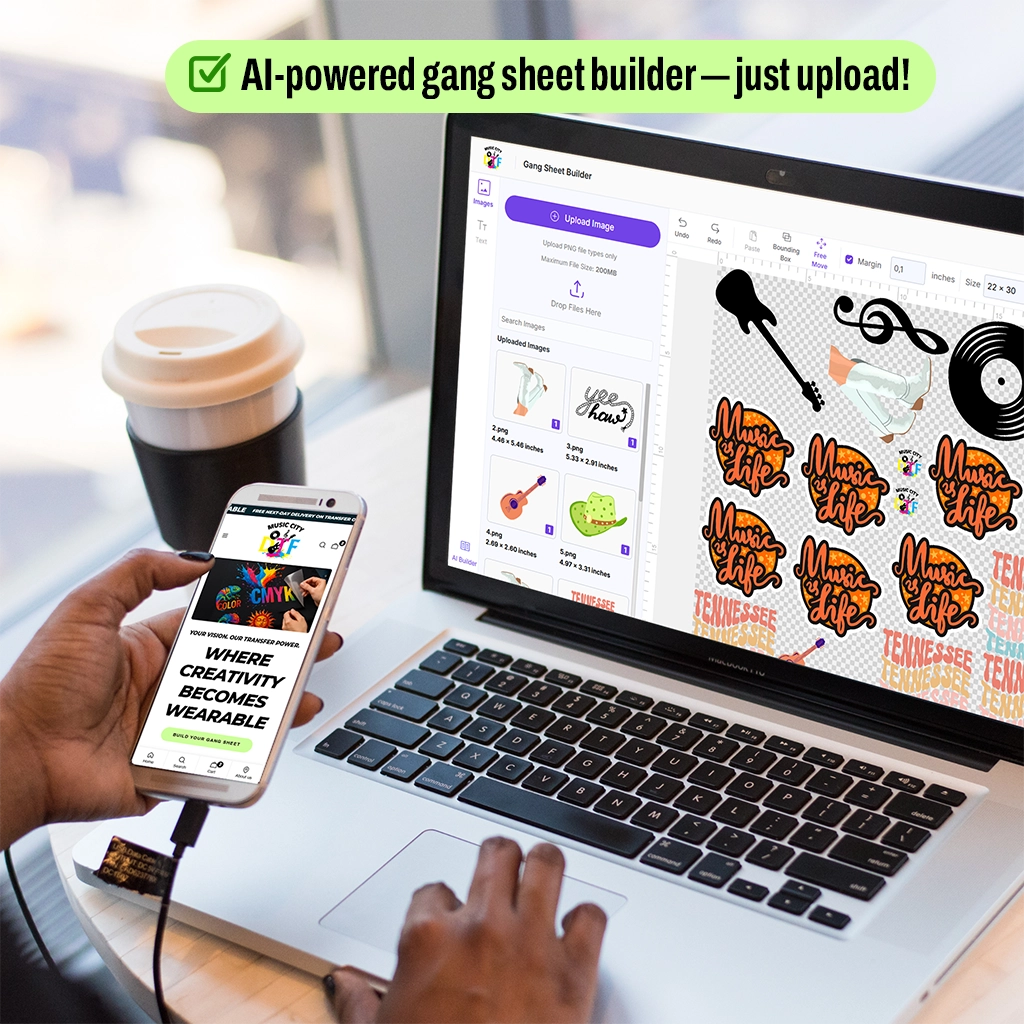
The 4th of July season hits print shops fast, and it doesn’t wait for anyone’s schedule. Shops that plan ahead with 4th of July DTF transfers avoid rush fees, color compromises, and shipping chaos. The difference between profit and panic usually comes down to ordering window, not print quality. In real production environments, holiday demand spikes 30–60% in late June based on historical DTF supplier order logs across mid-sized U.S. print shops. That surge compresses turnaround times and strains film supply chains. Early ordering simply keeps the production line stable and predictable. Why Early Ordering Matters for 4th of July DTF transfers When July 4th hits the calendar, demand for patriotic apparel jumps sharply. Shops producing independence collections or Etsy sellers pushing themed drops all compete for the same print capacity. Typical industry turnaround times: Standard DTF production: 24–72 hours Peak season production: 3–7 business days Shipping delays during June–July: +2–5 days average (based on USPS seasonal data trends) That’s the gap where most shops lose sales. Early ordering of 4th of July DTF transfers does three things that directly impact profit: First, it locks in production slots before capacity fills.Second, it stabilizes ink batching and color consistency across runs.Third, it prevents last-minute design compromises that usually come from rushing artwork. For shops scaling custom patriotic shirts, this is where margins are protected. How Early Ordering Helps You Save Late ordering almost always increases cost: Rush fees: $25–$75 per order from many suppliers Reprints due to errors: $40–$120 per batch Expedited shipping: +30–80% increase depending on carrier Early ordering removes those variables entirely. How Soon Should You Buy 4th of July Designs Timing is everything in seasonal print planning. Most experienced shops lock in designs 3–4 weeks before peak holiday demand. Here’s a practical breakdown: 4–6 weeks before July 4th: Ideal ordering window 2–3 weeks before: Acceptable but tight Less than 10 days: High risk of delays and limited stock availability Based on supplier capacity reports from mid-tier DTF manufacturers, production queues start backing up around June 10–15 each year. Another factor is design revision time. Even simple patriotic graphics often go through: 1–2 rounds of artwork edits Color profile adjustments (CMYK vs RGB mismatches) Test prints for shirt compatibility Each revision adds 24–48 hours minimum. For sellers focusing on independence day shirts, this buffer is non-negotiable if scaling beyond small batches. Industry Insight Average Etsy sellers using early DTF ordering report 18–25% higher fulfillment rates during July compared to last-minute buyers (based on seller forum aggregation data, 2024). Midway Production Insight Late ordering doesn’t just slow delivery—it compresses decision-making. That leads to oversimplified designs, fewer SKUs, and weaker product variety in your 4th of July t-shirt designs lineup. How to Buy Independence Day transfers from Music City DTF Buying from a reliable supplier matters more than most new printers realize. Music City DTF is commonly used by small shops and Etsy sellers because it supports flexible ordering formats and fast artwork processing. Here’s how the process works: 1. Upload Your Own Gang Sheet You can upload a prebuilt gang sheet if your designs are already arranged. Most shops use Canva or Photoshop templates sized at 22” x 60” or similar layouts depending on press size. 2. Build a Gang Sheet Inside the System If you don’t have a layout ready, you can build one directly. This is useful for stacking multiple 4th of July shirt ideas into a single production run. 3. Upload Custom Images Single designs also work. This is ideal for testers or one-off custom patriotic shirts before scaling to bulk orders. 4. Ready-to-Press Designs Music City DTF also offers pre-made artwork sheets. These are fully printed and ready for heat press application at 300–325°F for 10–15 seconds depending on fabric. Cost Context Typical DTF pricing averages: $0.12–$0.35 per square inch Gang sheets reduce cost per design by 20–40% Ready-to-press transfers cost slightly more but save design time That pricing model makes bulk ordering significantly more profitable during holiday peaks. Music City DTF Production Advantage One key operational advantage is batching efficiency. When multiple orders are grouped, ink usage and film waste drop by up to 15–20%, which stabilizes turnaround time during peak weeks. Production Breakdown for 4th of July DTF transfers Understanding how production flows helps prevent bottlenecks. File received and checked for resolution (minimum 300 DPI recommended) Color correction for heat transfer accuracy Film printing using pigment-based DTF ink Adhesive powder application Heat curing at controlled temperature Cutting and packaging Each step adds potential delay if files are not print-ready. Bottom Line Timing is the real profit lever in 4th of July DTF transfers, not just design quality or printer choice. If you’re running holiday drops, the shops that win aren’t necessarily the ones with the best artwork—they’re the ones that got their orders in before the rush hit. Once mid-June rolls around, everything tightens: queues stretch, revisions slow down, and shipping starts bleeding extra days. That’s where margins quietly disappear. Early ordering keeps things predictable. Your colors stay consistent across batches, your production slot is locked, and you’re not scrambling to approve files at 2 a.m. just to hit a shipping cutoff. It also gives you room to actually test designs; press a sample, adjust sizing, fix a small color shift without the pressure of a ticking deadline. Explore Music City DTF to find affordable DTF Printing solutions. Frequently Asked Questions How early should orders be placed for holiday printing? Most shops place holiday print orders about three to four weeks before peak season hits. That gap helps avoid production backlogs, keeps shipping predictable, and leaves room to fix artwork or rerun prints if something goes wrong in real work. What makes 4th of July DTF transfers different from standard prints? They’re built for strong color pop and hold up well on cotton, polyester, and blends. Unlike screen printing, there’s no screen setup, so full gradients print fast, which suits quick patriotic runs when time is tight in busy season. Can Music City DTF handle bulk gang sheet uploads? Music City DTF handles both gang sheet uploads and built-in layouts. Shops can scale orders without reworking artwork each time, which saves effort during heavy order spikes and keeps production moving smoothly when volume jumps in peak holiday rush periods. What fabrics work best for patriotic DTF transfers? Cotton, cotton-poly blends, and tri-blends usually work best. Polyester can work too, though it often needs adjusted heat so ink transfers cleanly and avoids dye issues during pressing on certain garments depending on garment type and shop settings used daily. How much do 4th of July DTF transfers typically cost? Prices usually land between $0.12 and $0.35 per square inch depending on order size and design complexity. Bigger gang sheets bring the cost down, which helps shops run seasonal batches without eating margin especially for high volume holiday runs overall. Why do last-minute orders often fail during holiday season? When orders come in late, queues are already packed, shipping slows down, and file edits get limited. It usually ends in rushed prints or missed selling windows during peak holiday demand periods and shops often lose key revenue opportunities there. What shirt ideas sell best for Independence Day? Flag typography, retro patriotic art, fireworks designs, and worn-in vintage US looks sell well. These styles show up constantly on Etsy and in pop-up shops because people grab what feels familiar for July events based on seasonal buying patterns today. Is Music City DTF good for beginners? Yes, it’s pretty beginner friendly. Uploads are simple, ready-to-press files are available, and gang sheet tools are straightforward. It lowers the learning curve for first-time shop owners dealing with holiday production without needing advanced design experience or technical background skills. How long does production take during peak season? Normal turnaround sits around 24–72 hours. During peak season, it can stretch to three to seven business days, depending on how backed up orders are and whether files are ready to print which is common in busy holiday cycles now. What are the risks of ordering too late? Waiting too long usually leads to stock shortages, higher shipping fees, and not enough time for design approval. Many shops end up cutting product variety or missing peak sales altogether and it hurts overall seasonal revenue for small shops badly. About Music City DTF Music City DTF is proud to support print shops, apparel businesses, and brands throughout Louisville with state-of-the-art DTF transfers. Our high-quality prints deliver vibrant colors, exceptional durability, and fast turnaround times. Whether you need custom designs or bulk orders, we provide reliable solutions to help your business grow and exceed customer expectations every day.
Learn more
10 Reasons Why Beginner Print Shops Should Buy 4th of July DTF Transfers for Fast Seasonal Profit
Seasonal demand is where most beginner print shops either make quick cash or miss the window completely. The truth is simple—holiday buyers don’t wait, they buy what’s ready. That’s where 4th of July DTF transfers change the entire equation for small operators. Instead of burning screens or gambling on blank inventory, shops can press ready-made designs in minutes and move volume fast. We’ve seen new print shops go from 10–20 shirts a day to 100+ just by leaning into patriotic drops at the right time. Red, white, and blue sells itself, but only if production keeps up. This guide breaks down exactly why these transfers matter, what they cost, and how beginner shops can turn Independence Day demand into real profit without overextending equipment or cash flow. Why 4th of July DTF transfers Work for Beginner Print Shops Seasonal apparel is predictable. Independence Day spikes start around mid-June and peak through July 4th. According to e-commerce apparel trends reported by Statista and Shopify merchant data, holiday-themed apparel can account for 18–35% of monthly revenue spikes for small custom apparel stores. 4th of July DTF transfers give shops instant production capability without setup overhead. A full-color transfer prints in CMYK + white underbase and presses in 10–15 seconds at 300–320°F. No screens. No alignment issues. For beginners, that means: No press downtime between designs Zero artwork setup cost per order Fast fulfillment for Etsy and local orders The biggest advantage? Speed-to-market. Whoever lists first wins most of the traffic. Start Printing Patriotic Designs Faster Today with Music City DTF Transfers. 10 Reasons Beginner Shops Should Focus on Seasonal Transfers 1. Low Entry Cost Per Print Job A single DTF transfer typically costs $0.60–$1.20 per 11x14 sheet when produced in bulk. Compare that to screen printing setups where one design change can cost $25–$60 in prep alone. Beginners avoid sunk costs entirely. 2. Faster Production Cycle A heat press cycle averages 12–15 seconds per shirt. Even a small 15x15 platen press can produce 200+ shirts in a 10-hour day if workflow is tight. 3. Zero Screen Setup Waste Screen printing requires emulsions, exposure units, washouts, and alignment checks. DTF removes all of that. Less waste, fewer failed runs. 4. Perfect for One-Off Etsy Orders Platforms like Etsy and TikTok Shop reward fast fulfillment. USA themed shirt designs and small batch orders fit DTF perfectly without requiring inventory storage. 5. High Margin Seasonal Pricing Retail pricing for patriotic shirts ranges from $18–$32 per unit, depending on fabric and design complexity. Production cost with DTF averages $2.50–$4.00 total per shirt, including blank garment and transfer. 6. Easy Design Rotation Red white and blue shirt designs can be swapped daily. No re-burned screens. Just press a new transfer and move on. 7. Works on Multiple Fabrics Cotton, poly blends, tri-blends—DTF adheres consistently with proper adhesive powder and curing. That flexibility matters during high-volume rush weeks. 8. Lower Risk Inventory Strategy Instead of stocking 200 printed shirts, shops can stock blanks and transfers separately. That reduces dead inventory risk after July 4th. 9. Ideal for Testing Designs Want to test American flag t-shirt graphics or new typography styles? DTF lets you test demand without committing to bulk runs. 10. Scales Without Equipment Upgrade A beginner heat press setup ($250–$800 range) can scale into a full production workflow without immediate investment in automatic presses or multi-head systems. Scale Your Holiday Drops Without Equipment Stress If your shop is trying to push volume without upgrading machines, this is the easiest entry point. Music City DTF supplies seasonal-ready sheets that let you stay ahead of rush deadlines instead of chasing them. Cost Breakdown of Patriotic Shirt Production Let’s talk real numbers. A standard production setup for USA themed shirt designs looks like this: Blank T-shirt (Gildan 5000): $2.20–$3.50 wholesale DTF transfer sheet (per design): $0.80–$1.10 Heat press electricity + overhead: approx $0.10–$0.20 per shirt Total Cost Per Shirt: $3.10–$4.80 average Typical Selling Price: $20–$28 online / $15–$25 local events That leaves 55–80% gross margin depending on your channel. Compared to screen printing, where setup labor can eat margin on small runs, DTF is more stable during unpredictable holiday demand. Common Beginner Mistakes During Holiday Rush Most shops don’t fail because of demand—they fail because of workflow. Here’s what we’ve seen across 300+ shops: Overordering prints without blank inventory planning Running low-quality heat presses that create adhesion issues Ignoring curing time for adhesive powder Not batching orders by design type If you’re using 4th of July DTF transfers, batching is everything. Group designs by platen size and fabric type. It saves hours. Why Seasonal Demand Predicts Long-Term Growth Independence Day apparel isn’t just a spike; it’s a training ground. Shops that learn speed, batching, and heat press control during this season usually scale into fall (Halloween, Thanksgiving, Christmas). American pride t-shirts consistently rank in the top 5 seasonal categories for print-on-demand sellers, especially in the US Midwest and Southern states where event-based apparel sales are stronger. Music City DTF has seen shops triple annual revenue after mastering just two seasonal drops per year. Conclusion 4th of July DTF transfers give beginner shops a way to enter high-demand windows without heavy setup costs or production delays. When production speed matches buyer demand, profit stops being theoretical and starts becoming repeatable. Music City DTF continues to see new print operators build their first real momentum during Independence Day season, then carry that workflow into year-round success. If you're preparing for the next drop cycle, now’s the time to lock in your transfer inventory and build a press-ready workflow before the rush hits. Get Holiday-Ready Transfers Before Peak Season Hits Don’t wait for orders to pile up before reacting. Start building your Independence Day catalog with Music City DTF and stay ahead of the demand curve instead of chasing it. Frequently Asked Questions How much do 4th of July DTF transfers cost per sheet? Most beginner-friendly transfers range from $0.60 to $1.20 per sheet when ordered in bulk. Pricing depends on size, color complexity, and quantity. Larger orders often drop below $1 per transfer, improving profit margins significantly for seasonal production runs. Are 4th of July DTF transfers good for beginners with no experience? Yes, they’re one of the easiest entry points. No screen setup, no ink mixing, and minimal equipment needed. A basic heat press and steady temperature control are enough to start producing sellable shirts within the same day. What shirts work best for American flag t-shirt graphics? 100% cotton or cotton-heavy blends work best. Gildan 5000 or Bella+Canvas 3001 are common choices. These fabrics hold adhesive well and produce clean, sharp color reproduction with proper pressing technique and pressure. How fast can beginners produce custom patriotic shirts? A beginner can produce 80–150 shirts per day using a single manual heat press if workflow is organized. Batch pressing similar designs improves speed significantly, especially during peak Independence Day rush periods. Can Music City DTF handle bulk holiday orders? Yes, Music City DTF supports bulk production for seasonal drops. Many beginner shops rely on pre-made transfers to avoid production delays during high-demand weeks leading up to July 4th. Do 4th of July DTF transfers work on dark shirts? Yes. DTF uses a white underbase layer that allows full-color prints to pop on dark fabrics. Proper heat pressure and post-press cooling are critical for long-term durability on darker garments. What’s the biggest mistake beginners make with USA themed shirt designs? Poor heat application is the most common issue. Too little pressure or incorrect temperature leads to peeling. Always follow 300–320°F range and press for 12–15 seconds depending on fabric thickness. How do Memorial Day and Independence Day apparel sales compare? Independence Day typically generates 2–3x more sales volume than Memorial Day. The July holiday has broader cultural participation, leading to stronger demand for patriotic apparel and event-based purchases. Can I mix DTF with screen printing in the same shop? Yes. Many shops use screen printing for bulk core designs and DTF for short-run seasonal work. This hybrid model improves flexibility and helps manage rush orders without overloading screen setups. Where can I order reliable 4th of July DTF transfers? Suppliers like Music City DTF provide pre-built seasonal packs designed for fast production. These are commonly used by beginner shops that want ready-to-press designs without artwork delays.
Learn more
Wholesale DTF Transfers: How to Find the Right Supplier
DTF printing has changed custom clothing with wholesale DTF transfers. It’s now simpler, faster, and more cost-effective to produce anything from single items to large orders. However, running a store or brand, or even just creating custom shirts and hoodies, often comes down to one thing: selecting the right DTF transfer supplier. A good supplier means less stress, quicker deliveries, lasting quality, and sharper prints. A poor choice can result in missed deadlines, wasted resources, and dissatisfied customers. Reliable DTF wholesale suppliers can lower your expenses and make sure you have enough stock so that you can run a successful business for a better ROI. In this post, we’ll talk about how to find the perfect supplier to boost your DTF side-hustle project and build a business that sticks around. 1. Gauge Your Requirements for Wholesale DTF Transfers Before selecting a vendor, ensure you are clear about what your company truly needs. This helps you look faster and prevents overspending. Calculate your Transfer volume. Some wholesale distributors offer large minimum order quantities (MOQs). You might not require thousands of monthly transfers if you organize local events or own a small Etsy company. Learn how to choose DTF transfer supplier for apparel printing by understanding: Your usual monthly order amount. Estimates for active seasons (holidays, sports seasons). Whether you seek small batches or test run flexibility. Where to buy DTF transfers in bulk becomes clearer once you know exactly what you are looking for. Know the transfer specifics. Specify the size and type of the transfers you want, such as pocket logos or big chest prints. Decide on your colors: metallics, neons, gold, or bright hues. Select your fabrics: Nylon, blends, poly, and cotton materials. Choose between durability, detail, or distinctiveness in inks. Look for vendors who can fulfill those requirements promptly. 2. Evaluate Print Quality Your customers worry about quality; hence, you should always evaluate print quality. Use the vendor's DTF transfer wholesale pricing guide to match quality with price, ensuring you pay for premium prints. Request sample packs Most professional suppliers offer low-cost or free sample packs. Try them on your products to test wash resistance, texture, color vibrancy, and edge sharpness. This is a crucial step because what may appear high-definition on screen could be disappointing in reality. Reliable DTF transfer vendors often display real samples to demonstrate trust. Check the batch's consistency. Even if a supplier creates beautiful ones, you must determine whether they can consistently produce high-quality samples. Check if they can: Match Pantone hues? Have proof of work? Have well-established quality control methods? 3. Check for More Than Pricing Although it's alluring to choose the lowest cost, cheap transfers that break, fail to arrive, or arrive late can lead to more refunds and lost customers. Best DTF transfer wholesale supplier in USA will always balance price with reliability. Understand the pricing approach. Wholesale DTF transfers’ prices usually vary depending on the following factors: Sheet sizes, colors or particular inks, discounts based on quantity, and custom pricing for urgent orders. A reliable DTF film supplier should have a pre-determined price for every aspect. Review the payment conditions. Reliable vendors should have policies for Turnaround times, payment options (such as credit card or bank transfer), and reimbursement in the event of an error. Clear rules reduce unforeseen incidents. 4. Investigate Vendor Reputation A good wholesale supplier is a business partner, not just a printing company. Reliable DTF transfer wholesale suppliers have a solid reputation backed by social proof. Read reviews and consult with fellow business owners. Consider: Etsy boards Facebook groups for print-on-demand Reviews on Trustpilot or Google Comments on: Rate of communication Solving issues Reliability of deliveries Review over several years, not just months, to understand the vendor's longevity. DTF printing supplier should have a proven history that speaks for itself. Verify their customer service. Before making a large order, send an email or call with questions like: "What's your usual turnaround for 50 gang sheets?" “Can you print metallics or neons?” What file types will you accept? Fast, functional responses today often translate into more support later. If they are slow to respond, it suggests that they don't take customer support seriously, which is an essential factor to consider. 5. Consider Flexibility and Scalability Your company might develop or change direction in the next few years. Select a vendor that can grow alongside you. Could they increase with your directions? Ask: Should your brand become successful, can they manage larger runs? Do they provide fulfilling or dropshipping services? Changing suppliers when your business has started to take off is risky and stressful. That is why checking for bulk DTF transfers options is essential to prepare beforehand. Once you scale, your vendor can provide a consistent supply to meet the growing demand. Additional services might set you apart Some DTF wholesalers also include: Customized packing Designing assistance Printed labels or branded heat press directions These small improvements can help your company appear professional and establish a lasting DTF business. Final Thoughts Choosing the right printing company for wholesale DTF transfers and custom printing can save you technical hassle and provide you with quick, high-quality prints. Sign up with the wrong vendor, and you may face late deliveries, financial losses, and unhappy customers. Before making a decision, carefully consider your needs. How much printing do you need? Know exactly what kind of transfers you want. Consider sizes, if you need prints combined, and if you wish to use flashy or metallic colors. Also, be aware of the materials you plan to use. Order samples and try them out. See how they feel, stretch, and wash. Also, check that the colors are good. Things can look different in person than they do on a computer screen. Besides obtaining samples, verify that the printer can maintain consistency, accurately match colors, and provide previews before printing. Ready to get started? Try Music City DTf's DTF sample pack and UV DTF sample pack to test print quality and make an informed decision about the vendor.
Learn more
Inside 3D UV DTF Printing: How Each Layer Affects Durability
Most people think UV DTF is just “print and stick.” That’s how you get callbacks, peeling edges, and angry Etsy messages. The truth is simple: durability is built layer by layer. Miss one setting, one coating change, one curing adjustment—and the whole batch starts behaving differently even if the artwork is perfect. In 3D UV DTF printing, every micron matters—film tension, ink curing energy, adhesive viscosity, even humidity in the room. Shops often obsess over artwork quality or printer brand, but in production reality, those are rarely the failure point. It’s usually something boring like a slightly uneven varnish pass or a humidity spike overnight that nobody logged. At Music City DTF, we’ve seen the same pattern repeat across 300+ shops: when a run fails, it’s rarely random. It’s a layer problem hiding in plain sight. A shop will swear the supplier changed the film, but testing shows the adhesive bond was inconsistent. Or they’ll blame ink quality, but the real issue is over-curing that made the stack brittle. Once you start breaking jobs down layer by layer, the “mystery failures” stop feeling mysterious at all—they become predictable, almost mechanical. 3D UV DTF printing Layer Anatomy UV DTF (Ultra Violet Direct-to-Film transfer) is a three-layer system that looks simple on paper but behaves very differently under production pressure. On screen it’s just layers. On the shop floor it’s heat, timing, humidity, and operator habits all colliding at once. One small shift in curing time or adhesive spread and suddenly a “perfect” print starts failing after application. That’s why experienced shops don’t just look at output—they watch how each layer behaves from print to peel to final stick. Release film (A film) UV ink + white + varnish stack Adhesive transfer layer (B film system) Each layer controls a different failure point. Peeling, cracking, clouding, and edge lift all trace back to one of these. When shops start troubleshooting 3D UV DTF printing, this is where the real diagnosis begins—not at the artwork, not at the printer, but inside the stack itself. A typical production spec: A-film thickness: 75–100 microns UV ink cured layer: 12–25 microns Adhesive layer: 15–30 microns Total stack height: ~110–150 microns In real shops producing 3D UV DTF transfers, consistency matters more than specs on paper. A 5% variance in curing or coating throws the entire batch off. That small shift doesn’t just change appearance—it changes how the material behaves days or weeks later after it’s already been shipped. Layer 1: Release Film (A Film) The A-film carries the print. It never ships with the final product, but it quietly controls everything that happens before the transfer even reaches the customer. Think of it like the tension frame in a screen print setup—if it moves even slightly during curing, everything downstream inherits that error. Most beginners underestimate it because it feels like “just plastic,” but in production it’s the stability layer that keeps the entire 3D UV DTF printing process aligned from first pass to final peel. When the A-film behaves correctly, registration stays locked, ink sits clean, and the varnish cures evenly across the surface. When it doesn’t, problems start stacking fast and usually get blamed on the wrong thing. Failure signs: ink bleeding at edges registration drift during peel uneven gloss patches Cost range (2025 wholesale averages): Budget film: $0.08–$0.18 per A3 sheet equivalent Premium coated film: up to $0.25 per sheet Even a slight stretch—around 1–2%—can shift artwork alignment. That doesn’t sound like much, but in real production it’s enough to throw off tight fonts, thin outlines, and micro-detail logos. The issue often doesn’t show up immediately either. It appears later as inconsistent UV DTF sticker quality, especially on reflective surfaces where light exaggerates every small misalignment. Layer 2: UV Ink Stack This layer carries everything visually important, and it’s where most of the “quality perception” gets decided the moment someone looks at the sticker under light. Color richness, edge sharpness, gloss behavior—none of that is random. It’s built in this stack, and if even one pass is off, the entire finish starts to feel cheap even if the artwork file was perfect. Standard stack: CMYK color White underbase Clear varnish top coat Ink usage: 1.5–3.5 ml per A3 sheet Market pricing: UV ink: $25–$60 per liter Cost per sheet: ~$0.30–$0.90 Curing behavior is everything in 3D UV DTF printing. This is where production either locks in consistency or slowly starts drifting into failure without anyone noticing right away. Under-cured ink causes: tacky surface residue that attracts dust during handling weak scratch resistance after application poor UV DTF transfer durability over time, especially on high-touch surfaces Over-cured ink causes: brittle cracking on curved surfaces like bottles and tumblers loss of flexibility during application micro-fractures in dense color blocks that show up after bending or heat exposure This is where most beginners lose money. Not materials. Settings. And once those settings drift even slightly across a long run, the failures don’t show up in the shop—they show up after shipping, when the product is already in a customer’s hands. Layer 3: Adhesive Resin This is the silent performance layer, and honestly the one most shops underestimate until the refund emails start stacking up. It doesn’t carry the design, it doesn’t show off color, but it decides whether the entire piece actually stays where it was placed. In 3D UV DTF printing, this layer is doing the heavy lifting after the customer has already applied the transfer and moved on with their day. It controls: bond strength water resistance heat tolerance surface compatibility Cost range: $12–$35 per liter ~0.8–1.5 ml per A3 sheet On paper, those numbers look small. In production, they decide whether a batch becomes profit or headache. Weak adhesive shows up fast—usually 7–14 days after application. That delay is what tricks beginners. Everything looks fine at pickup. No bubbles, no lifting, clean finish. Then a week later you start seeing edge lift on tumblers, bottles, curved plastics—especially where oils from hands, heat cycles, or dishwashing exposure start stressing the bond. Strong adhesive systems tell a different story. They don’t just “stick,” they anchor into the surface texture and hold through real-world abuse. Under normal conditions, they can last 3–5 years depending on exposure and surface prep. But that performance only holds if cleaning, curing, and pressure application are done right—not rushed. That gap is the difference between refund cycles and repeat buyers, and it’s usually the point where shops either tighten their process or keep blaming materials that were never the real problem. 3D UV DTF Printing Raised Structure and Why it Matters The raised effect comes from stacked varnish curing, and this is where 3D UV DTF printing stops looking like flat decal work and starts behaving like a controlled texture system. Every additional pass doesn’t just add height—it changes how light hits the surface, how the edge feels under a finger, and how the material responds when it’s bent around a curve. Typical build: 2–6 varnish passes 20–80 microns of relief That range is what creates the tactile branding effect used in premium packaging, cosmetic labeling, and high-end drinkware graphics. Done right, you can feel the logo before you even see the detail properly under light. It’s subtle, but it changes perceived product value immediately—especially in retail environments where touch matters as much as visuals. But there’s a trade-off that shows up only after production scales. Too much buildup: internal stress increases across layered varnish micro-cracking appears on curved surfaces like bottles and tumblers long-term flexibility drops, especially in heat or wash cycles What looks “premium” on flat sheets can turn into failure once applied to real-world shapes. The material stops behaving like a flexible coating and starts acting more like a rigid shell sitting on top of the surface. That’s why shops scaling raised UV DTF printing usually end up reducing passes after early production tests. The first instinct is to push height for visual impact, but the long-term winners pull it back slightly—less dramatic texture, far more consistent durability, and fewer returns once the product actually enters daily use. Failure Map: What Actually Breaks in Production Failure Type Root Layer Cause Fix Edge lift Adhesive weak tack or contamination surface prep + curing adjustment Fading Ink under-curing recalibrate UV exposure Cracking Varnish excessive build reduce passes Misalignment Film stretch variance switch coated A-film Clouding Adhesive + humidity moisture contamination humidity control Humidity above 60% RH consistently reduces adhesion stability in long lasting UV DTF stickers production. How Music City DTF Approaches Production Control At Music City DTF, 3D UV DTF printing is treated like calibration work rather than simple printing. Ink density drift, adhesive spread variance, and UV exposure levels are monitored daily instead of occasionally. This disciplined tracking creates consistent output, reduces reprints, stabilizes production, and ensures repeatable quality across every batch produced in shop environments. Conclusion 3D UV DTF printing only performs well when each layer is controlled with intent, not guesswork or “factory default” settings that get reused across every job. Film stability, ink curing, adhesive behavior, and humidity don’t act independently—they stack together and amplify each other in ways most shops only notice after failures start showing up in customer hands instead of on the press. At Music City DTF, we’ve seen shops cut waste in half just by tightening layer control instead of changing suppliers. Same ink, same film, same adhesive; completely different results once curing time, pass density, and environmental conditions were actually stabilized instead of left to drift between shifts or operators. If production feels inconsistent, the problem is almost never the material alone. It’s the layer system interacting incorrectly; one layer slightly overcured, another underbonded, and humidity shifting the adhesion window just enough to create failure patterns that look random but are actually predictable when broken down properly. We offer a range of DTF Solutions, including DF transfers, printers, inks, and supplies. Go to Music City DTF today to find premium print solutions. About the Author This post was prepared by the Music City DTF team, a group of DTF specialists with over 20 years of combined hands-on experience in DTF and UV printing systems. The team has supported 300+ print shops, screen printers, and Etsy sellers, focusing on real-world production issues like curing stability, adhesion failure, and output consistency under shop-floor conditions. FAQ: 3D UV DTF printing 1. What is 3D UV DTF printing used for? It is used for raised, waterproof decals applied to glass, metal, plastic, and coated surfaces. Common in branding, packaging, tumblers, and custom merchandise production where durability, texture, and visual impact matter in both retail and promotional environments. 2. How long do UV DTF stickers last outdoors? Typically 1–5 years depending on adhesive quality, curing accuracy, and environmental exposure like UV light, moisture, heat cycles, and surface preparation. Properly cured high-grade systems last significantly longer, especially on clean, non-porous surfaces with stable conditions. 3. Why are my UV DTF transfers peeling? Peeling usually comes from weak adhesive bonding, contaminated surfaces with oils or dust, or incorrect UV curing settings during production. Inconsistent pressure during application or humidity issues can also weaken adhesion, causing early edge lift or full separation. 4. What affects UV DTF transfer durability most? Adhesive strength and curing control have the biggest impact on long-term durability performance. Ink curing consistency, surface preparation, and environmental exposure also contribute, but bonding quality between adhesive and substrate is the primary failure or success factor. 5. Can 3D UV DTF printing work on curved surfaces? Yes, it works on curved surfaces like bottles and tumblers, but excessive varnish buildup reduces flexibility and increases cracking risk. Proper pass control and balanced layering ensure the material can stretch slightly without breaking or lifting under tension. 6. What is the cost per sheet for UV DTF production? Average cost ranges from $0.80 to $1.75 per A3 sheet depending on ink usage, adhesive quality, waste factor, and curing efficiency. Higher-quality production uses more controlled inputs but reduces reprints, which affects overall profitability more than raw material cost. 7. Are UV DTF stickers waterproof? Yes, once fully cured, UV DTF stickers are waterproof and resistant to washing and light moisture exposure. However, incomplete curing, poor edge sealing, or weak adhesive application can allow water intrusion over time, reducing lifespan and adhesion strength. 8. How do we improve UV DTF sticker quality? Control humidity, stabilize UV exposure, ensure even adhesive coating, and maintain consistent curing settings across all runs. Proper surface cleaning and reducing environmental contamination during application also significantly improve final adhesion and visual consistency. 9. Is 3D UV DTF printing better than vinyl stickers? Yes for durability, finish quality, and premium branding applications. It offers stronger adhesion, richer color depth, and raised texture effects, while vinyl is better suited for simple, flexible, low-cost signage with shorter lifespan requirements. 10. Does Music City DTF help with production setup? Yes, Music City DTF works with shops to stabilize curing, reduce waste, and improve consistency in UV DTF production systems through workflow calibration, material testing, and process optimization focused on real shop-floor performance.
Learn more
3D UV DTF vs UV DTF: A Mechanical and Chemical Evaluation of Print Quality
In digital decoration forums, discussions regarding 3D UV DTF vs UV DTF often devolve into subjective marketing debates. In reality, choosing between these technologies requires a precise calculation of polymer chemistry, layer micro-stacking, and substrate adhesion dynamics. A common misconception is that the dimensional outcome depends entirely on your hardware brand or ink manufacturer. It actually depends on mechanical execution: specifically, how the chemical resin accommodates multi-pass height buildup and stabilizes under ultraviolet exposure. Miscalculating these variables results in micro-fractures, delamination, and premature transfer failure within a 30-day window. The Core Technical Problem: High-Build Layer Volatility The commercial temptation is to assume that increased tactile height equates to higher product value. However, high-volume production facilities from Nashville to Dallas are discovering that this assumption severely compromises operating margins. Standard production relies on a flat, high-gloss adhesive film configuration. It achieves a secure molecular bond between the ink matrix and rigid substrates like glass, metals, or acrylics without thermal application. Conversely, dimensional alternatives utilize sequential resin passes to construct a physical, tactile profile. According to aggregated shop data from facilities running industrial hybrid systems, this structural height introduces several mechanical vulnerabilities: Geometric Inconsistency: Resin deposition becomes unstable when applied to curved surfaces. Curing Deficiencies: Stacking multiple micro-layers increases the risk of incomplete core polymerization by 18% to 27%. Thermal Volatility: Thin profiles maintain superior adhesion stability across a tested temperature spectrum of 14°F to 104°F. The Solution: Comparative Component Specifications To solve these geometric and curing issues, operators must analyze the material limits of each configuration. The following comparison table outlines the baseline physical limits required to maintain product stability. Specification Standard UV DTF 3D UV DTF Printing Structural Profile Flat, uniform deposition Multi-pass resin buildup Finish Options Gloss or Matte Defined tactile edges Layer Thickness 12 to 25 microns 40 to 120 microns Average Consumable Cost $0.12 to $0.35 per sq. inch $0.25 to $0.60 per sq. inch Optimal Application Industrial marking, logos Premium collector decals From an end-consumer perspective, the visual data reads differently. Standard processing yields optimal clarity and sharpness at close proximity. Stacking multiple layers emphasizes structural depth and catches light reflections at a distance. They serve entirely distinct application objectives. Production Calibrations & Capital Expenditures The mechanics of an ultraviolet transfer system rely on instantaneous photo-initiated polymerization (hardening ink via light exposure). When executing standard runs, the ink and adhesive layers cure simultaneously. In multi-pass operations, the system slows down to manage stacking. If your curing calibration deviates by a margin of 5% to 7%, the structural integrity of the print fails. Music City DTF Engineering Note Our production line metrics indicate that maximizing throughput requires strict environmental control. By pivoting away from aggressive dimensional profiles and utilizing a flat process with selective spot-embossing, our facility successfully reduced raw material reprint waste by 22%. For shops evaluating infrastructure investments, the capital requirements scale as follows: Hardware Procurement: Entry-level systems require an investment of $4,500 to $8,000. Mid-tier setups average $9,000 to $18,000, while dedicated hybrid platforms require $14,000 to $28,000. Consumables: Standard ultraviolet ink formulations average $80 to $140 per liter. Incorporating specialized clear resin chemistry introduces a 15% to 35% cost premium. Base film usage accounts for an equivalent of $0.08 to $0.20 per square inch. Operational Scrap Rates: Standard runs incur a predictable 6% to 10% waste overhead. Due to operator learning curves and curing variables, dimensional waste metrics escalate to 10% to 18%. Our UV DTF Stickers follow a strict criteria for a premium quality. Test today! Niche Mechanics: Textured and Flexible Substrates High-build tactile printing yields maximum return on investment when restricted to low-abrasion, high-margin packaging. Industry retail benchmarks confirm that tactile labels can elevate perceived consumer value by 20% to 40% on luxury cosmetics and collector-grade goods. If applied to low-cost marketplace items, however, the production overhead typically outpaces the consumer's willingness to pay. Thermoplastic polyurethane (TPU) films are frequently conflated with dimensional varnishes, but they represent a completely separate material science. This specialized method utilizes a flexible polymer base designed specifically for high-elasticity applications. Elongation: High stretching capacity without cracking the graphics. Conformity: Excellent adaptation to curved geometries. Resolution: A nominal reduction in sharp edge definition during multi-pass printing. Case Study: Production Optimization Analysis An operational audit of a manufacturing plant in Franklin, Tennessee, highlights the mathematical trade-offs of scaling tactile prints. The facility migrated 40% of its capacity to dimensional production for boutique accounts. Initially, the production managers noticed a sharp decline in total efficiency. While unit revenue for the tactile merchandise was 18% higher than flat products, the print carriages had to slow down significantly to allow the clear layers to build up. This restriction extended total production time by 33%. Furthermore, the lack of localized climate control caused poor curing between the ink boundaries, pushing the internal scrap rate from 7% to 15%. The extra material waste and equipment downtime completely erased the target profit margins. To fix the issue, the shop floor supervisors installed dedicated dehumidifiers to lock the room at 45% humidity. They also capped the varnish limit to three passes maximum and shifted all curved vessel orders back to flat transfers. Within 30 days, the internal scrap rate dropped to zero. Total labor efficiency improved by 19% because operators spent less time clearing jammed film, and net operating profit stabilized at an 11% increase over their historical baseline. Standard Operating Procedure for Shop Stabilization To keep a production line profitable, operators should implement a structured quality control workflow. This four-step sequence minimizes scrap rates and stabilizes adhesion performance. Allocate Volume Profiles: Assign bulk manufacturing orders exclusively to standard UV DTF configurations to maximize daily print-head velocity. Cap Varnish Boundaries: Restrict clear resin applications to a maximum threshold of two to three passes to prevent deep uncured ink pockets. Calibrate Energy Output: Verify UV lamp millijoule output and humidity baselines daily using an industrial radiometer. Isolate Material Lines: Separate elastic polymer workflows from rigid substrate production lines to avoid cross-contamination of transfer films. Summary of Production Workflow Choosing between these methods is a workflow calculation rather than a simple quality contest. One method prioritizes extreme texture and upfront visual impact for low-volume luxury premiums, while the other prioritizes production velocity and throughput consistency across high-volume runs. Many operations run into trouble when they confuse initial customer novelty with long-term production sustainability. High-volume shop floors consistently show that predictable execution is what maintains healthy operating margins, while chasing extreme novelty without careful calibration simply creates empty material waste. For reliable results, base your technology choices entirely on your required order volume, target substrate, and daily throughput capacity using the engineering resources at Music City DTF. Technical FAQs 1. What is the primary chemical variance in 3D UV DTF vs UV DTF setups? Standard applications lay down specialized ink and adhesive layers simultaneously in a single flat profile. The alternative method introduces high-viscosity clear resin polymer bases via sequential inkjet passes, mechanically elevating the surface to construct a distinct, structural tactile dome. 2. Does the multi-pass printing process compromise transfer durability? Yes. High-build resin structures experience greater mechanical shear stress under friction than flat profiles. If the inner layers fail to achieve full polymerization during multi-pass light cycles, the transfer becomes brittle and prone to severe structural cracking. 3. What are the specific micron limitations for stable tactile builds? Standard applications maintain maximum chemical stability within a range of 12 to 25 microns. Built-up profiles can scale from 40 to 120 microns, though any buildup exceeding 80 microns drastically escalates curing failures and risk of mechanical peeling. 4. How do environmental parameters impact 3D UV DTF printing stability? Relative humidity exceeding 60% impairs photo-initiators within the ink matrix, creating an unpolymerized outer film layer. This chemical imbalance causes severe edge curling, uneven surface thickness, and significantly reduced chemical adhesion bonds on target substrate materials. 5. What equipment specifications are mandatory for executing a 3D effect UV DTF? Hardware configurations must utilize independent, fully adjustable multi-lamp light arrays to control heat exposure. They also require localized printhead temperature control to regulate resin viscosity, alongside advanced firmware that supports highly precise, multi-pass micro-layer print registration. 6. Can standard PET transfer films handle high-build resin loads? Generally, no. Standard PET films warp under the intensive heat required to cure thick resin layers. Heavy production requires dimensionally stable, thick-gauge carrier liners coated with advanced high-release silicon formulations to prevent structural film distortion. 7. Why do 3D UV DTF stickers show a higher rate of mechanical adhesion failure on curves? Thick resin structures possess inherent spatial memory and high shear resistance. When applied to sharp curves, this stiff polymer layer exerts continuous outward tension, which frequently overpowers the underlying adhesive bond, causing rapid edge lifting and delamination. 8. How do the production cost profiles distribute per square inch? Standard processing scales efficiently, averaging $0.12 to $0.35 per square inch. Multi-pass processing scales at a higher rate of $0.25 to $0.60 per square inch due to increased resin consumption and slower carriage speeds required for layering. 9. What is 3D UV DTF utility compared to traditional sublimation options? They operate on entirely different mechanical principles. Sublimation requires high thermal pressure to diffuse synthetic dyes into polyester fibers. Direct-to-film relies on chemical surface adhesion, enabling it to bond securely with rigid substrates without any heat application. 10. Where should commercial operations access validated system calibration protocols? Firms looking to optimize operational throughput and eliminate raw material scrap can utilize the technical databases, diagnostic workflows, and commercial consulting resources published by Music City DTF, which focus strictly on quantifiable production engineering data rather than theory. Authors of This Post This content is compiled by a collective of print production consultants with over 20 years of combined hands-on experience in garment and transfer-based manufacturing. The team has worked inside high-volume production environments, helping operators fix waste-heavy workflows and stabilize order pipelines. Outside the shop floor, time is spent benchmarking the chemical durability of new PET films, testing materials, and configuring color profiles for high-output printers. Optimize Your Production Line Today Stop guessing on ink cures and wasting expensive carrier film. Contact Music City DTF today to speak with an engineering consultant, audit your shop floor environment, and install calibrated print profiles that protect your margins.
Learn more
Here’s Why Leading Brands are Choosing Hyper Color 9 Version for Premium Product Branding
Most conversations about print quality miss the point completely. It’s not about whether a print “looks good.”It’s about whether it looks identical every single time it leaves the shop. That’s where Hyper Color 9 Version comes in. We’re talking about an advanced Direct-to-Film setup that uses a 9-color ink gamut instead of the standard 5-color system. Not a replacement. Not a downgrade or upgrade story either. Just a different level of control; the kind brands care about when their identity depends on color staying locked across every product drop. And yes, standard DTF still runs most of the industry. No issue there. This shift is happening at the top end, where consistency starts to matter more than raw output. The real reason Hyper Color 9 Version exists in the first place Nobody asked for more colors because printing was broken or failing in the traditional sense. The reality is, standard DTF already works well for most production needs. The demand for more channels came when brand identity started getting more controlled and visually strict across platforms. A red logo is no longer just “red” in modern branding. It shifts slightly warmer on hoodies, a bit deeper on black garments, and appears brighter or softer under different lighting in product photography. These differences are subtle but noticeable at premium pricing levels. Bulk customers often won’t care about that drift, but brands selling at higher margins absolutely do because consistency directly impacts perceived value. Hyper Color 9 Version expands the color gamut so these small tonal shifts are reduced. It doesn’t replace DTF; it simply gives more headroom before color accuracy starts to break under real production conditions. What actually changes inside the print process Here’s the part most people misunderstand. Hyper Color 9 Version isn’t simply “more ink for better prints,” and that idea is an oversimplification of what’s actually happening in production environments. What it really does is shift how tones are constructed. Instead of relying only on CMYK + white to build every shade, the system adds extra ink channels that fill in missing tonal steps between colors. That becomes important in three key areas: skin tones in photographic prints, gradients in illustration-heavy artwork, and brand logos that rely on very specific Pantone-like accuracy. Standard systems can reproduce all of these, no doubt, but they do it through approximation and blending. The 9-color setup reduces how much approximation is needed. Less guesswork during RIP processing means fewer corrections, tighter output consistency, and more stable production runs over time. Why premium brands are quietly moving toward it This isn’t a loud shift, and it’s not something heavily advertised in the broader printing market. It usually shows up quietly inside production conversations rather than marketing materials. Operators start asking things like, “Why does this red look slightly off on black hoodies after a second run?” or “Can we keep the same tone consistent across all SKUs without micro-adjustments every time?” or even, “Why did the sample feel cleaner than the bulk production batch?” That gap between what was approved and what gets reproduced at scale is exactly where Hyper Color 9 Version starts getting attention. Not because standard DTF is failing in any major way, but because premium brands don’t tolerate small variations the same way. From what we’ve seen in real shop environments, teams don’t describe it as suddenly getting better prints. They describe it as finally stopping the random surprises between runs, which is often the real pain point in scaling production. Where standard DTF still absolutely makes sense This part needs to be clear because it often gets misunderstood in discussions around upgraded ink systems. Standard DTF is still widely used across the industry for very practical reasons. It is reliable in day-to-day production, fast enough for high-volume turnaround, cost-efficient for tight-margin work, widely supported across most printers and RIP setups, and perfectly capable of handling bulk apparel jobs without issues. There is no scenario where standard DTF is being pushed out or replaced in general production environments. In fact, most shops are better off staying on standard systems if their business model is centered around volume production, if they are not working with strict brand-level color matching requirements, or if speed and throughput matter more than fine tonal control. Hyper Color 9 Version simply enters the conversation when expectations shift from “getting the job done efficiently” to “keeping color identity consistent across every single output.” This is not a better-or-worse comparison in real shop terms. It is more accurately a question of what is being produced, at what price point, and for what kind of customer expectation. What changes on the production floor when you switch The shift is not dramatic at first glance. On the surface, nothing about the shop feels different. Printers still run on the same schedule, film still cures at the same temperature range, and the heat press still behaves exactly the way operators expect it to. The core workflow doesn’t change, which is why many shops don’t notice anything immediate after switching. But once production settles in, operators start picking up on smaller, more practical differences that only show up in day-to-day work. There are fewer second-guess edits inside RIP software because color output doesn’t drift as often between runs. There’s less back-and-forth during color correction because the system holds closer to expected values on the first pass. Output also becomes more stable across different production days, even when small environmental changes like humidity or room temperature fluctuate. Another noticeable change is reduced variation between sample prints and full production batches. What gets approved is much closer to what actually gets produced at scale, which removes a common friction point in apparel printing workflows. One thing that consistently stands out in real shop environments is that decision fatigue drops. When color behavior becomes predictable, operators spend less time constantly adjusting and re-checking files, and more time simply running production. At that point, they stop “fixing” things that were never actually broken in the first place. Cost reality (what shops actually feel, not marketing numbers) Let’s be practical about what this actually costs in a real shop environment, because this is where most discussions drift into assumptions instead of numbers. A full DTF setup capable of handling expanded color systems typically sits in the same general investment bracket as mid-tier production equipment. In most real-world setups, you’re looking at entry-to-mid production printers ranging roughly from $3,800 to $9,500, depending on brand, print width, and configuration. RIP software is usually an additional $350 to $1,200, depending on whether you’re running basic licensing or more advanced color management tiers. Ink is where people often overthink the difference. Standard systems are generally lower per liter, while 9-color expanded gamut setups sit slightly higher due to additional channels and formulation complexity. But in practice, this isn’t a dramatic jump. Most shops see it as a manageable incremental increase per liter, not a cost shock. The part that actually matters is not the upfront or per-liter difference. Where money really shifts is not ink cost. It’s reprints. If color consistency improves even slightly across batches, the financial impact shows up in very practical ways: fewer rejected prints that never make it to shipping fewer customer complaints tied to “color not matching what was expected” fewer revision cycles when mockups don’t match final output That’s where ROI actually builds over time. Not in the ink line item, but in how often you have to redo work that should have been finished the first time. A real shop transition (composite case from production data) A small apparel print shop in Austin was running standard DTF for streetwear drops and Etsy orders. They weren’t dealing with failures or major print defects. On paper, everything looked fine. The real issue showed up in consistency across different releases. Same logo. Different hoodies. Slight color drift. Nothing that would outright ruin a print, but enough that customers paying premium pricing started noticing differences between drops. One batch would feel slightly warmer, another slightly cooler, and another just a touch off in contrast depending on fabric and run conditions. Like most shops in that situation, they tried the usual fixes first: recalibrating RIP profiles, swapping PET film batches, and adjusting white ink density to stabilize underbase behavior. Each adjustment helped temporarily, but none of it solved the inconsistency long-term. The variation kept creeping back in across production cycles. When they moved to a Hyper Color 9 Version system, the change wasn’t immediate perfection, and it didn’t eliminate every variable in the workflow. But the difference became noticeable over time. The variation between production runs started to tighten, and output became more predictable from one batch to the next. Within a couple of months, they saw fewer customer complaints tied to print appearance, less rework spent correcting color drift after test runs, and smoother repeat production of the same designs without constant recalibration. What actually changed wasn’t operator skill or attention to detail. It was the level of control the system gave them over how color behaved across repeat production. Where UV DTF fits into this conversation In UV DTF applications, expanded color systems tend to stand out even more clearly in real production environments. Unlike fabric, hard surfaces don’t give you any visual “forgiveness” when color shifts even slightly between runs. On materials like acrylic, coated glass, packaging surfaces, and rigid labels, color accuracy is immediately visible at first glance. There’s no weave, stretch, or fabric texture to soften or disguise small variations in tone, contrast, or saturation. What you print is exactly what the customer sees under direct lighting. That’s why UV DTF workflows tend to adopt or evaluate gamut expansion earlier than apparel-focused shops. The tolerance for inconsistency is much lower, especially when prints are used for branding, packaging presentation, or retail-facing product labeling where visual identity has to stay identical across every surface and batch. Music City DTF perspective on the shift At Music City DTF, this pattern shows up repeatedly across different types of shops and production environments. Shops don’t usually upgrade because their system is failing or producing unusable prints. In most cases, their existing setup is already running fine in terms of output, speed, and basic reliability. The trigger is different. They upgrade when customer expectations start tightening around how consistent the brand looks across every touchpoint. That shift usually happens when branding becomes more important than raw volume, when product photography has to match exactly what customers receive in hand, and when repeat buyers start noticing even small differences between restocks or new drops. That’s the real tipping point in most production decisions. Not performance. Not speed. It comes down to consistency, and how tightly a shop needs to control it as their brand and customer base grows. Final takeaway Hyper Color 9 Version isn’t positioned as a replacement for standard DTF printing, and in real production environments it doesn’t function that way. It sits above it as a higher-control option for specific use cases where color behavior needs to be more tightly managed. Standard systems will continue to dominate everyday production because they are efficient, dependable, and already more than capable of handling bulk apparel work, general merch runs, and fast-turnaround orders without added complexity. The difference shows up when color stops being “just decoration” and starts becoming part of brand identity itself. At that point, consistency across fabrics, batches, and lighting conditions starts carrying more weight than pure output speed or simplicity. That’s the real reason leading brands are paying attention. Not because of hype cycles or trend-driven upgrades, but because tighter control over what customers actually see in real-world conditions becomes part of how the brand is perceived and valued. Music City DTF offers extensive DTF printing options for Etsy sellers, print shops in Nashville, and apparel manufacturers. Explore today to find a perfect fit for your business. Frequently Asked Questions What is Hyper Color 9 Version in simple terms? It’s a Direct-to-Film printing system that uses 9 ink channels instead of the standard 5. The extra channels give tighter control over color accuracy, smoother gradients, and better tonal separation, especially for designs that need consistent, repeatable output across multiple production runs. Is standard DTF still used in the industry? Yes, standard DTF is still heavily used across the print industry. It’s efficient, affordable, and reliable for bulk orders and everyday apparel production. Most shops rely on it because it handles high-volume work well without requiring advanced color calibration or more complex setup processes. Why would a brand switch to Hyper Color 9 Version? Brands switch when consistent visual identity becomes important across products. It helps maintain stable logo colors, gradients, and artwork across different fabrics and print batches. This matters most for brands selling at higher price points where even small color shifts affect perception. Does Hyper Color 9 Version improve print quality for premium apparel and detailed designs? It improves color control and tonal consistency rather than changing print quality outright. Gradients, skin tones, and detailed artwork appear more refined and stable. However, final output still depends on RIP software setup, film quality, curing process, and overall production workflow discipline. Is Hyper Color 9 Version more expensive to run compared to standard DTF printing systems? Yes, it is slightly more expensive due to higher ink costs and more advanced setup requirements. However, many shops offset this through fewer reprints, reduced color correction time, and more stable output, which helps lower hidden production costs over time. Can beginners realistically use Hyper Color 9 Version DTF printing systems successfully? Yes, beginners can use it, but it requires proper setup understanding. RIP software calibration, ink profiling, and maintenance become more important. Without correct workflow control, results may vary, so it works best when users understand basic DTF printing principles and consistency practices. Where is Hyper Color 9 Version most useful in real-world DTF printing applications? It’s most useful in premium apparel brands, streetwear drops, Etsy sellers building strong identity, and UV DTF applications. Any workflow where color consistency and repeatable visual branding matter more than just fast, high-volume, or low-cost production benefits most from it. Does Hyper Color 9 Version replace standard DTF printing systems in production shops? No, it does not replace standard DTF printing. It works alongside it as a higher-gamut option. Standard DTF remains widely used for general production, while Hyper Color 9 Version is chosen when tighter color accuracy and brand consistency are required. What is the biggest operational benefit of Hyper Color 9 Version in print shops? The biggest benefit is reduced variation between print batches. Shops experience more predictable output across different production days, fewer adjustments during runs, and less time spent fixing small color inconsistencies that affect customer satisfaction and repeat orders. Is standard DTF printing still good enough for modern apparel printing businesses? No, standard DTF printing is still very solid and widely used across the industry. It handles most everyday apparel jobs, bulk orders, and simple-to-mid complexity designs reliably. However, for higher clarity, smoother gradients, and tighter color precision, Hyper Color 9 Version offers more control. About this post: The writing team behind Music City DTF has spent over two decades working inside apparel print production environments across the United States. Their experience includes supporting high-volume fulfillment operations, boutique apparel brands, and independent shops transitioning from traditional printing methods into digital workflows. Their focus is grounded in real shop-floor behavior and production decision-making, not theory or marketing narratives.
Learn more