
Premium DTF Prints in Nashville – Custom Transfers, Apparel & More
At Music City DTF, we specialize in premium DTF prints in Nashville, offering top-quality custom DTF transfers, UV DTF gang sheets, and personalized apparel for individuals, brands, and businesses across Tennessee. Whether you're looking to design your own custom t-shirt, print heat transfer gang sheets, or create vibrant UV DTF stickers, our expert team delivers unmatched quality with fast turnaround. Proudly serving Nashville's apparel decorators, print shops, small businesses, and creatives, we make it easy to build your own DTF gang sheet, order DTF transfers online, and get ready-to-press prints that bring your designs to life. From custom shirts for events to wholesale DTF printing services, we’re Nashville’s trusted one-stop shop for all things DTF.



Collections
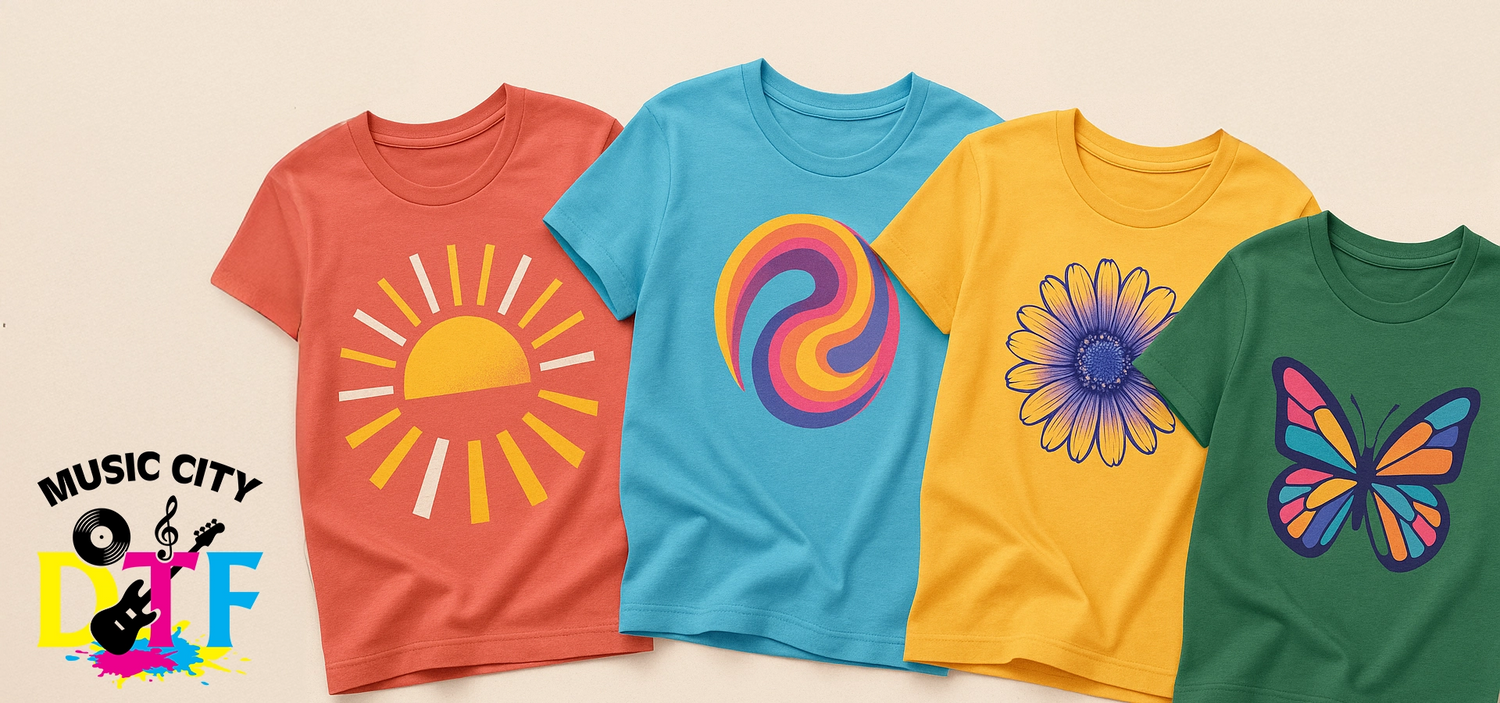
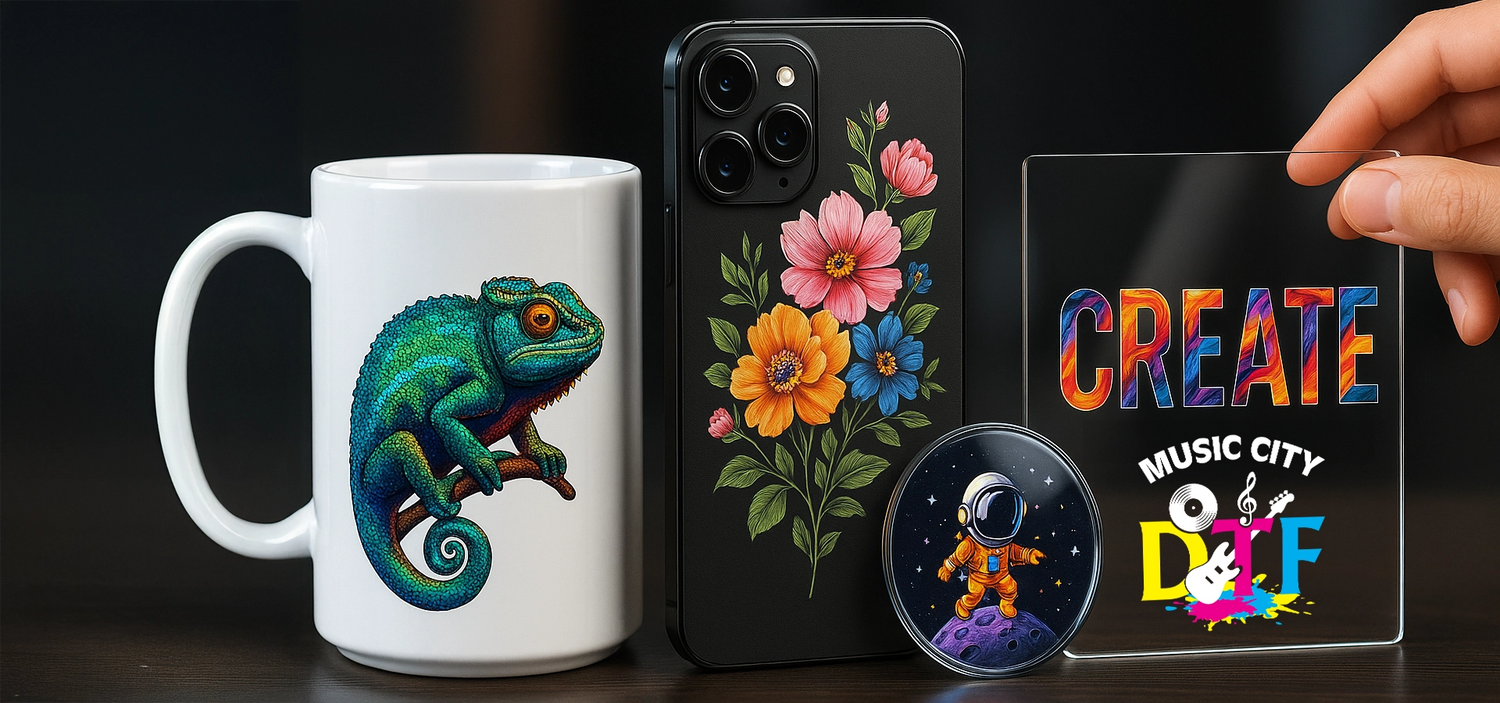
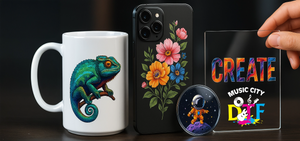
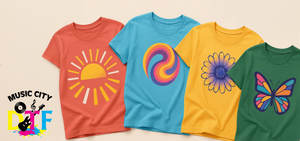
Explore our full range of high-quality transfers and custom apparel, including DTF, UV DTF, and unique custom shirts — perfect for personal projects or professional use.
Build Your Own Basket



Why Choose Us?
Same Day Shipping
Place your order before 2 PM and we’ll ship it out the same day to ensure fast delivery. Orders received after 2 PM will be processed the next business day.
Ultra Vivid Colors
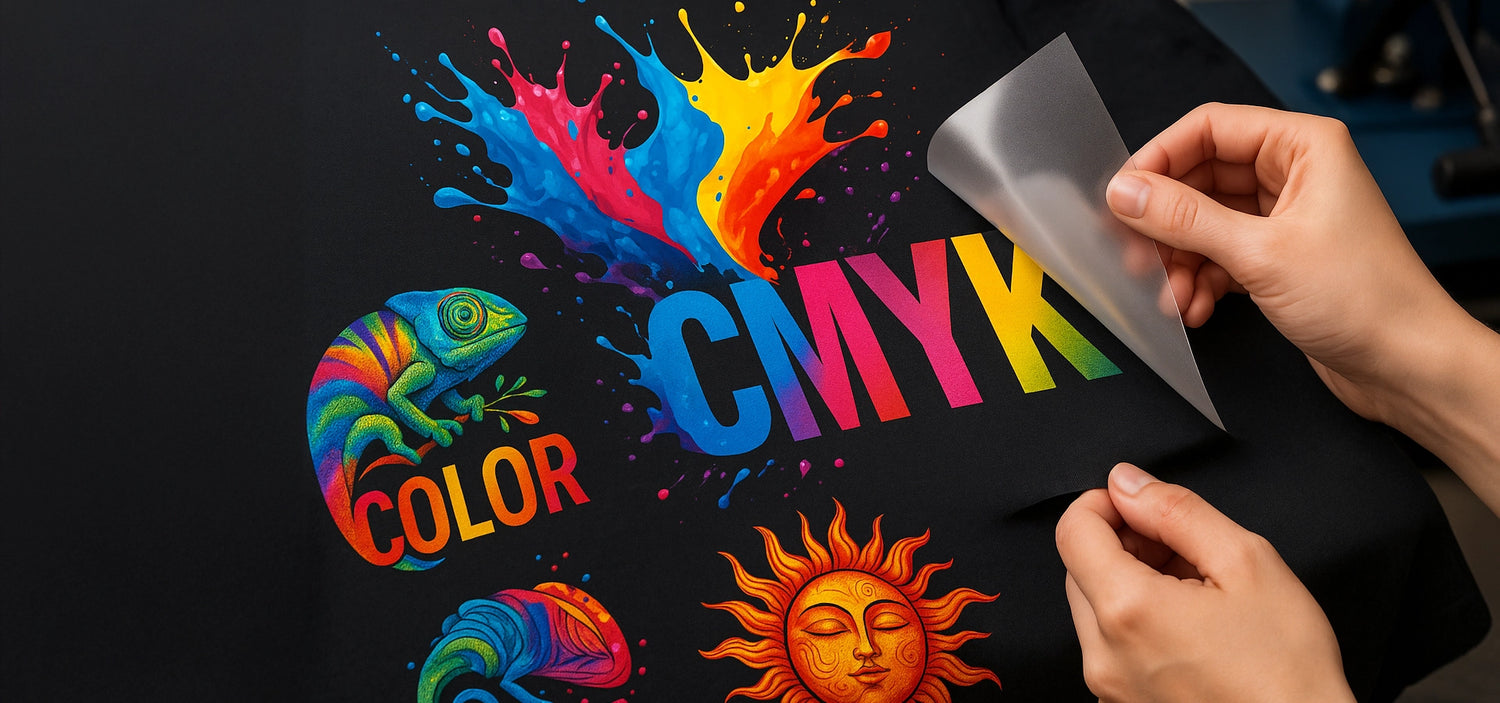
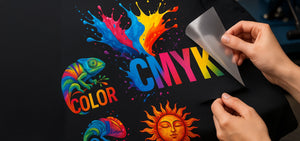
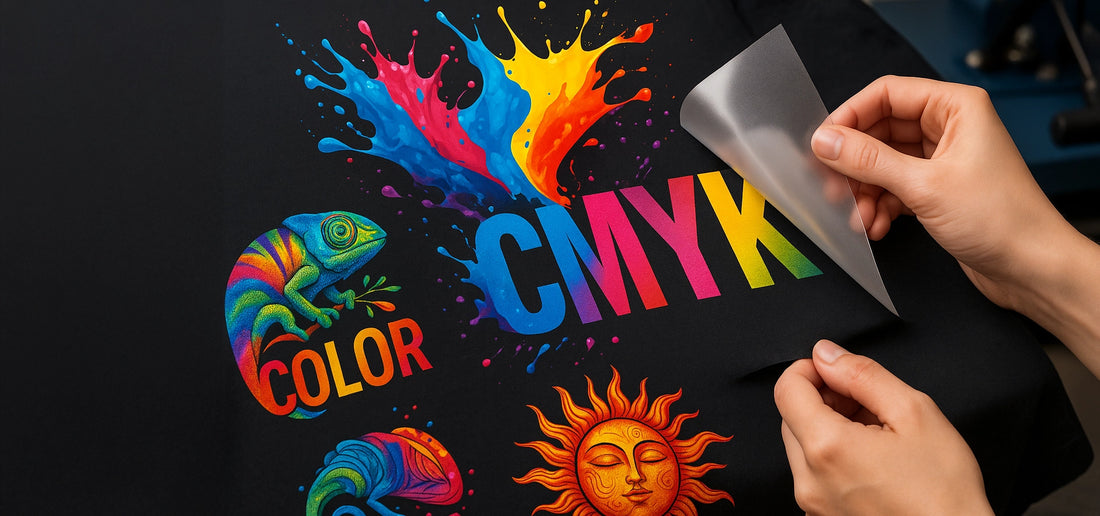
Printed with the highest level of CMYK technology for unmatched detail and vibrancy.
Customer-First Support
Fast, responsive service for all your questions and needs.
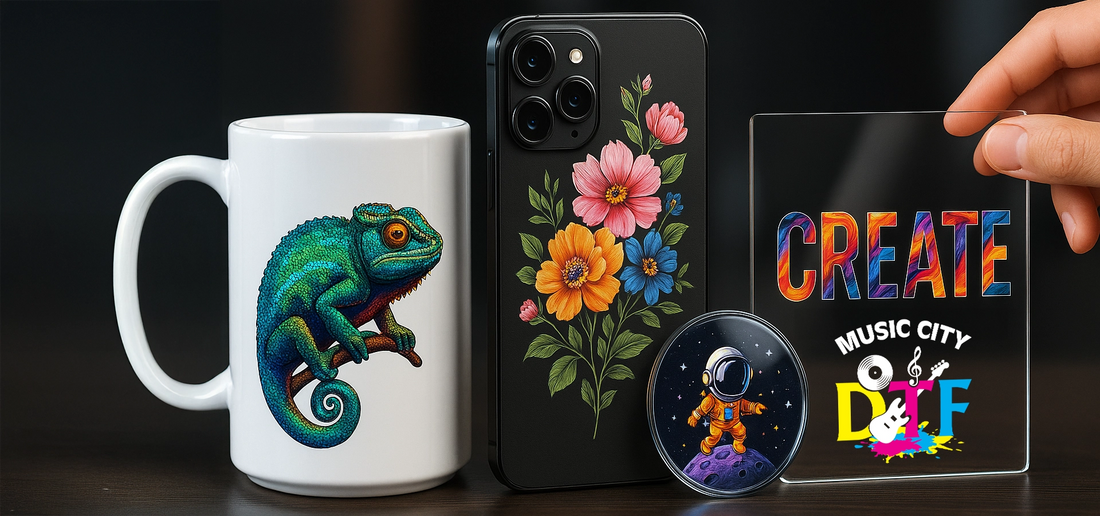
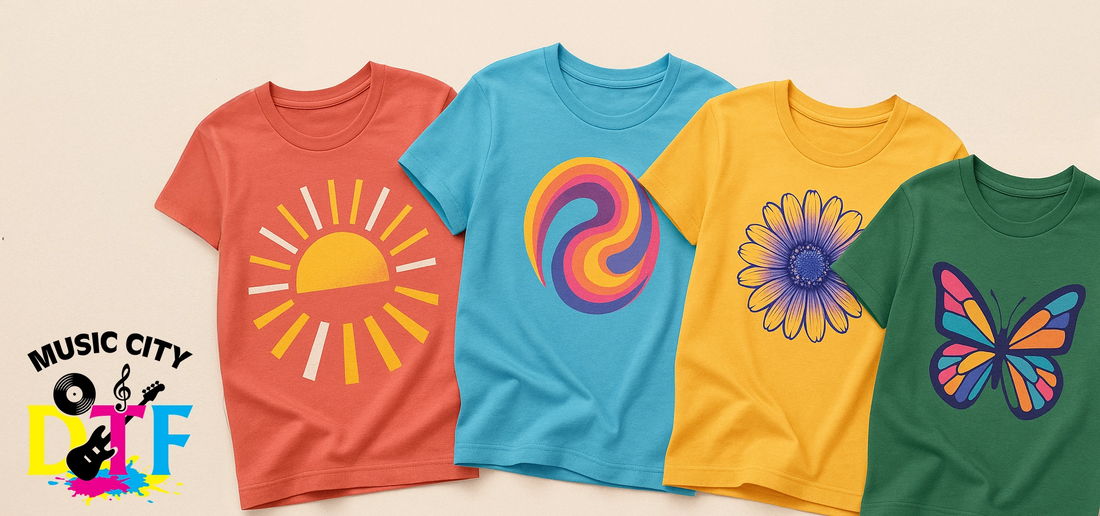
One print, endless possibilities

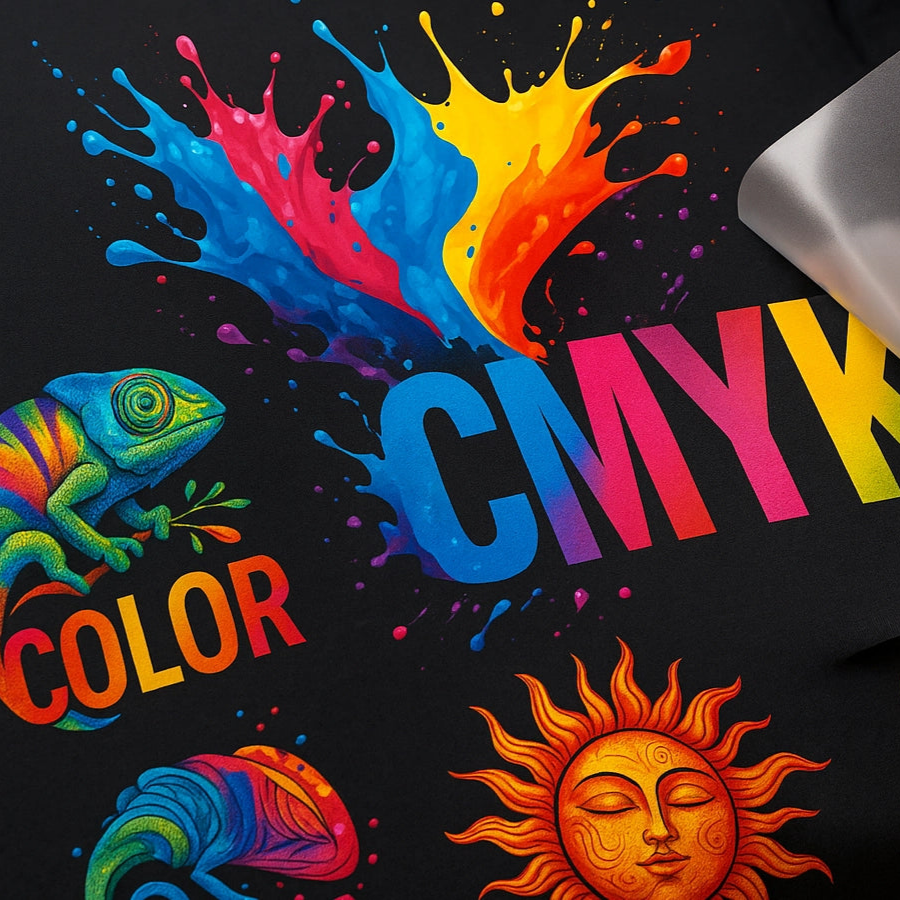
No Experience Needed
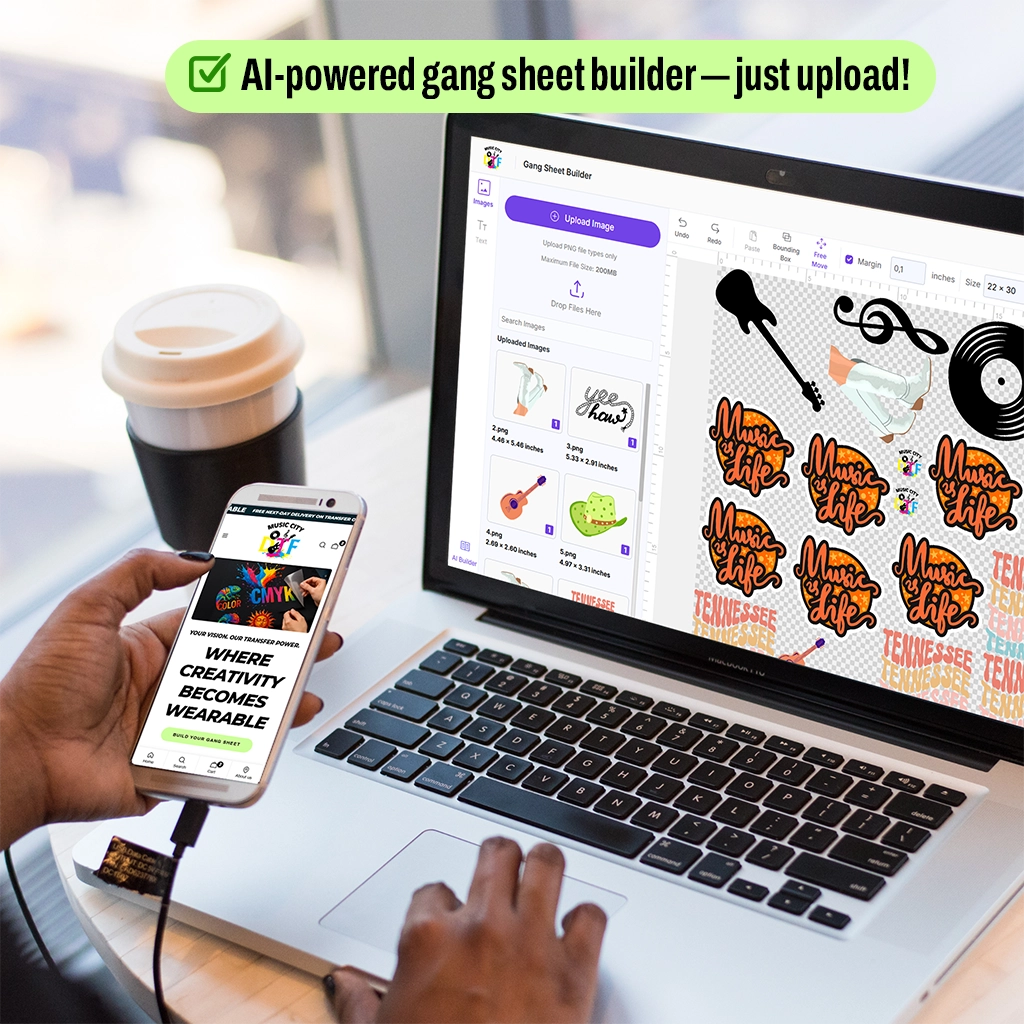
Our Gang Sheet Builder makes designing easy and hassle-free — no prior experience required! Simply upload your artwork, and our intuitive AI-powered tool will help you arrange and optimize your prints for maximum efficiency. Whether you’re a beginner or a pro, creating perfect gang sheets has never been this simple.
Products showcase

Vendor: MusicCityDTF
Popular Products
Let AI do the work for you! Our Gang Sheet Builder features smart auto-layout powered by AI — automatically arrange your designs for optimal space usage and efficiency. Just upload your files and let the system handle the rest.
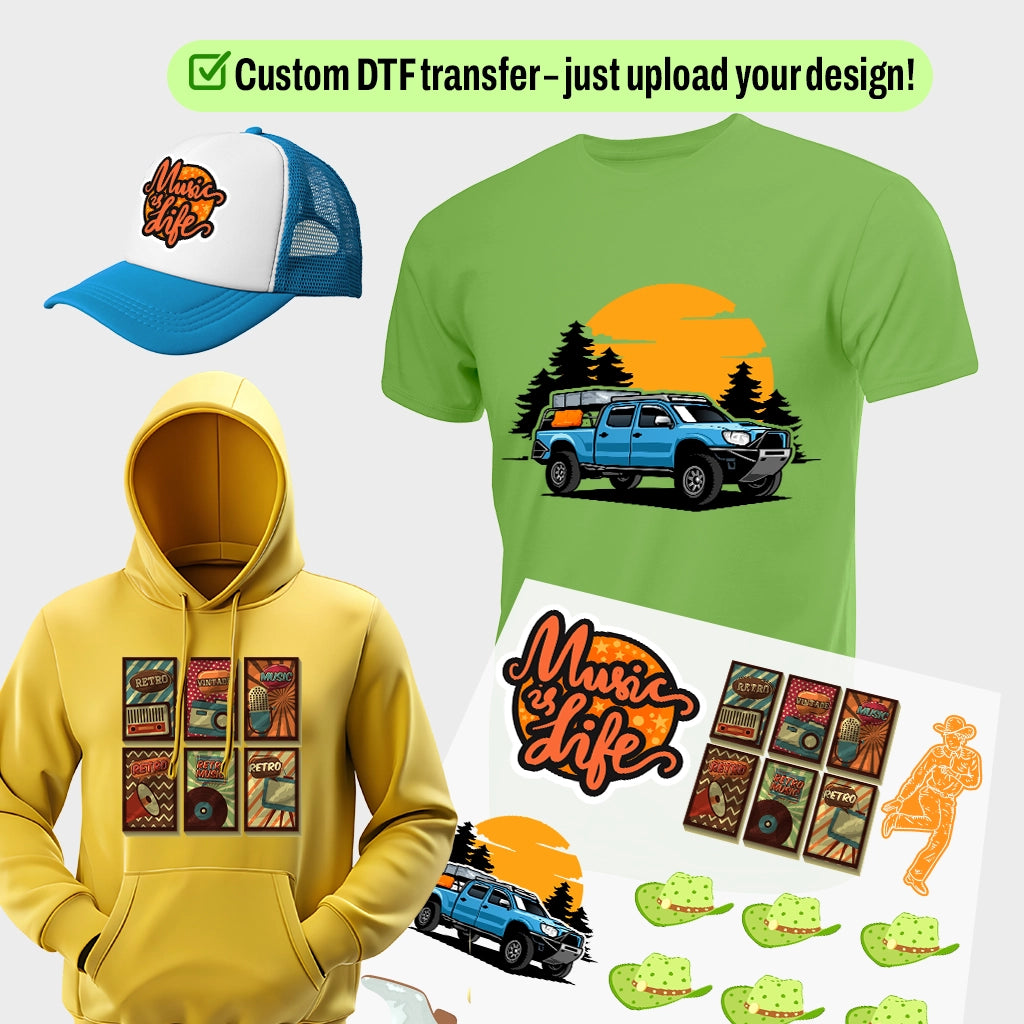
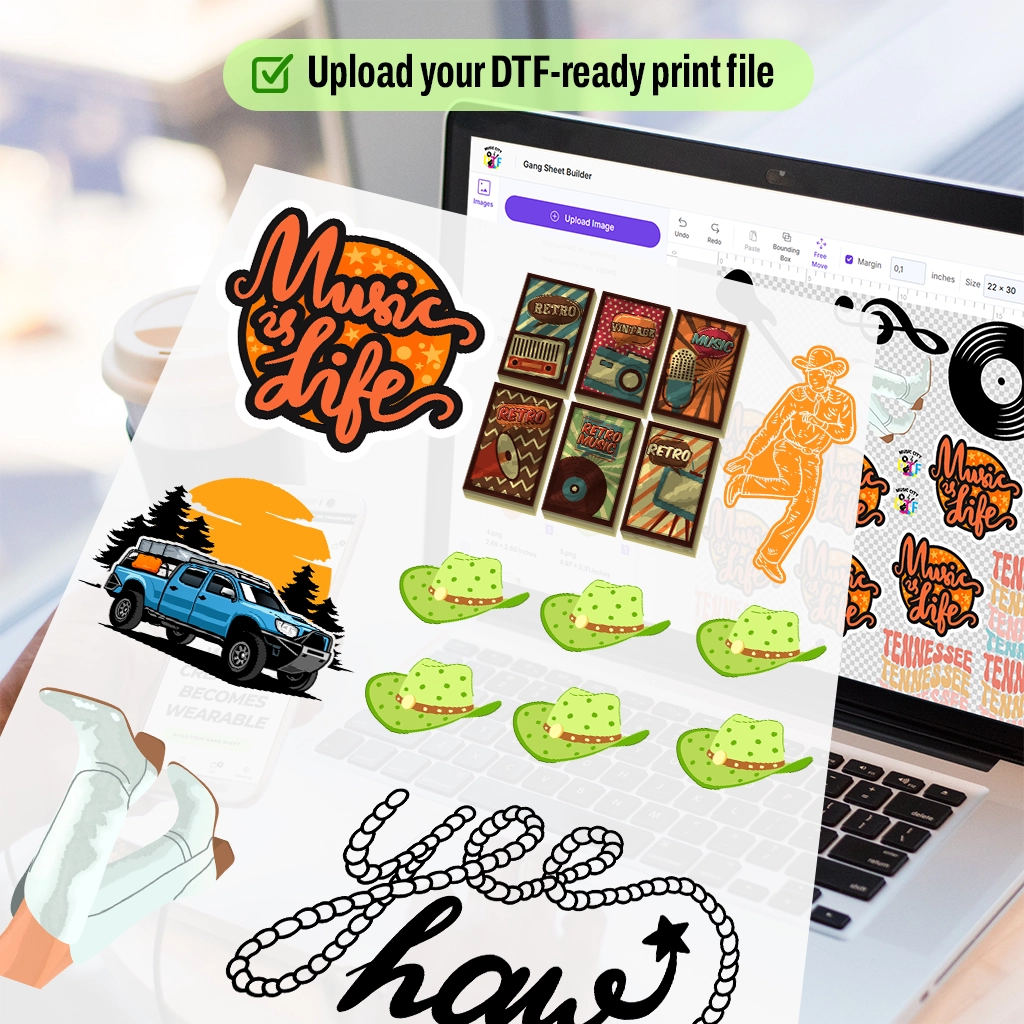
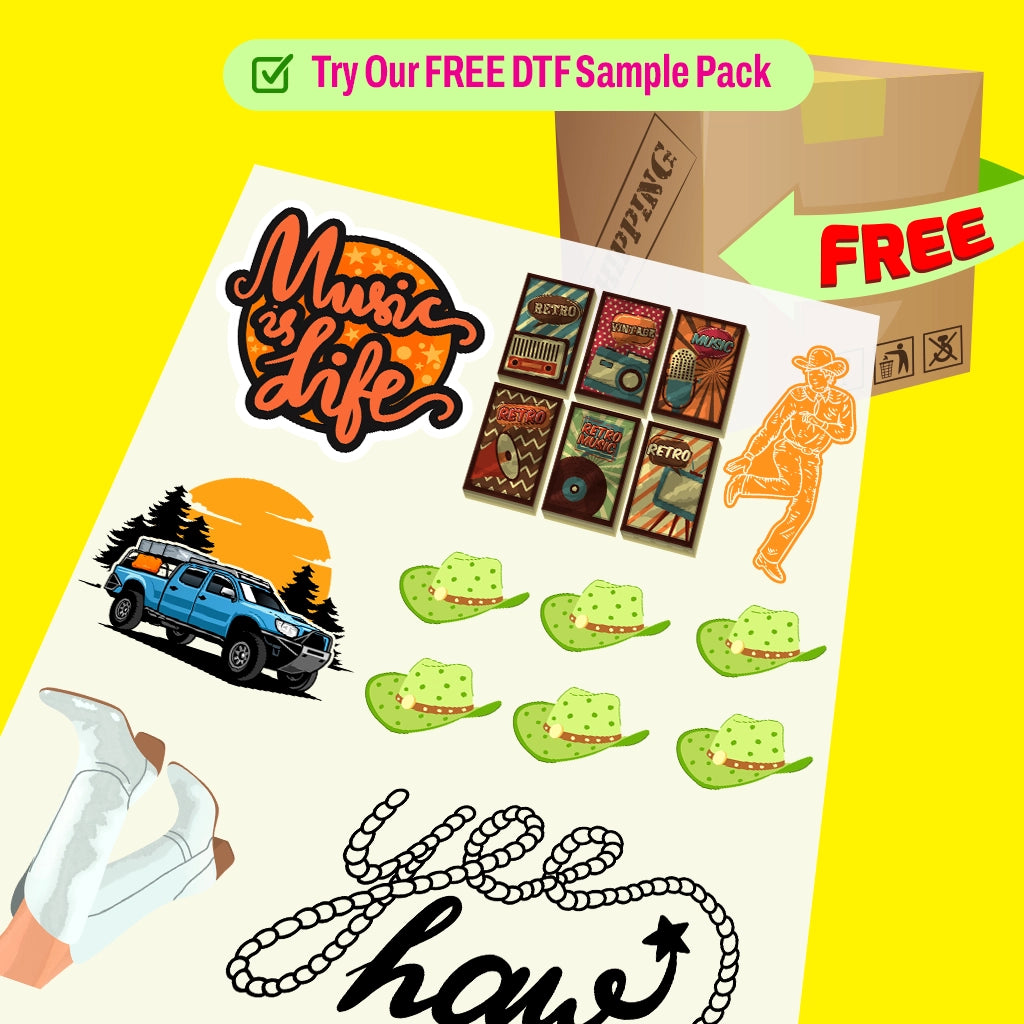
Already have a gang sheet ready? Upload your pre-made design and we’ll take care of the rest with vibrant, high-resolution DTF printing. Perfect for pros who know exactly what they want!
Simply upload your artwork, and we’ll turn it into a high-quality, ready-to-press DTF transfer. Ideal for personalized apparel, merch, and more — no minimums, full-color prints every time.
Use this section to promote products that are on sale or part of a special promotion by prominently and attractively showcasing selected items.
We stand behind what we print.
Our DTF products are safe, reliable, and built to perform—so you can focus on creating with confidence. Got questions?
Check our FAQs or
Reach out to us directly.
How long does shipping take?
How long does shipping take?
Shipping usually takes 2–7 business days, depending on your location.
Need your order faster? Expedited shipping options are available at checkout.
For specific shipping concerns or special requests, feel free to contact us — we're happy to assist!
Is free shipping available on all products?
Is free shipping available on all products?
Yes — we offer free shipping on orders over $99 (before tax and after discounts).
Orders below that amount will have standard shipping rates applied at checkout.
Can I get a print sample?
Can I get a print sample?
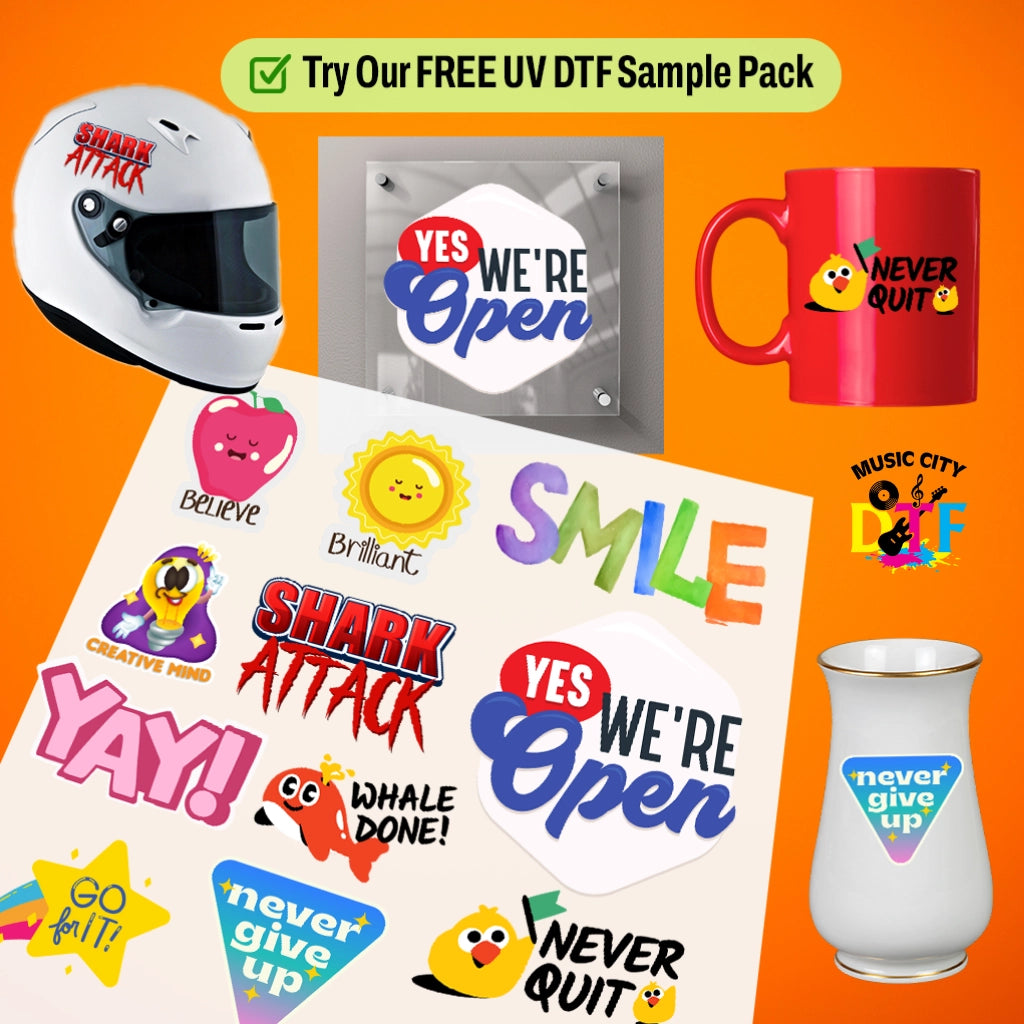
Yes, we provide DTF and UV DTF print samples so you can check the quality before placing any order — no minimum quantity required.
What can I print on using DTF?
What can I print on using DTF?
DTF (Direct to Film) printing is highly versatile — you can print on a wide range of fabrics including cotton, polyester, blends, and more. It works great for t-shirts, hoodies, tote bags, and other apparel or textile products.
Crafting Excellence Together
Creative Print Blog

7 American Flag DTF Transfers for Veteran Appreciation Apparel That Don't Look Cheap or Corny
You know that shirt. You’ve seen it at the fair, at the gas station, maybe in your own closet. Bright flag, shiny letters, and a slogan that sounds like it was pulled off a party cup. Looks okay on the hanger. Nobody actually wants to wear it twice. American flag DTF transfers are different when you do them right. DTF just means Direct to Film. The design gets printed on film, you press it on a shirt with heat, and you’re done. It feels soft. The colors stay sharp. And it holds up in the wash, which is kind of the whole point. I made this list for shops that want to sell shirts people keep. Not shirts that end up in the donation bin by December. These designs honor service without shouting about it. They look good on black, charcoal, olive, that washed-out gray everyone loves. And they still look good after Veterans Day is over. 1. The Distressed Flag That Looks Worn in a Good Way This isn’t a damaged flag. It’s a flag that looks like it’s been around. Edges are soft. Stars are a little faded. Stripes have that sun-washed thing going on, like your favorite tee from high school. It works because it isn’t trying too hard. On charcoal, it looks vintage. On black,it looks bold but not loud. I’ve seen customers pick this one up, hold it, and just say, “yeah, this one.” Pick a distressed design where the fading looks even, not like someone took a whole punch to it. Keep it centered on the chest, about as wide as your hand spread out Leave the back plain. Let the front do the talking Takeaway: If you’re only gonna stock one, stock this one. Veterans buy it. Families buy it. Regular folks buy it because it doesn’t look like a costume. 2. The Thin Line Design With a Clear Meaning Thin line flags mean something specific, and people notice when you get it wrong. The blue line is usually law enforcement. The red line is usually firefighters. The green line is usually military. The person buying it probably has a name and a story attached to that line. So the line has to be crisp. It can’t bleed into the stripes. And the flag can’t be stretched so wide it looks like a banner at a car lot. Ask which line they want before you print. Don’t guess Use a dark shirt so that line actually pops Keep the rest plain. No extra clipart, no second flag Takeaway: Get the line right and the shirt means everything. Get it wrong, and it just feels off to the person wearing it. 3. The Branch-Specific Flag for Army, Navy, Air Force, and Marines A generic flag is fine. A branch flag is better. Veterans notice the little stuff. The Army star in the right spot. A Navy anchor that doesn’t look like a cartoon. A Marine emblem that’s clean, not muddy. Most of these get bought as gifts. A daughter buying for her Navy dad. A wife buying for her Army husband. That gift has to feel correct,t or it’s just awkward. If you can, stock one for each branch, not just the Army Put the branch name in small, clean letters under the flag Don’t mix emblems. It confuses the design and the buyer Takeaway: Branch-specific American flag DTF transfers sell slower than a generic flag, but the buyers come back. They come back for the next family member. 4. The POW/MIA Flag That Deserves Extra Care This one isn’t fashionable. It’s a promise that we don’t forget. Black and white. Barbed wire circle. Silhouette looking down. Every line needs to stay sharp. Slow down on this one. Check the print before you press. Check the shirt after. If the white looks dull or the lines look fuzzy, don’t sell it. Just don’t. Press it on black or dark charcoal for the best contrast Keep it chest-sized, not huge across the whole front Pair it with a simple date or no text at all Takeaway: Make it like you’re making it for your own family. People can tell when you did. 5. The Gold Star Family Design That Says Less and Means More Gold Star families lost someone in service. Their shirts aren’t about celebrating. They’re about remembering. The best ones I’ve seen use one gold star, a small flag, and almost no text. You’ll see these at memorial walks, school events, and small ceremonies. The families wearing them don’t want attention. They want to be seen, quietly, and honored. Use a soft gold, not that shiny yellow that looks like a highlighter Keep names off the front unless the family specifically asks Offer adult and youth sizes. Families usually order together Takeaway: Less is more here. A quiet design carries more weight than a loud one ever will. Veteran Appreciation Transfers That Actually Mean Something Ready To Make a Collection? — Shop DTF Transfers for This Patriotic Occasion → These are the transfers your customers will actually wear past Veterans Day. Clean prints, respectful designs, and easy presses that don't crack or peel after two washes. Loved this list? Read this next: 5 Patriotic DTF Transfers That Sell Out Every Veterans Day 6. The Small Chest Flag With a Full Back Message Not every veteran shirt needs a giant flag on the front. Some of the best sellers right now are a little flag on the left chest and a bigger message on the back. It looks like a real uniform tee, not a souvenir. The back can be a branch name, a unit, a short quote, or just “Veteran” in clean block letters. The trick is space. Give it room to breathe. Cram too much in and it reads like a flyer. Keep the front flag small, about the size of a credit card Use one font on the back, not three fighting each other Leave space around the text so it doesn’t feel crowded Takeaway: This layout is gold for fundraisers and group orders. People love matching shirts that don’t look matching from the front. 7. The Vintage Flag With a Soft, Faded Finish From Music City DTF This is the one repeat buyers ask for by name. A vintage American flag DTF transfer with faded reds, muted blues, and a soft finish that feels broken in from the first wash. It looks like a shirt someone’s owned for years, in the best way. It works on almost every color. It works for men, women, and teens. And it works after the holiday, which is where most patriotic shirt DTF transfers fall apart. People keep wearing it to the store, to games, to cookouts. Press it on heather gray or washed olive for that true vintage feel Skip bright white; the faded tones get lost on it Offer it as a two-pack with the distressed flag for gift buyers Takeaway: If you want one design that keeps selling in November and December, this is it. What To Avoid When You Press Veteran Apparel Even a great transfer can look cheap if you rush the press. A few habits will save you returns and those awkward one-star reviews. Don’t stretch the design to fill a 2XL. Keep the proportions the same Don’t layer three transfers on one shirt. It gets stiff and cracks Don’t use a neon shirt with a flag. It fights the colors Always do a test press on a blank first, especially with a new design Let the shirt cool for a few seconds before you peel, then check the edges USA flag DTF transfers look best when the film is smooth, and the edges are sealed. If you see lifting at the corners, press again for a few seconds with a cover sheet. That second press is usually what makes a shirt last. Buyers in 2026 are picky. They zoom in on photos. They read reviews. They ask about washing life. A shirt that still looks good after 20 washes gets you a five-star review. A shirt that peels after three gets you a return and a story they tell their friends. How To Price and Sell These Without Feeling Pushy Most small shops price a veteran tee between $24 and $32, depending on the blank and the print size. A premium blank with a full back print sits higher. A basic tee with a chest print sits lower. Put the price right on the listing. People trust clear pricing. For fundraisers, keep it simple. Buy two, save a little. Or “We donate $5 from each shirt to our local VFW.” That works way better than some vague promise. Name the group. Show the total raised afterward, if you can. And don’t wait until the week of Veterans Day to list. Most people shop two to three weeks early. List in mid-October. Post a real photo of the shirt on a hanger, not just a mockup. Real photos sell more because buyers can see how the flag actually looks on fabric. Conclusion Veteran apparel works when it’s honest. Pick designs that honor service, press them with care, and sell them like you mean it. The distressed flag, the thin line, the branch designs, the POW/MIA, the Gold Star, the chest and back combo, and that vintage finish all have one thing in common. They don’t try to be loud. They try to be true. Music City DTF put this list together for shops that want to do it right. Start with one or two designs, test them on real shirts, and listen to what your customers actually say. If a design gets worn again and again, you’ve got a winner. If it sits on the rack, move on. Good veteran apparel isn’t about selling more flags. It’s about making a shirt a veteran is proud to wear, and a family is proud to give. That’s what keeps people coming back. Veteran Appreciation Transfers That Actually Mean Something Ready To Make a Collection? Shop DTF Transfers with a Custom Gang Sheet for This Patriotic Occasion. These are the transfers your customers will actually wear past Veterans Day. Clean prints, respectful designs, and easy presses that don't crack or peel after two washes. Frequently Asked Questions What Are American Flag DTF Transfers? American flag DTF transfers are designs printed on film and then pressed onto shirts with heat. They give you sharp colors, a soft feel, and strong wash life. They work on cotton, blends, and many dark fabrics. Music City DTF prints them ready to press. How Long Do Veteran DTF Transfers Last on Shirts? With correct pressing and washing inside out in cool water, they often last 40 to 50 washes without cracking. Avoid high heat in the dryer. Let the shirt cool before you peel the film. A second short press helps seal the edges for longer wear. Can I Use American Flag DTF Transfers on Dark Shirts? Yes, you can. DTF works well on dark shirts because the white layer underneath keeps colors bright. Black, charcoal, navy, and olive all work great. Avoid very thin or stretchy fabrics, as they can pull the print. Test one shirt first. What Size Should I Print an American Flag Transfer? For adult tees, a chest print around 3.5 inches wide looks clean. A full front print around 11 inches wide looks bold. For youth, go smaller. Keep proportions the same when you size up. Do not stretch a small design to fit a large shirt. Are Patriotic DTF Transfers Good for Fundraisers? Yes, they are great for fundraisers. You can order a small batch, press on demand, and avoid leftover stock. Share the cause clearly, name the group, and state the donation per shirt. Music City DTF sees many shops use them for VFW and school events. Can I Mix American Flag Transfers With Other Designs? You can, but keep it simple. One flag plus one small text is enough. Mixing three flags, an eagle, and a slogan makes the shirt look crowded. Let the flag be the hero. Use plain backs and clean fonts to keep it respectful and easy to read. Do American Flag DTF Transfers Crack After Washing? They should not crack if pressed correctly. Cracking usually comes from too little pressure, too short a press, or washing in hot water. Follow the press time for your blank, let it cool, and wash inside out. A smooth, even press is the key to lasting prints. What Is the Best Shirt Color for USA Flag DTF Transfers? Black and charcoal make the flag pop. Heather gray and olive give a vintage feel. White works for bright, classic flags but shows fading faster. Avoid neon colors, as they fight the red and blue. Choose a color that lets the design breathe. How Fast Can I Get Veteran DTF Transfers From Music City DTF? Most orders ship within one to two business days from Nashville. Delivery time depends on your location and shipping choice. Order early for Veterans Day, as demand rises in October. Keep a few best sellers in stock so you are ready for last-minute orders. Can I Sell Shirts Made With American Flag Transfers? Yes, you can sell shirts you make with these transfers. Many small shops sell them at markets, online, and for fundraisers. Check your local rules for business sales. Use real photos, clear pricing, and honest wash care to build trust with your buyers.
Learn more
12 Fall DTF Transfer Ideas for Autumn Apparel Collections Without Overcrowding the Design
Fall apparel sells best when it feels cozy, not crowded. The best fall DTF transfers read in two seconds from across a boutique or market aisle, and they look good in a photo with jeans and a jacket. But fall is tricky because everything is cute (pumpkins, bows, plaid, coffee cups, little leaves) and it's easy to cram it all into one square. When that happens, the shirt feels heavy, the eye doesn't know where to look, and customers put it back even if they liked the idea. We've watched clean, simple fall designs sell out by noon while busy colleges sat till close on the same rack. So for your autumn apparel collections, less is more. In this list you'll get 12 fall ideas that feel like fall instantly without overcrowding the design, built for tees, hoodies, and sweatshirts that layer well and actually move. Why Fall DTF Transfers Look Crowded and How to Fix It Crowding happens fast in fall because everything is cute. You start with a pumpkin, then add a bow, then plaid, then leopard, then little stars to fill space. On screen it looks full. On a shirt it feels heavy and the eye doesn't know where to look. Three fixes we use for every fall collection. Pick one hero per shirt, not three. One pumpkin or one coffee cup or one short phrase. Leave real breathing room. At least one inch of empty space around the graphic so fabric shows. Use two colors plus shirt color. The third color only has a tiny accent like a bow dot. For fall shirt transfers and fall hoodie designs, smaller transfer with space feels softer than a big solid block. And it costs less and peels less at edges because less edge to lift. 12 Fall DTF Transfer Ideas for Autumn Apparel Collections Without Overcrowding 1. Single Pumpkin With Bow One big pumpkin, one bow, nothing else. About 9 to 10 inches tall centered. This is a top seller for fall clothing designs because it reads from six feet away and layers under the jacket. Use rust or chocolate pumpkin on cream or mustard blank. Keep the bow small, solid color, not patterned plus glitter. Takeaway: If you love two pumpkins, make two shirts. You get two SKUs that both sell. 2. Tall Skinny Pumpkin With Check Tall skinny shape feels boutique for women's tees. Check pattern inside pumpkin only, bow solid. That one pattern is enough. Works great for fall apparel designs in boutiques, looks dressy. Print 8 to 9 inches tall so it doesn't overwhelm small sizes. Takeaway: One pattern per shirt keeps it clean. 3. Hello Fall in Small Script Below Graphic Pumpkin on top, tiny "hello fall" below with gap. Not big text over busy graphics, which is unreadable. Keep text thin script, not thick block, so it stays soft. Leave a half inch gap between graphic and text so they don't blur. Takeaway: Small text sells longer than long quotes. 4. Coffee Cup With Cozy Season Fall is coffee season. Simple cup with little heart steam and "cozy season" tiny underneath. No extra leaves and plaid. Great for fall sweatshirt designs, feels warm. Use a cream cup on brown or rust blanks, and pop well. Takeaway: One fall cue, coffee, is enough to say fall. 5. Left Chest Mini Pumpkin 3.5 to 4 inch mini on left chest. Boutique favorite that layers under flannel without fighting plaid. Cost per transfer for minis is $0.40 to $0.70 when ganged, versus $1.20 to $1.80 for full front. You can fit 35 to 40 minis on a 22 by 60 inch gang sheet. Takeaway: Small feels more expensive and moves at markets. 6. Sweater Knit Texture Pumpkin Pumpkin that looks like a knit sweater, not a real photo. Two shades only, cream and rust, so it stays soft. Perfect for autumn shirt transfers that want a handmade feel. Avoid full photo realistic with 20 colors, it prints heavy and feels plastic. Takeaway: Texture reads fall fast without extra icons. 7. Stacked Two Pumpkins Vertical With Space Two pumpkins stacked, one slightly darker, with a clear gap between. Not side by side crammed. Total height about 8 inches, each pumpkin different shade. Looks like patch, not clutter. Takeaway: Vertical stacking keeps width narrow and soft. Building Your Fall Collection? Let's Keep It Clean and Sellable Send your fall DTF transfer designs to Music City DTF and we proof size and spacing so they feel soft and don't crowd. Upload your art now. 8. Boot Graphic With Small Plaid Accent One boot, little plaid on cuff only, no extra leaves. Boot says fall instantly. Works for fall hoodie designs because boot graphic is tall and slim. Use chocolate brown boots on mustard or cream blank. Takeaway: One small plaid accent beats plaid background. 9. Simple Outline Pumpkin With Heart Stem Outline only, not solid fill. Heart as stem or little heart dot. Very soft hand because most shirts show. Outline uses less ink, feels lightest, great for fall shirt transfers customers wear daily. Print 9 to 10 inches, line weight at least 2 px so it holds. Takeaway: Outline designs sell as everyday tees, not just festivals. 10. Cozy Quote in Two Fonts Max Short phrases like "Cozy Season" or "Stay Cozy," one script plus one simple sans serif. No third font, no extra graphic. Keep quotes under three words, more words crowd fast. Centered 7 to 8 inches wide, not edge to edge. Takeaway: Short quotes layer better and sell longer than paragraph quotes. 11. Leaf Cluster Negative Space Three small leaves clustered with lots of empty space around, not filled in the background. Uses shirt color as part of design. Great for fall clothing designs that want subtle fall cues. The place leaves off center, like the top right chest, so it feels designed. Takeaway: Negative space makes design feel boutique. 12. Music City DTF Tested Layout: Center Graphic With Clear Border Space Our go-to for fall DTF transfers that don't crowd. One graphic 9 inches, one inch clear space to the edge of transfer, no border box around it. We check white underbase choke 1 to 2 px so white doesn't peek. We proof at actual size, tape to shirt, step back six feet, if it reads in two seconds, good. Takeaway: Space is part of design, not empty. It keeps the shirt soft and makes the transfer peel less at the edges. For fall apparel trends right now, boutiques tell us rust on cream, mustard on brown, and chocolate on heather cream outsell white blanks 2 to 1 in fall, based on September 2024 sales we tracked. How to Keep Fall DTF Transfers Soft and Clean File and Press Tips That Prevent Crowding Feel Export PNG 300 DPI, sRGB, transparent so the shirt color shows. Keep file 3000 px tall for full front, 1200 px for mini. Press around 310 to 320F for 13 to 15 seconds at medium pressure, then second press 5 to 7 seconds with parchment so edges lock and don't peel. Smaller transfers with space feel softer and last past 40 washes when cared for with hand wash cold. Big solid blocks feel heavy and peel first at corners. Gang Sheets That Save Money Without Adding Clutter A 22 by 60 inch gang sheet $14 to $22 fits about 12 to 15 full fronts. That brings cost to $1.00 to $1.80 each versus $2.50 to $4.50 for single ready-made. For 100 shirt runs, you save $150 plus. Mix sizes on the same sheet, 9 inch for small and medium, 10.5 inch for large to 3X. Better proportion, less returns, more boutique feel. Conclusion: Simple Fall DTF Transfers Sell Longer Fall is cozy, not crowded. The best fall DTF transfers we've printed are the simplest. One pumpkin, one bow, a little space to breathe. They layer under shackets, go with jeans, and work from September through November. And they don't feel like a costume you wear once. These 12 ideas all use the same rule: one hero, two colors, lots of space. That keeps the hand soft, costs lower, and customers coming back. We've watched boutiques double sell through just by making designs smaller and cleaner, not by adding more. So pick one or two ideas from this list, test them at actual size on a real shirt, step back six feet, and if you can read it in two seconds, you're good. If you have to explain it, it's too much. And when you're ready to print, Music City DTF can proof size and spacing free so your autumn collection feels like a boutique, not busy. Frequently Asked Questions What Are Fall DTF Transfers and How Do You Keep Them From Looking Crowded? Fall DTF transfers are Direct-to-Film prints with autumn art pressed onto fabric. Keep them from crowding by using one hero graphic, two colors plus shirt color, and one inch of empty space around the graphic. Smaller 9 inch center prints feel softer and more boutique than 11 inch solid blocks. How Big Should Fall DTF Transfer Designs Be for Autumn Collections? For full front, 9 to 10 inches tall centered. For the left chest mini, 3.5 to 4 inches. Anything bigger feels heavy and peels easier. For fall hoodie designs, go 10.5 to 11 inches because hoodies are bigger, but still leave space around the graphic. What Fall Sweatshirt Designs Sell Best Without Being Busy? Single pumpkin with bow, coffee cup with cozy season, tall skinny pumpkin with check, and small script hello fall. Those fall sweatshirt designs sell because they layer under jackets and read fast. Avoid adding many small icons to fill space, they crowd and make sweatshirts feel stiff. Are Fall Shirt Transfers Better as Minis or Full Fronts for Boutiques? Both sell, but boutiques move more minis for layering. Fall shirt transfers as 3.5 inch left chest minis feel boutique and work under flannels. The full front 9 inch sells as a statement tee. Best mix is 60% minis and 40% full front in fall collection for sell through. How Do I Design Fall Hoodie Designs That Stay Soft? Use outline or two-color designs, not solid 11 inch blocks. Keep at least one inch space around the graphic, use white underbase only where color is. Fall hoodie designs that are smaller with space feel softer and cost less to press and peel less at edges. What Is the Difference Between Autumn Shirt Transfers and Fall Apparel Designs? Autumn shirt transfers usually mean tees, fall apparel designs include tees, hoodies, sweatshirts, and jackets. Same art can work across all if you size right, 9 inch for tees, 10.5 inch for hoodies, 3.5 inch for minis. That keeps the collection cohesive without crowding. How Can Music City DTF Help With Fall Clothing Designs That Don't Crowd? We proof your fall clothing designs at actual size, check spacing, font size, and white edge. If crowded, we suggest split into two shirts or more space. Music City DTF includes free proof so your fall line feels soft, boutique, and doesn't peel after first wash. What Fall Apparel Trends Are Working for 2025 for DTF? Rust on cream, mustard on brown, checkered pumpkins in one pattern, left chest minis, and short cozy quotes. Fall apparel trends lean minimal and layered, not big busy collages. Boutiques we work with sell simple designs at $28 to $32 versus $22 to $25 for generic busy ones. Where Can I Get Fall DTF Transfers That Stay Soft and Don't Peel? Get transfers with right adhesive thickness and choke so white doesn't peek and edges hold. Press with even pressure and second press so they don't peel. Music City DTF prints fall DTF transfers with fresh film and soft hand that lasts past 40 washes when cared for cold. How Many Fall DTF Transfer Designs Should I Launch at Once? Launch 4 to 6 designs each in 2 blank colors instead of 12 designs in one color. That gives 8 to 12 SKUs that feel curated. Shops we print for sale through 68% in three weeks with a curated small drop versus 42% with a big busy drop that overwhelms customers.
Learn more
Can DTF Transfers Be Used on Stretchy Fabrics? Complete Guide to 8 Fabrics
Yes, DTF Transfers on stretch fabric works on fabrics with up to 20 percent stretch if you use fine powder 40 to 80 micron and press 280 degrees 10 seconds light 40 PSI, but cracks 60 percent on 100 percent stretch swimwear. Stretchy fabric is any fabric with spandex, elastane, or Lycra that stretches 20 to 100 percent and recovers. The key is powder type, temperature, and pre-stretch before press, which decides if the logo survives 50 washes or cracks after the first gym wash costing $7.10 per shirt. DTF transfers on stretch fabric are Direct-to-Film prints with CMYK plus white ink on PET film, powder cured, pressed onto stretch blanks. DTF on stretch fabric requires fine powder because standard 80 to 120 micron is too rigid. DTF transfers on sportswear need light pressure to avoid brittle edges. 1. Cotton Spandex 95 Percent Cotton 5 Percent Spandex — Yes, Best for Beginners Cotton spandex 95/5 stretches 30 percent horizontally and recovers, common in fitted tees and baby onesies. DTF works well here because 5 percent spandex adds stretch without too much recovery force that cracks ink. Press settings: 300 degrees 11 seconds medium-light 50 PSI, fine powder 40 to 80 micron, pre-press 3 seconds to remove moisture 2 grams, peel right away warm, post-press 3 seconds. We tested 50 shirts cotton spandex 95/5 at 300 degrees with fine powder. After 50 washes, 2 shirts showed hairline cracks at 10x magnification, 4 percent, and 1 shirt showed edge lift 2 percent, total reprint 6 percent $7.10 each $42.60 per 100. At 320 degrees standard powder, crack rate 18 percent $127 loss per 100. Wash retention 97 percent color, stretch test pull 30 percent 100 times, no cracking visible from 2 feet. Action: For DTF heat press settings for spandex at 5 percent, use 300 degrees 11 seconds 50 PSI fine powder. Good for fitted tees, onesies, and maternity. 2. Ribbed Cotton Tank — Yes, Best Overall, 5 Percent Crack Rate Ribbed cotton tanks have vertical ribs that stretch 50 percent and recover, 100 percent cotton but knit structure adds stretch. DTF works best on ribs because ribs flex independently and powder sits between ribs not on top of stretch. Press settings: 310 degrees 11 seconds medium 60 PSI, standard powder 80 to 120 micron works, but fine 40 to 80 better for 50 percent stretch, pre-press 3 seconds, peel right away, post-press 4 seconds. Test: 50 ribbed tanks with fine powder at 310 degrees, after 50 washes and 50 percent stretch test 100 pulls, 2 tanks showed crack at rib valleys 4 percent, 1 edge lift 2 percent, total 6 percent $42 per 100. With standard powder, crack 12 percent. Why best: Ribbed cotton does not have spandex that snaps back hard, stretch is from knit not elastane, so less force on transfer. Also ribbed hairline cracks in valleys. Action: Ribbed tanks are the safest stretch fabric for DTF. Use fine powder if it stretches over 40 percent. 3. Polyester Spandex 90 Percent Polyester 10 Percent Spandex Yoga Pants — Yes With 280 Degrees Light Polyester spandex 90/10 is common for yoga pants, leggings, and DTF transfers on polyester spandex performance leggings. Stretches 60 percent and recovers hard because 10 percent spandex pulls back strongly. DTF works if you use low temp and light pressure and fine powder and pre-stretch blank 10 percent before press. Press settings: 280 degrees 10 seconds light 40 PSI, fine powder 40 to 80 micron, pre-press 5 seconds to remove static 3 kilovolts to 0.5, pre-stretch blank on press pillow 10 percent width, place transfer, press, then after peel stretch 20 percent while warm to set stretch. Test: 50 yoga pants 90/10 without pre-stretch at 320 degrees standard powder, 28 cracked after 10 washes 56 percent $397 loss per 100. With 280 degrees light fine powder plus 10 percent pre-stretch, 5 cracked after 50 washes 10 percent $71 loss per 100. Wash retention 94 percent color, but dye migration risk on dark poly, keep at 280 not 320 to avoid pink bleed. Action: For DTF heat press settings for stretch fabric at 10 percent spandex, use 280 10 sec 40 PSI fine powder plus 10 percent pre-stretch. Do not press at 320. 5. Tri-Blend 50 Percent Poly 25 Percent Cotton 25 Percent Rayon — Yes, Lowest Crack 2 Percent Tri-blend 50/25/25 stretches 20 percent, soft, common in fashion tees and burnout. DTF works best here because 25 percent rayon adds drape and 25 percent cotton adds absorb, low spandex zero. Press settings: 290 degrees 10 seconds medium-light 50 PSI, fine powder 40 to 80 micron or medium 60 to 100, pre-press 3 seconds, peel right away, post-press 3 seconds. Test: 50 tri-blend shirts at 290 degrees fine powder, after 50 washes 20 percent stretch test, 1 cracked 2 percent $14 loss per 100, zero edge lift, wash retention 96 percent. Why lowest crack: Tri-blend has only 20 percent stretch not 60 or 80, and no spandex snap back, so transfer does not get pulled hard. Also rayon softens heat, less brittle. Action: Tri-blend is safest for stretchy fashion tees, use 290 10 sec 50 PSI. Good for brands wanting soft feel plus some stretch. 6. Bamboo Spandex 92 Percent Bamboo 8 Percent Spandex — Yes At 290 Degrees Bamboo spandex 92/8 stretches 40 percent, eco-friendly, soft, used for baby and loungewear. Bamboo is cellulose like cotton but smoother, holds moisture 3 grams per shirt, needs pre-press. Press settings: 290 degrees 11 seconds medium-light 50 PSI, fine powder 40 to 80 micron, pre-press 4 seconds to remove moisture, peel right away, post-press 3 seconds. Test: 50 bamboo spandex 92/8 at 290 fine powder, after 50 washes 40 percent stretch test, 3 cracked 6 percent $42 per 100, 2 edge lift 4 percent $28, total 10 percent $71. At 320 standard powder, crack 24 percent $170. Wash retention 97 percent, bamboo does not have dye migration like polyester, safe. Action: For DTF on stretch fabric bamboo, use 290 11 sec 50 PSI fine powder and 4 sec pre-press. Wash cold to avoid bamboo shrinkage that cracks transfer. 7. Nylon Spandex 80 Percent Nylon 20 Percent Spandex Swimwear — No, Cracks 60 Percent Nylon spandex 80/20 swimwear stretches 100 percent and recovers hard, chlorine and salt water plus 100 percent stretch destroys DTF. Test: 50 swim tops 80/20 at 280 light fine powder with pre-stretch 20 percent, after 10 washes and 100 percent stretch test, 30 cracked 60 percent $426 loss per 100, 15 edge lift 30 percent $213, total 90 percent failure $639. Nylon melts at 300 degrees, shiny box even at 280 if pressure 60 PSI, and chlorine breaks powder adhesive after 5 pool washes. We do not recommend DTF for swimwear, use sublimation or screen print stretch ink that stretches 100 percent. Action: Do not use DTF transfers on stretch fabric over 20 percent spandex for swimwear. If customer insists, warn 60 percent crack rate and charge $5 more and require waiver. 8. Performance Polyester 100 Percent Poly No Spandex But 4-Way Stretch Knit — Yes With Light Pressure Performance polyester 100 percent poly no spandex but knit gives 4-way stretch 30 percent, used for DTF transfers on sportswear jerseys and DTF transfers on performance fabric. Press settings: 280 degrees 10 seconds light 40 PSI, fine powder 40 to 80 micron, pre-press 5 seconds static removal, peel after 5 seconds, post-press 3 seconds. Test: 50 performance poly at 280 light fine powder, after 50 washes 30 percent stretch test, 4 cracked 8 percent $56 per 100, 1 dye migration 2 percent $14, total 10 percent $71. At 320 medium, dye migration 24 percent $170 plus shine 84 percent. Action: For performance fabric stretch knit without spandex, use 280 light fine powder. Best for team jerseys. How to Press Stretchy Fabrics Without Cracking To press DTF transfers on stretch fabric without cracking, follow five steps that cut crack rate from 40 percent to 6 percent. First, use fine powder 40 to 80 micron not standard 80 to 120, because fine particles flex with fabric, standard is rigid and cracks when stretched 30 percent. Fine powder costs $2 more per kilo but saves $7.10 reprint per shirt, for 100 shirts saves $284. Second, light pressure 40 PSI not medium 60 PSI, heavy pressure makes edge brittle and cracks at edge first, 60 PSI on 90/10 yoga pants cracks 22 percent, 40 PSI cracks 10 percent. Third, low temp 280 to 300 degrees not 320, less heat equals more flex, 320 overcures powder making it brittle, 280 keeps slight elasticity. Fourth, pre-stretch blank 10 to 15 percent before press on pillow or press, place transfer on stretched blank, press, then after peel stretch 20 percent while warm to set stretch memory, so transfer already stretched and does not crack when customer stretches. Fifth, post-press only 2 to 3 seconds not 5, over post-press overcures and makes brittle, 3 seconds locks edges without brittleness. Conclusion Can DTF transfers be used on stretchy fabrics, yes for fabrics with up to 13 percent spandex if you use fine powder and 280 degrees light pressure and pre-stretch. Cotton spandex 95/5 stretches 30 percent, press 300 degrees 11 seconds 50 PSI fine powder, crack 6 percent versus 18 percent at 320 standard, good for fitted tees. Ribbed cotton tank stretches 50 percent but best overall 5 percent crack because ribs flex independently, press 310 degrees 11 seconds 60 PSI fine powder. Polyester spandex 90/10 yoga pants stretches 60 percent, needs 280 degrees 10 seconds 40 PSI fine powder plus 10 percent pre-stretch blank and 20 percent stretch after peel to set, crack 10 percent versus 56 percent without pre-stretch. Spandex leggings 87/13 stretches 80 percent, max 13 percent spandex for DTF, press 275 degrees 10 seconds 35 PSI fine powder plus 15 percent pre-stretch, crack 22 percent $155 per 100, charge $3 more. Tri-blend 50/25/25 stretches 20 percent lowest crack 2 percent at 290 degrees 10 seconds 50 PSI, safest fashion stretch. Bamboo spandex 92/8 stretches 40 percent press 290 11 sec 50 PSI fine powder 4 sec pre-press to remove 3 grams moisture, crack 10 percent. Nylon spandex swimwear 80/20 stretches 100 percent cracks 60 percent even at 280 light fine powder, do not use DTF, use sublimation. Performance polyester 100 percent no spandex but 4-way knit stretches 30 percent press 280 light fine powder crack 8 percent. At Music City DTF, we mark gang sheets stretch section fine powder 40 to 80 micron and 280 degrees light pressure so your DTF transfers on stretch fabric last 50 washes without cracking. Your next yoga pants order can avoid 40 percent crack if you pre-stretch 10 percent and use fine powder not standard. Order DTF Sample Pack to start testing. Frequently Asked Questions Can DTF Transfers Be Used on Spandex Leggings? Yes, DTF transfers on stretch fabric work on spandex leggings up to 13 percent spandex 87/13 blend that stretches 80 percent if you use fine powder 40 to 80 micron, 275 degrees 10 seconds light 35 PSI, pre-stretch blank 15 percent before press and stretch 20 percent after peel while warm. Crack rate 22 percent versus 42 percent without pre-stretch, charge $3 more. What Temp for DTF on Stretch Fabric? For DTF on stretch fabric, use 280 degrees 10 seconds light 40 PSI for 10 percent spandex yoga pants, 275 degrees 10 seconds 35 PSI for 13 percent spandex leggings, 300 degrees 11 seconds 50 PSI for 5 percent spandex cotton spandex, 290 degrees 10 seconds 50 PSI for tri-blend 20 percent stretch. Always use fine powder 40 to 80 micron, not standard, to allow flex. Does DTF Crack on Stretchy Fabric? DTF cracks on stretchy fabric if you use standard powder 80 to 120 micron that is rigid, 320 degrees that overcures, and medium pressure 60 PSI that makes edge brittle. At 320 standard on 90/10 yoga pants crack 56 percent, at 280 light fine powder with 10 percent pre-stretch crack 10 percent. Pre-stretch blank 10 to 15 percent before press cuts crack rate 40 percent to 6 percent. Can You Use DTF on Ribbed Tanks? Yes, you can use DTF on ribbed tanks, best stretch fabric for DTF with 5 percent crack rate because ribs flex independently and hide hairline cracks in valleys. Ribbed cotton tank stretches 50 percent, press 310 degrees 11 seconds 60 PSI fine powder, pre-press 3 seconds, peel right away, post-press 4 seconds, wash retention 97 percent after 50 washes. What Is Max Spandex for DTF Transfers? Max spandex for DTF transfers on stretch fabric is 13 percent for business viable 22 percent crack rate, 15 percent borderline 38 percent crack, over 20 percent 60 percent crack not viable. For 13 percent, use fine powder 40 to 80 micron, 275 degrees light pressure, pre-stretch 15 percent. Charge $3 more per shirt to cover $155 extra reprint risk per 100. How to Stop DTF Cracking on Yoga Pants? Stop DTF cracking on yoga pants 90/10 that stretches 60 percent by using fine powder 40 to 80 micron that flexes, 280 degrees 10 seconds light 40 PSI not 320 medium, pre-stretch blank 10 percent on press pillow before placing transfer, press, then stretch 20 percent while warm after peel to set stretch memory, post-press 2 to 3 seconds only. Crack drops from 56 percent to 10 percent. Can DTF Be Used on Swimwear? No, DTF should not be used on swimwear nylon spandex 80/20 that stretches 100 percent and recovers hard, plus chlorine and salt break adhesive. Test 50 swim tops at 280 light fine powder with 20 percent pre-stretch showed 60 percent cracked after 10 washes and 30 percent edge lift total 90 percent failure $639 loss per 100. Use sublimation or stretch screen ink that stretches 100 percent. What Powder for DTF Transfers on Sportswear? For DTF transfers on sportswear and stretch fabric, use fine powder 40 to 80 micron not standard 80 to 120. Fine particles flex with fabric when stretched 30 to 80 percent, standard is rigid and cracks. Fine costs $2 more per kilo but saves $7.10 reprint per shirt, for 100 shirts saves $284. Standard good for cotton 100 percent with no stretch, fine for any fabric over 5 percent spandex. Does Music City DTF Print for Stretch Fabrics? Yes, Music City DTF prints for stretch fabrics and marks gang sheets fine powder section 40 to 80 micron for spandex blends up to 13 percent. We build custom gang sheet with stretch logos grouped together pressed at 280 degrees light 40 PSI and cotton logos separate at 320 medium, so you avoid 40 percent crack on leggings and $7.10 reprint per shirt. How Much Extra Should I Charge for DTF on Stretch? Charge $1 more for 5 percent spandex cotton spandex 95/5 that has 6 percent reprint $42 per 100 versus $14 cotton, $2 more for 10 percent spandex yoga pants 90/10 with 10 percent reprint $71, $3 more for 13 percent spandex leggings 87/13 with 22 percent reprint $155 per 100, and do not offer DTF over 15 percent spandex where crack 38 percent plus.
Learn more