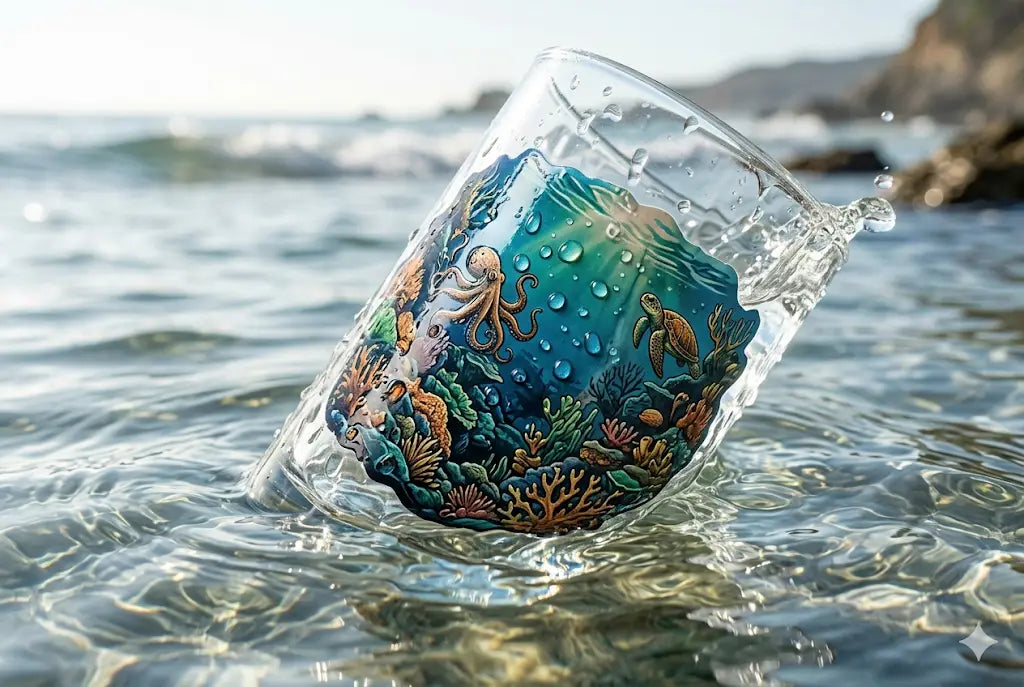
There are many statements online about absolute moisture resistance, while others say that decals quickly get destroyed when coming in contact with water.
But the reality is somewhere in between. The modern decal printing technology allows us to create durable UV DTF transfers waterproof that resist splashing, cleaning with soap solution, and other effects associated with the presence of moisture. The level of durability depends not only on the quality but on the surface, technique, and environment as well.
Learning how these products work under exposure to water helps you to set realistic expectations and maximize their longevity. It is important to remember that the absolute water resistance does not exist; instead, you should assess the level of durability depending on the conditions of use.
Water Resistance Science Behind Modern Printed Films
Knowledge of How the Graphics Work
The resistance to any physical damage starts from the ultraviolet process, where ink cures quickly. The creation of a solid polymer film enhances water repellency by attaching it firmly to the graphic's surface.
The Function of Adhesive Coatings
Pressure-sensitive glue is used to secure the graphic. Proper installation provides sealing to prevent water ingress. However, insufficient adhesive causes weaker spots vulnerable to water leakage.
Behavior of Contacting Surfaces
Flat and smooth surfaces like glass and coated metal provide better opportunities for adhesion than porous and dusty areas.
Water Resistance Levels
Although the hardened coating resists spraying and occasional cleaning, soaking or strong jets of water slowly deteriorate structure stability, mainly at the borders.
Application Quality and Bond Strength Factors
The Significance of Surface Preparation
Preparation is essential in maximizing adhesion, especially for UV DTF transfers for water bottles. Particles like dust, oil, or residues act as minute barriers impeding full layer-to-layer bonding.
Pressure Application During Installation
Equal pressure guarantees consistent bonding. Inconsistency will lead to air bubbles that will serve as paths for water intrusion.
Durability After Curing
Post-curing sees the product stabilize for hours. In this duration, keeping it away from any moisture contributes to its durability.
Performance of Edge Sealing
Edges represent the weak points. Failure to apply adequate pressure will result in lifting and eventual water infiltration.
Environmental Impact on Durability Performance
Sunlight & Heat
Repeated exposure to UV light will slowly break down the surface coating layers due to heat expansion. Although this process will not affect the bonding immediately, it can decrease visibility.
Moisture and Humidity
Areas with high humidity will apply stress to the bond. It may be difficult for the adhesive to cope if there is permanent moisture present.
Environmental Stressors
Rain, wind, and changes in temperature will all affect the physical properties of the product. Although proper design will help it cope, weathering effects will occur nonetheless.
Exposure to Chemicals
The use of chemical cleaners and solvents is not recommended because of their harsh nature. Detergent is more suited to preserve clarity.
Maintenance Practices for Extended Lifespan
Gentle Cleaning Methods
The use of soft cloths along with mild soap prevents damage to the surface without affecting its protective coating or adhesive property.
Avoidance of Abrasive Materials
The use of abrasive tools can cause scratches to the exterior layer, making it easy for water to seep through.
Effective Drying Methods
After the cleaning process, natural drying ensures that no moisture is left behind, thus preventing any weakening of the bond.
Storage of Unemployed Graphics
It is advisable to keep the unutilized graphics in cool and dry places to prevent any decay before use.
Conclusion
Water exposure may not cause an immediate failure in modern printed film decals, although the effectiveness will largely depend on the proper preparation of the surface, application, and surrounding environment. They are very durable when it comes to water exposure; however, they are not entirely waterproof. This knowledge is crucial for obtaining more reliable and consistent results.
Try Music City DTF UV decals today to test the overall quality.
FAQs
Are UV DTF waterproof or not?
They aren't totally resistant to water under all circumstances. Even though they withstand water splashes and light washing very well, they are prone to adhesion degradation after prolonged soaking and cleaning with excessive water pressure. Also, it matters how they were applied to different types of surfaces.
Can UV curing endure rain in the open air?
Yes, they have good resistance to raindrops. They will remain functional in wet conditions thanks to the cured ink and adhesive used. At the same time, they aren't designed to be left outside all the time because prolonged exposure to various weather conditions can decrease their clarity and adhesion properties.
Will washing ruin the UV design on plastic cups?
No. It won't affect the design if you will wash your stickers using only mild soap and water. At the same time, aggressive washing will ruin surface coating and adhesive layers in the long run. It's important to note that they must be protected from abrasives during washing procedures.
Which material resists moisture problems most effectively?
Glass, metal with a coating, and specific types of plastics will give the best results. Non-porous smooth surfaces allow achieving a more reliable bond with a minimal possibility for water seepage. A rough, dirty, or irregular surface is associated with a weaker bond that leads to peeling from exposure to moisture or water.
Do UV DTF transfers wash off and cause lifting?
Lifting can happen when the initial bonding was poor or there were some contaminants on the surface before application. Moisture can get into small cracks, causing further weak bonding. Temperature variations and moisture cycles also influence edge lifting. Using adequate pressure and cleaning help avoid this problem.
Is it okay to apply high-pressure water for cleaning purposes?
It is undesirable to use high pressure because liquid can penetrate the bonding layer. This can result in lifting, especially when it comes to edges. Rinsing at low pressure and subsequent wiping can provide good results without damaging the bonding process.
What effect will temperature have on the water-resistance properties?
Thermal variations lead to contraction and expansion of both adhesive and surface materials. That causes the formation of micropores through which the liquid can penetrate. In hot or very cold weather, the product wears out faster. The conditions inside homes allow for maintaining high quality for longer periods, whereas outdoor climate requires particular care during installation and use.
Will humidity alone cause degradation of the product?
No. High humidity won't affect the quality instantly, yet, long-term exposure to moisture can lead to deterioration over time. Such conditions facilitate weakening of the bond in places with poor sealing. If installed properly, there won't be much trouble with humidity after the curing process. The impact is minor when humidity is low.
How will proper installation enhance water resistance of the design?
It plays an important role in ensuring good performance. It is essential to prepare surfaces properly, apply the product under adequate pressure and align the design correctly. Good installation results in higher adhesion and less penetration of moisture.
How long will they survive under occasional contact with water?
Under normal application and limited usage circumstances, their lifespan would be months to years. Under occasional water contact, such as washing and rainfall, the effect would be insignificant in the short term. It is important to note that the lifespan would greatly depend on the stresses in the environment, the surface, and proper maintenance.