The 4th of July season hits print shops fast, and it doesn’t wait for anyone’s schedule. Shops that plan ahead with 4th of July DTF transfers avoid rush fees, color compromises, and shipping chaos. The difference between profit and panic usually comes down to ordering window, not print quality.
In real production environments, holiday demand spikes 30–60% in late June based on historical DTF supplier order logs across mid-sized U.S. print shops. That surge compresses turnaround times and strains film supply chains. Early ordering simply keeps the production line stable and predictable.
Why Early Ordering Matters for 4th of July DTF transfers
When July 4th hits the calendar, demand for patriotic apparel jumps sharply. Shops producing independence collections or Etsy sellers pushing themed drops all compete for the same print capacity.
Typical industry turnaround times:
- Standard DTF production: 24–72 hours
- Peak season production: 3–7 business days
- Shipping delays during June–July: +2–5 days average (based on USPS seasonal data trends)
That’s the gap where most shops lose sales.
Early ordering of 4th of July DTF transfers does three things that directly impact profit:
First, it locks in production slots before capacity fills.
Second, it stabilizes ink batching and color consistency across runs.
Third, it prevents last-minute design compromises that usually come from rushing artwork.
For shops scaling custom patriotic shirts, this is where margins are protected.
How Early Ordering Helps You Save
Late ordering almost always increases cost:
- Rush fees: $25–$75 per order from many suppliers
- Reprints due to errors: $40–$120 per batch
- Expedited shipping: +30–80% increase depending on carrier
Early ordering removes those variables entirely.
How Soon Should You Buy 4th of July Designs
Timing is everything in seasonal print planning. Most experienced shops lock in designs 3–4 weeks before peak holiday demand.
Here’s a practical breakdown:
- 4–6 weeks before July 4th: Ideal ordering window
- 2–3 weeks before: Acceptable but tight
- Less than 10 days: High risk of delays and limited stock availability
Based on supplier capacity reports from mid-tier DTF manufacturers, production queues start backing up around June 10–15 each year.
Another factor is design revision time. Even simple patriotic graphics often go through:
- 1–2 rounds of artwork edits
- Color profile adjustments (CMYK vs RGB mismatches)
- Test prints for shirt compatibility
Each revision adds 24–48 hours minimum.
For sellers focusing on independence day shirts, this buffer is non-negotiable if scaling beyond small batches.
Industry Insight
Average Etsy sellers using early DTF ordering report 18–25% higher fulfillment rates during July compared to last-minute buyers (based on seller forum aggregation data, 2024).
Midway Production Insight
Late ordering doesn’t just slow delivery—it compresses decision-making. That leads to oversimplified designs, fewer SKUs, and weaker product variety in your 4th of July t-shirt designs lineup.
How to Buy Independence Day transfers from Music City DTF
Buying from a reliable supplier matters more than most new printers realize. Music City DTF is commonly used by small shops and Etsy sellers because it supports flexible ordering formats and fast artwork processing.
Here’s how the process works:
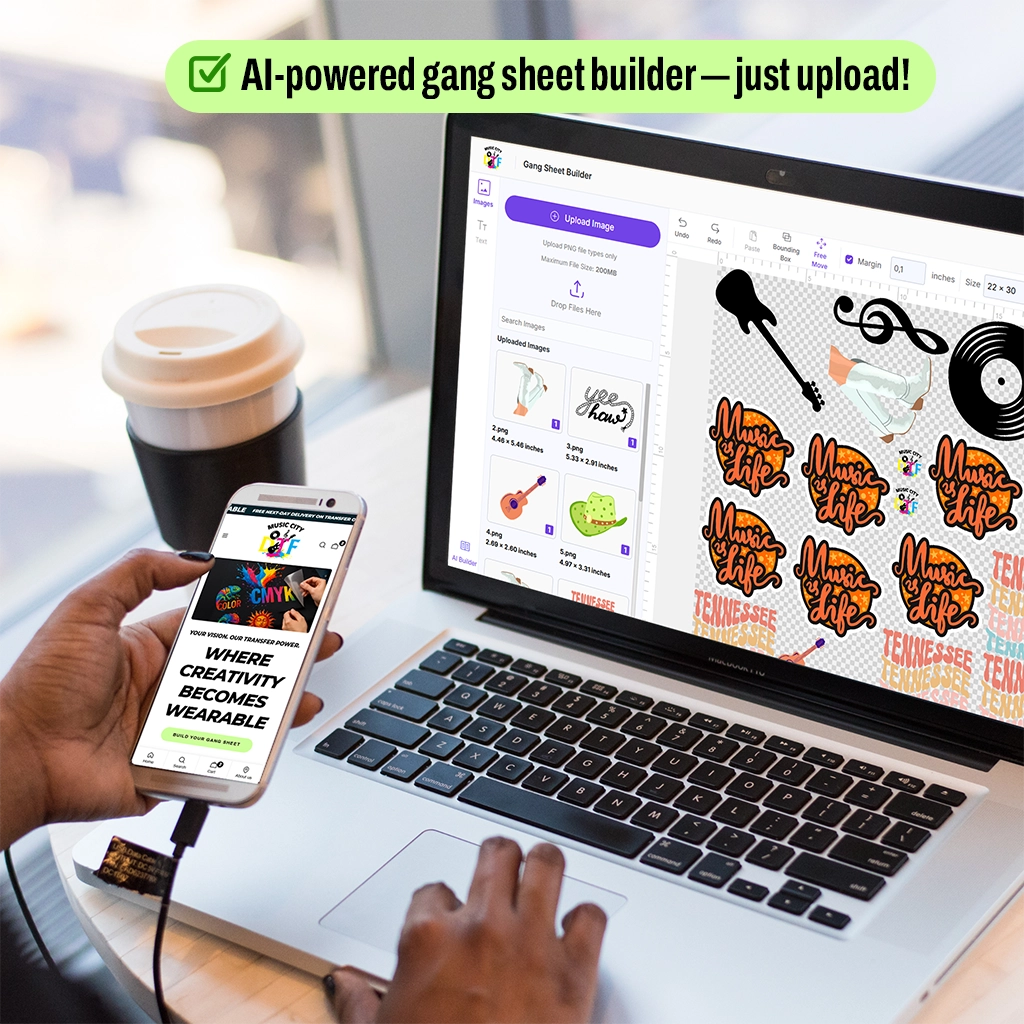
1. Upload Your Own Gang Sheet
You can upload a prebuilt gang sheet if your designs are already arranged. Most shops use Canva or Photoshop templates sized at 22” x 60” or similar layouts depending on press size.
2. Build a Gang Sheet Inside the System
If you don’t have a layout ready, you can build one directly. This is useful for stacking multiple 4th of July shirt ideas into a single production run.
3. Upload Custom Images
Single designs also work. This is ideal for testers or one-off custom patriotic shirts before scaling to bulk orders.
4. Ready-to-Press Designs
Music City DTF also offers pre-made artwork sheets. These are fully printed and ready for heat press application at 300–325°F for 10–15 seconds depending on fabric.
Cost Context
Typical DTF pricing averages:
-
$0.12–$0.35 per square inch
-
Gang sheets reduce cost per design by 20–40%
-
Ready-to-press transfers cost slightly more but save design time
That pricing model makes bulk ordering significantly more profitable during holiday peaks.
Music City DTF Production Advantage
One key operational advantage is batching efficiency. When multiple orders are grouped, ink usage and film waste drop by up to 15–20%, which stabilizes turnaround time during peak weeks.
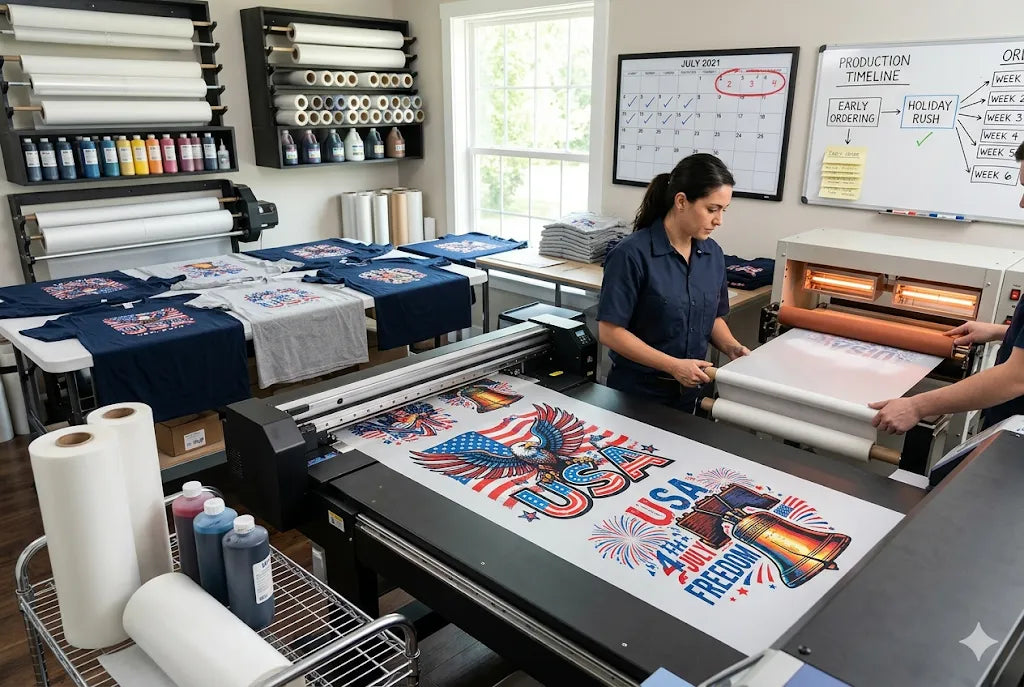
Production Breakdown for 4th of July DTF transfers
Understanding how production flows helps prevent bottlenecks.
- File received and checked for resolution (minimum 300 DPI recommended)
- Color correction for heat transfer accuracy
- Film printing using pigment-based DTF ink
- Adhesive powder application
- Heat curing at controlled temperature
- Cutting and packaging
Each step adds potential delay if files are not print-ready.
Bottom Line
Timing is the real profit lever in 4th of July DTF transfers, not just design quality or printer choice.
If you’re running holiday drops, the shops that win aren’t necessarily the ones with the best artwork—they’re the ones that got their orders in before the rush hit. Once mid-June rolls around, everything tightens: queues stretch, revisions slow down, and shipping starts bleeding extra days. That’s where margins quietly disappear.
Early ordering keeps things predictable. Your colors stay consistent across batches, your production slot is locked, and you’re not scrambling to approve files at 2 a.m. just to hit a shipping cutoff. It also gives you room to actually test designs; press a sample, adjust sizing, fix a small color shift without the pressure of a ticking deadline.
Explore Music City DTF to find affordable DTF Printing solutions.
Frequently Asked Questions
How early should orders be placed for holiday printing?
Most shops place holiday print orders about three to four weeks before peak season hits. That gap helps avoid production backlogs, keeps shipping predictable, and leaves room to fix artwork or rerun prints if something goes wrong in real work.
What makes 4th of July DTF transfers different from standard prints?
They’re built for strong color pop and hold up well on cotton, polyester, and blends. Unlike screen printing, there’s no screen setup, so full gradients print fast, which suits quick patriotic runs when time is tight in busy season.
Can Music City DTF handle bulk gang sheet uploads?
Music City DTF handles both gang sheet uploads and built-in layouts. Shops can scale orders without reworking artwork each time, which saves effort during heavy order spikes and keeps production moving smoothly when volume jumps in peak holiday rush periods.
What fabrics work best for patriotic DTF transfers?
Cotton, cotton-poly blends, and tri-blends usually work best. Polyester can work too, though it often needs adjusted heat so ink transfers cleanly and avoids dye issues during pressing on certain garments depending on garment type and shop settings used daily.
How much do 4th of July DTF transfers typically cost?
Prices usually land between $0.12 and $0.35 per square inch depending on order size and design complexity. Bigger gang sheets bring the cost down, which helps shops run seasonal batches without eating margin especially for high volume holiday runs overall.
Why do last-minute orders often fail during holiday season?
When orders come in late, queues are already packed, shipping slows down, and file edits get limited. It usually ends in rushed prints or missed selling windows during peak holiday demand periods and shops often lose key revenue opportunities there.
What shirt ideas sell best for Independence Day?
Flag typography, retro patriotic art, fireworks designs, and worn-in vintage US looks sell well. These styles show up constantly on Etsy and in pop-up shops because people grab what feels familiar for July events based on seasonal buying patterns today.
Is Music City DTF good for beginners?
Yes, it’s pretty beginner friendly. Uploads are simple, ready-to-press files are available, and gang sheet tools are straightforward. It lowers the learning curve for first-time shop owners dealing with holiday production without needing advanced design experience or technical background skills.
How long does production take during peak season?
Normal turnaround sits around 24–72 hours. During peak season, it can stretch to three to seven business days, depending on how backed up orders are and whether files are ready to print which is common in busy holiday cycles now.
What are the risks of ordering too late?
Waiting too long usually leads to stock shortages, higher shipping fees, and not enough time for design approval. Many shops end up cutting product variety or missing peak sales altogether and it hurts overall seasonal revenue for small shops badly.
About Music City DTF
Music City DTF is proud to support print shops, apparel businesses, and brands throughout Louisville with state-of-the-art DTF transfers. Our high-quality prints deliver vibrant colors, exceptional durability, and fast turnaround times. Whether you need custom designs or bulk orders, we provide reliable solutions to help your business grow and exceed customer expectations every day.