That big stack of film you just got in feels perfect. The colors pop, the powder looks even, the sheet lays flat. Then you leave it overnight in a humid shop and it curls, sticks, and sweats ink the next morning.
Humidity doesn't ask permission. It just walks into your shop and starts breaking down the chemistry of your transfer. If you store large DTF orders wrong, you're not storing art. You're storing future rejects.
We’ve spent 20 years watching good prints die in bad air. This is how you stop it.
What Humidity Actually Does to Your DTF Gang Sheet
DTF is like giving your design a second life. You print it onto film, dust it with powder, and cure it until it’s ready to travel. Then with one press of heat, it jumps from film to fabric. No limits on color. No limits on fabric. Just your art, stuck on and made to last.
And humidity is the one thing that can interrupt that jump.
DTF film has a coated side that holds ink. That coating is hygroscopic. It pulls moisture from the air. When relative humidity climbs above 60%, the coating swells just enough to stop holding a crisp edge. Your whites get gummy. Your powder clumps instead of melting clean.
The adhesive powder is worse. TPU powder starts absorbing moisture at 55% RH. In a shop running at 70% humidity in July, an open box of powder can gain 2-3% moisture weight in 48 hours. That moisture turns to steam in your curing oven and leaves pinholes. It turns to steam under your heat press and leaves bubbles.
Large orders make it worse because you have more surface area stacked tight, trapping that damp air between sheets.
How to Set Up Your Shop So Film Stays Flat and Ready
You don't need a clean room. You need control.
Keep your storage zone at 68-75°F and 45-55% relative humidity. That's the sweet spot where film stays dimensionally stable and powder stays dry. A $15 hygrometer from Amazon will tell you the truth. Most shops are shocked to find they're at 72% at 7am.
Run a commercial dehumidifier rated for your square footage, not a residential one. For a 1200 sq ft shop in the Southeast, you need a 70-pint unit pulling at least 50 pints per day. That unit costs around $280-$350 and will save you $400+ in ruined film per humid month. Place it low, because damp air sinks, and keep it 18 inches off the wall.
And don't fight your AC. Air conditioning removes moisture only when it's running. If you turn it off at night to save power, your shop spikes to 80% humidity by morning. Keep air moving 24/7, even on low.
How to Store Large DTF Orders So They Don't Stick Together
This is where shops lose money. They get a 500-foot roll of Custom DTF Gang Sheet order and lay it in a pile.
Don't.
If you use rolls, store them vertically on a core rack, wrapped in the original black poly bag with two silica gel packs taped inside. Vertical storage prevents flat spots and edge curl that cause head strikes later if you were to reprint. If you have to store flat, never stack more than 5 rolls high.
If you receive sheets, you need air gaps. Slip a sheet of parchment or butcher paper between every 10-15 transfers. Not wax paper, it sticks. The parchment wicks trapped moisture and stops ink-to-back transfer when sheets get warm.
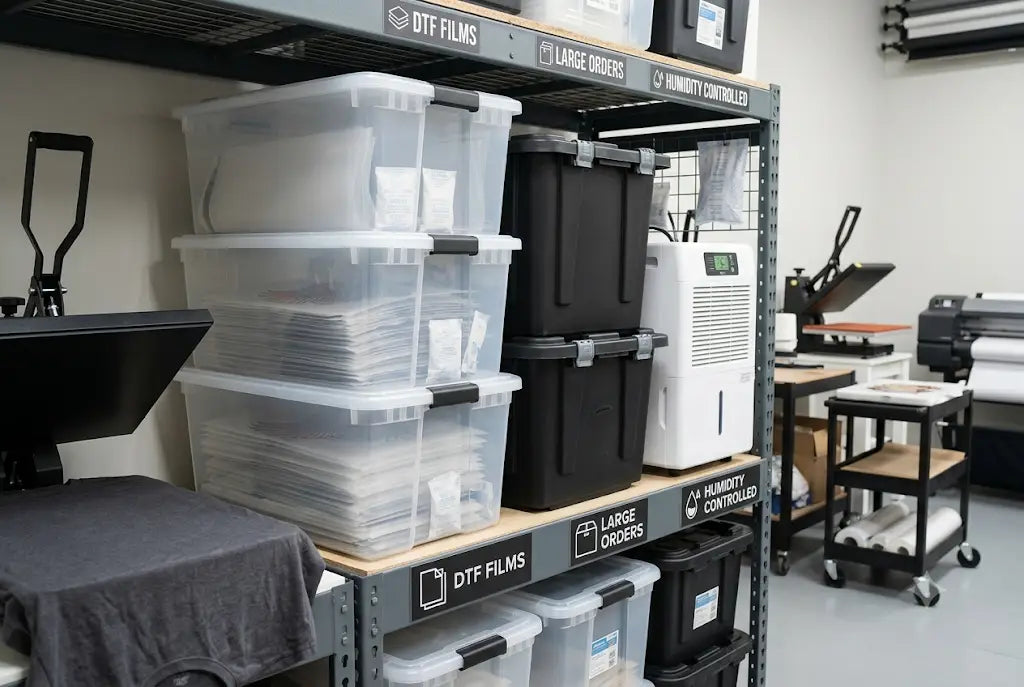
For a Custom Gang Sheet order over 100 sheets, break it into smaller batches in sealed bins. We use 60-quart gasket-seal totes. Each tote holds about 100 gang sheets, plus a 100-gram rechargeable desiccant. At Music City DTF we pack large orders this way before they ship because a cardboard box breathes. A gasket tote doesn't.
Keep all totes off the floor. Four inches is enough. Concrete sweats. Put them on wire shelving or a pallet.
Gang Sheet Layout Tips That Reduce Moisture Problems Later
How you build the sheet changes how it stores.
When you How to Make a DTF Gang Sheet, you want to think about powder load. A solid 10x10 inch block of white ink holds a massive amount of wet powder. That block is a moisture magnet.
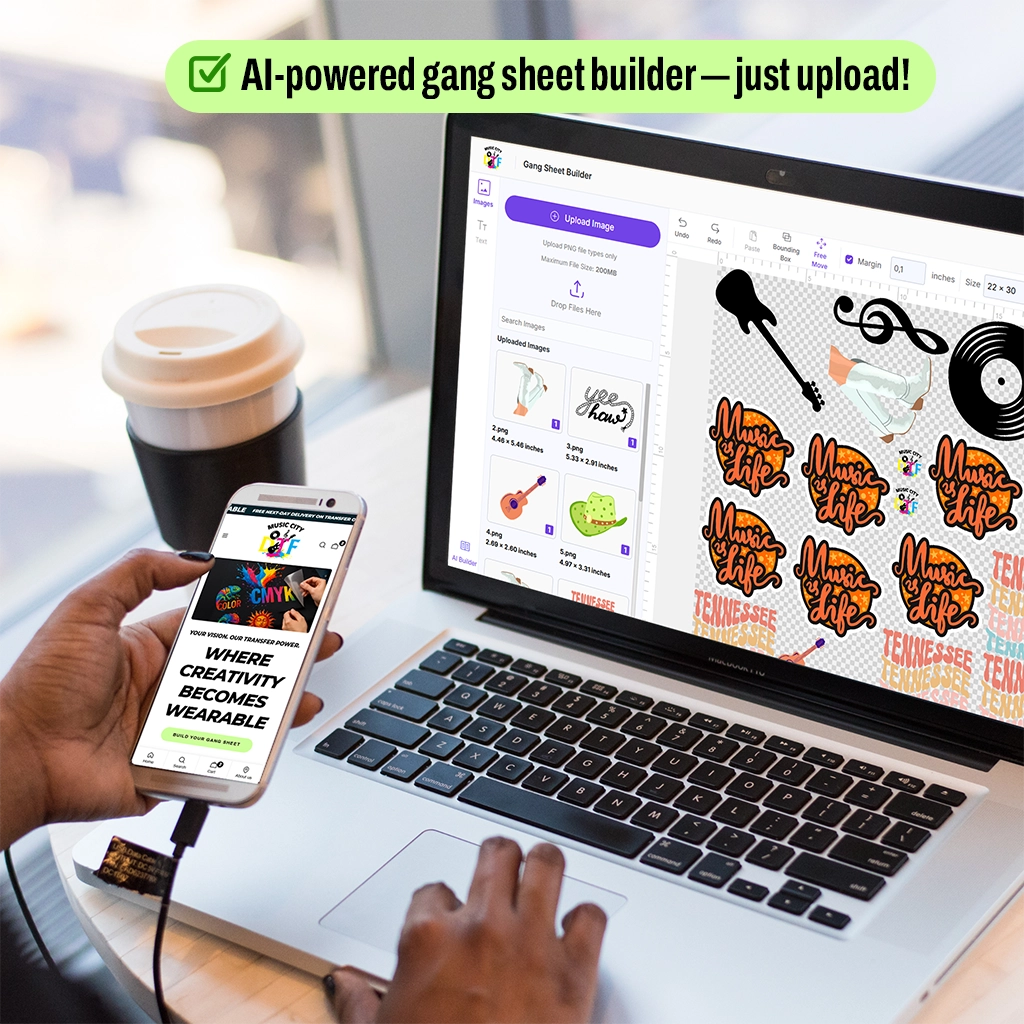
So when you use a Gang Sheet Builder, break up big solids. Add a 1/8 inch gap between designs. That gap lets powder cure more evenly and lets air circulate during storage. It also makes cutting faster.
And maximize gang sheet space the smart way. Don't jam art to the very edge of the film. Leave a 0.5 inch clean border around the entire Custom Gang Sheet. That border keeps the sheets from sealing together with static and humidity and gives you a dry place to grab without touching ink.
For Gang Sheet Printing, set your white ink to 65-75% for storage orders. A super heavy white layer looks great on day one but stays soft for days in humidity. A slightly leaner white cures harder and stores longer.
Your Daily Routine for Humid Days
This is the routine we give shops that use our Gang Sheet Builder in Nashville, where summer humidity averages 74%.
First thing in the morning, check your hygrometer and empty your dehumidifier if it isn't plumbed. If your shop is over 60%, don't open your totes yet. Let the dehumidifier pull it down to 55% first. That's usually 30-45 minutes.
When you pull sheets for pressing, only pull what you'll press in the next two hours. Reseal the tote. Every time you open and close a tote in damp air, you exchange all that dry air for wet.
If a sheet feels tacky or limp, don't press it. Put it in front of a fan for 10 minutes, coated side up. If it doesn't snap back and feel crisp, put it in a dry tote with fresh desiccant for 4 hours. Pressing a damp transfer is how you get steam pops and poor wash durability.
And never cure or store near your heat press. Your press puts out pounds of steam per hour. That steam has to go somewhere. Keep storage at least 15 feet away, or behind a partition.
What to Do When Film Already Has Moisture Damage
You'll know. The film curls toward the printed side. The powder looks clumpy, like sugar that got wet. The colors look dull and the sheet sticks to the one below it.
You can sometimes save it. Lay the sheets individually on a wire rack in your driest room with a fan on low, not high. High air blows dust onto the tacky coating. After 60-90 minutes, most light curl will relax.
If powder is clumped and won't shake off, it's done. Reprint it. Pressing it will only leave a rough hand feel and you'll lose the customer.
This is why understanding Gang Sheet File Requirements matters at the start. A file built with too much ink coverage will never store as long as a clean file with proper choke and bleed. At Music City DTF, we see the longest storage life from 300 DPI PNGs with transparent backgrounds and no hidden white boxes.
Maximize Gang Sheet Space Without Sacrificing Storage Life
You want to How to Build a Gang Sheet that pays for itself and still presses perfect two weeks later.
Use varied sizing. Mix adult chest logos with left chest and sleeve hits on the same sheet. That mix naturally creates air channels in the stack because the ink thickness varies.
Group similar colors together when you can. It doesn't affect moisture, but it reduces powder waste and gives you a more consistent cure, which indirectly helps storage.
And use the nesting feature in your DTF Gang Sheet Builder. Good nesting software will rotate designs to fit 15-22% more art on the same length. On a 22.5" x 60" Custom Gang Sheet that retails for $28-$42, that extra 18% is pure profit. Just don't nest so tight that designs touch. A kiss cut needs space.
Conclusion
Storing DTF isn't about being neat. It's about respecting the chemistry you paid for. Film, ink, and powder are all waiting for heat to do their job. Humidity gives them a false start before they ever hit your press.
So build your storage like you build your business. A $35 tote, a $12 desiccant pack, and a $30 hygrometer will protect thousands of dollars in Custom DTF Gang Sheet inventory. Keep your air at 45-55% RH, keep your totes sealed and off the floor, and keep your heat press steam away from your storage wall.
Do that and your transfers will feel the same on day 14 as they did on day one. Crisp. Flat. Ready to jump. And when you nail How to Make a DTF Gang Sheet that stores well, you don't just save film. You save time, reprints, and customers. That's how a small shop in a humid town runs like a big one, and that's exactly what we help with at Music City DTF every single day.
Your Art Deserves Better Than a Damp Shelf.
You've learned how to protect your transfers. Now let's make sure your next order is built to last from the first print. Our team checks every sheet for cure, powder evenness, and pack-out so it arrives ready to press.
Browse Our Services → • Request a Quote → • Place Your Order
Why Choose Music City for DTF Transfers
We are Music City DTF, a team of production leads, color specialists, and shop consultants with 20 years combined on DTF presses, curing ovens, and fulfillment tables. We have worked with UV DTF stickers, cold peel transfers, and high-volume gang rolls through humid summers, dry winters, and everything in between. We have helped shops scale from a single press to multi-press operations. This guide comes from thousands of feet of film we've printed, packed, stored, and tested for real-world wash and press performance.
Frequently Asked Questions
How Do I Store a Large DTF Gang Sheet Order in a Humid Shop?
Keep your sealed totes at 45-55% RH and 68-75°F, off the concrete floor and away from your heat press. Add parchment between every 10-15 sheets and use rechargeable desiccant packs inside each gasket-sealed tote to absorb trapped moisture and prevent sticking.
What Is the Best Humidity Level for Storing DTF Transfers?
The best range is 45-55% relative humidity. Below 40% creates static that pulls dust onto your film. Above 60% makes your DTF Gang Sheet absorb moisture, causing powder clumps, curling edges, and steam bubbles during pressing that ruin wash durability.
How Long Can I Store a Custom DTF Gang Sheet?
When stored correctly in a sealed tote with desiccant, a Custom DTF Gang Sheet will press clean for 3-4 weeks. At Music City DTF we recommend using it within 14 days for best hand feel and opacity, especially for large white ink areas that absorb moisture faster.
How to Build a Gang Sheet That Lasts Longer in Storage?
Leave a half-inch border, add an eighth-inch gap between designs, and avoid huge solid blocks of white. When you How to Build a Gang Sheet this way, powder cures more evenly and sheets don't trap damp air, so your Custom Gang Sheet stays flat and press-ready.
Why Is My Gang Sheet Sticking Together?
Your film is absorbing humidity from the air, which softens the ink and makes the coating tacky. This often happens when you store boxes on concrete or leave totes open overnight. Separate sheets with parchment paper and lower your shop humidity to 55% quickly.
What Are the Gang Sheet File Requirements for Humid Climates?
Supply a 300 DPI PNG with a transparent background and no hidden white blocks. Keep white ink at 65-75% for storage orders. Proper Gang Sheet File Requirements reduce excess powder load, so your DTF Gang Sheet cures harder and resists moisture pickup.
Can I Use a DTF Gang Sheet Builder to Save Space and Reduce Damage?
Yes. A good DTF Gang Sheet Builder nests designs with smart gaps that improve airflow and curing. Use it to Maximize Gang Sheet Space without letting art touch. This cuts costs and also prevents ink transfer when sheets are stacked tightly.
How Do I Know If My Gang Sheet Printing Was Cured Correctly for Storage?
A well-cured sheet feels smooth, not gritty, and the back of the film is dry with no powder falling off. For Gang Sheet Printing, the powder should be fully melted into an even orange-peel texture. If you see white dry powder, it will absorb humidity fast.
Does Music City DTF Pack Orders for Humid Storage?
Yes. At Music City DTF we ship large orders in moisture-resistant poly bags with desiccant inside sealed packaging, not just cardboard. We also split 100+ sheet orders into smaller sealed batches so you only expose what you need to press that day.
What Does Gang Sheet Layout Tips Mean for Storage?
Gang Sheet Layout Tips are placement rules for your art on film. For storage, it means leaving grab borders, spacing designs, and mixing sizes to create air channels. Good layout in your Gang Sheet Builder helps your Custom Gang Sheet stay flat and dry for weeks.